Guide
What to take for walking in Sicily
The right kit here is not the Alpine kit. The weight changes, the priorities change, and two things count more than all the rest.
People coming from the Alps tend to bring too much for the cold and too little for the sun. In Sicily the priorities are reversed.
The two things that really count
Water, in the quantities you will find in the guide on the subject, and protection from the sun: a wide-brimmed hat, sunglasses and cream. They are not accessories, they are the main equipment.
What shoes do you need?
A lugged sole, always. The polished limestone of the coasts and the paving slabs of the historic mule tracks, such as the Scala Vecchia on Monte Pellegrino, are more slippery on the way down than Alpine rock.
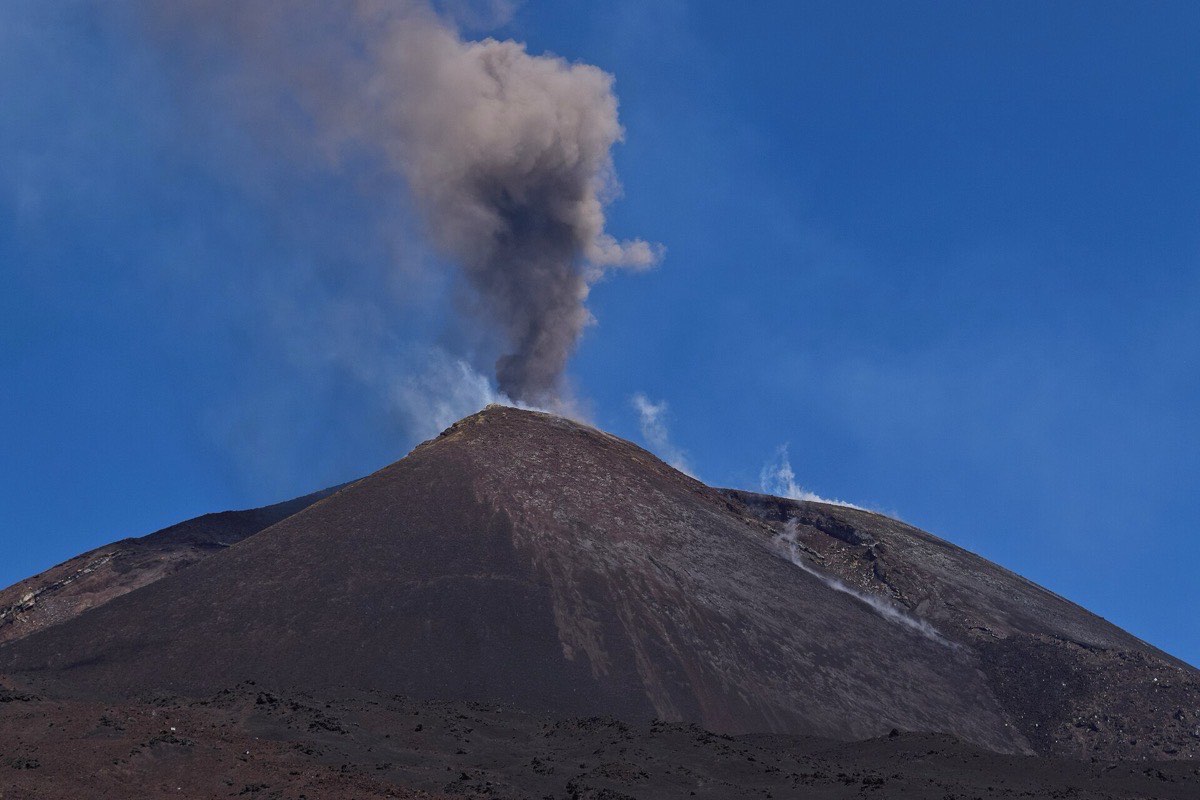
On Etna you need something tougher: lava is abrasive and cuts soft soles, and volcanic sand gets in everywhere. High boots make sense here.
In the gorges with water, from the Alcantara to Cavagrande, you need shoes that can get wet and that grip when wet.
How do you dress?
Light long sleeves beat a short-sleeved shirt: they protect from the sun without warming you, and they also shield you from the thorny scrub, which scratches.
A warm layer should be taken in any case when going up high, on Etna and in the Madonie, in August too. Above 1,800 m the wind is cold all year round.
The specifically Sicilian things
A tick repellent from spring to the end of summer, if you walk in woods with grazing: the Ficuzza, the Nebrodi, the Madonie.
A torch if you walk the tunnels at Pantalica.
A GPS track on the Pizzo Carbonara plateau and in the Bosco della Ficuzza, where the junctions all look alike.
One real case
Case
The lava eats soles
Etna, above the tree line.
- The track to the summit craters climbs from about 1,900 to about 3,100 m: twelve hundred metres of height difference from the start, and more than twenty degrees compared with the coast.
- The ground is volcanic sand and lava, abrasive on soft compounds.
- Above the tree line there is no shade, no water and no shelter for the whole length of the route.
What this tells you. The same shoe that does perfectly well at the Zingaro lasts one season on Etna. Kit in Sicily is not chosen for the region but for the rock: coastal limestone and volcanic lava ask for two different things.
The Etna pageFrequently asked questions
Do you need high boots for walking in Sicily?
Almost never. On coastal limestone and forest tracks, which are most of the routes, a low walking shoe with a lugged sole is enough. The exception is Etna, where high boots are needed to keep out the volcanic sand, which gets in everywhere, and because lava wears away soft compounds.
Do you need a windproof in Sicily?
On the high ground, yes, always. Above 1,800 m, on Etna and in the Madonie, the wind is cold in any month, the middle of August included.
Are there ticks in the Sicilian woods?
Yes, in woods with grazing such as the Ficuzza, the Nebrodi and the Madonie. From spring to the end of summer a repellent and a check when you get back are worth it.
The guidance comes from the "what to take" fields filled in on the individual pages, which are specific to the ground of each place and not a list that holds everywhere.
Written and checked by the Redazione Sentieri Siciliani. Published on 1 September 2026, updated on 1 September 2026. How we work.
Sources
- Club Alpino Italiano, the Italian alpine club — the hiking grading scale, waymarking and the Sentiero Italia
- Istituto Superiore di Sanità, EpiCentro, the epidemiology portal of the national institute of health — ticks, vector-borne diseases and heatwaves
- Parco dell’Etna, the Etna park authority — the park rules, the authorised paths and access to the volcano
Where to go from here
In the same series
Next step
From the principles to the places
Rules are worth little until they apply to a precise spot. From here you reach the pages with access points, parking and tracks.