Guides
How hiking in Sicily works
The things that hold across the whole island and that change the way you plan a walk: the season, the heat, the water, the rules.
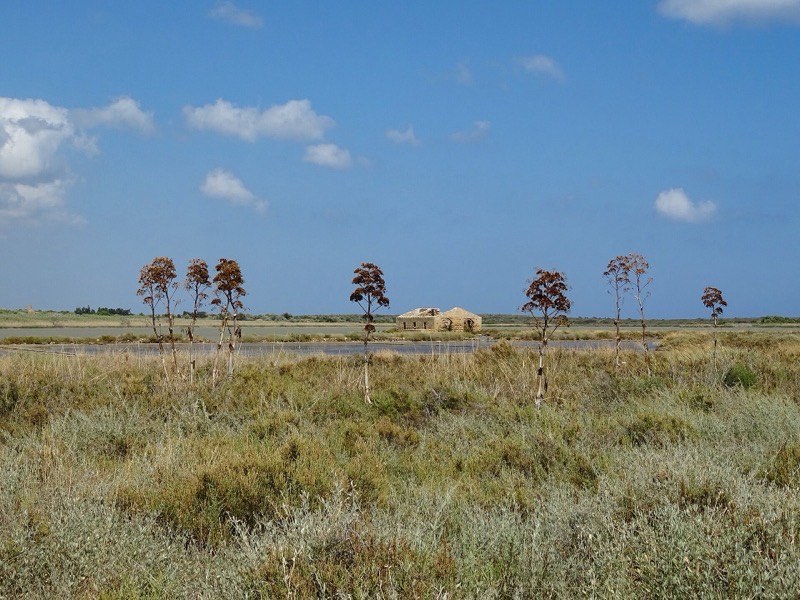 Guide
Five parks, 75 reserves, 245 Natura 2000 sites and seventeen different managing bodies. What zones A, B, C and D mean, and why tickets, opening hours and the rules on dogs change from one place to the next.
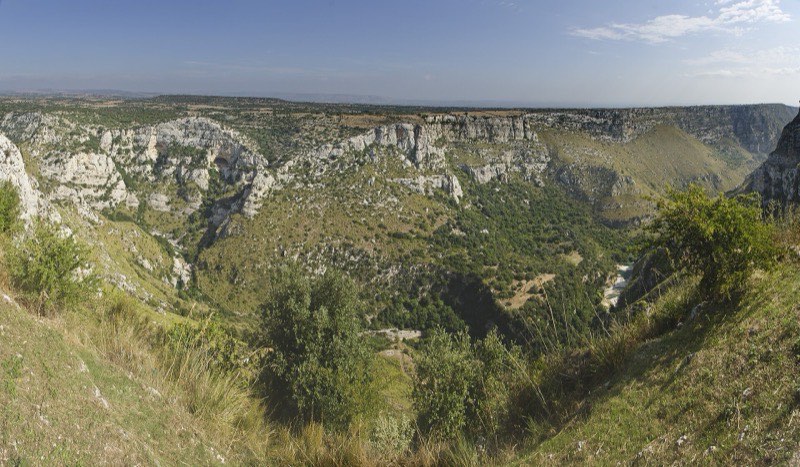 Guide
Sicilian waterfalls are visited mostly in summer, when almost every stream is at its lowest. Pools and waterfalls place by place: water, swimming, access.
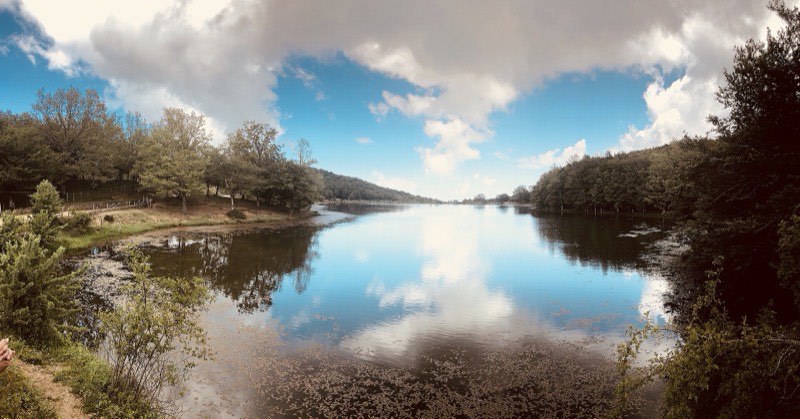 Guide
October and November are the second good window of the year, and almost nobody uses it. But autumn is not spring in reverse: there is one more variable, the first rain.
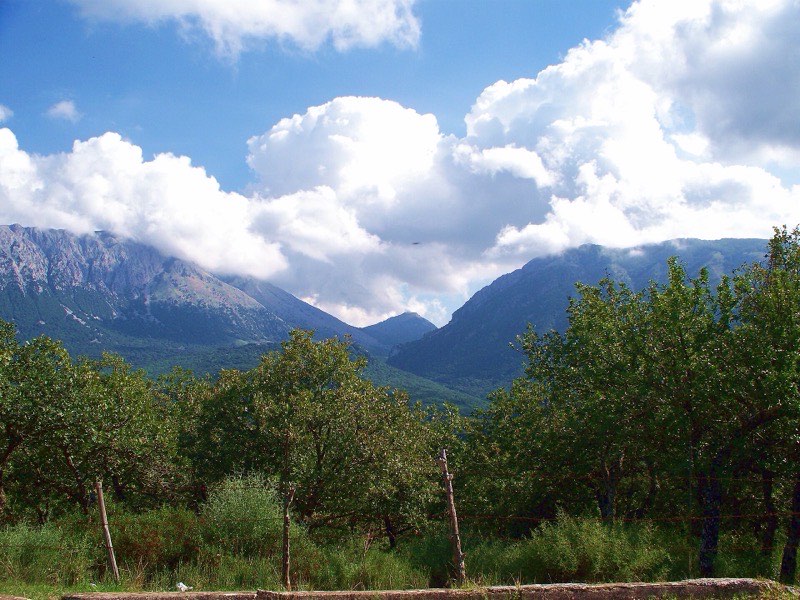 Guide
The good season for Sicilian walking is not the summer, and it is not the same across the whole island. Month by month, what works and what does not.
GuideWhich routes really work with small children, which ones are passed off as easy and are not, and what changes compared with the mountains of the north.
 Guide
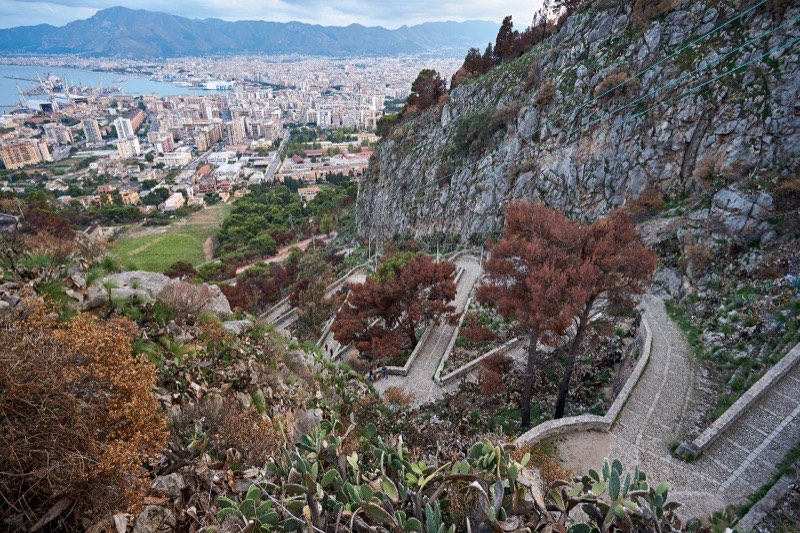
The Sicilian walks you can reach by public transport are few and can be counted one by one, but without a car the linear route opens up, and that is the one you cannot do with one.
 Guide
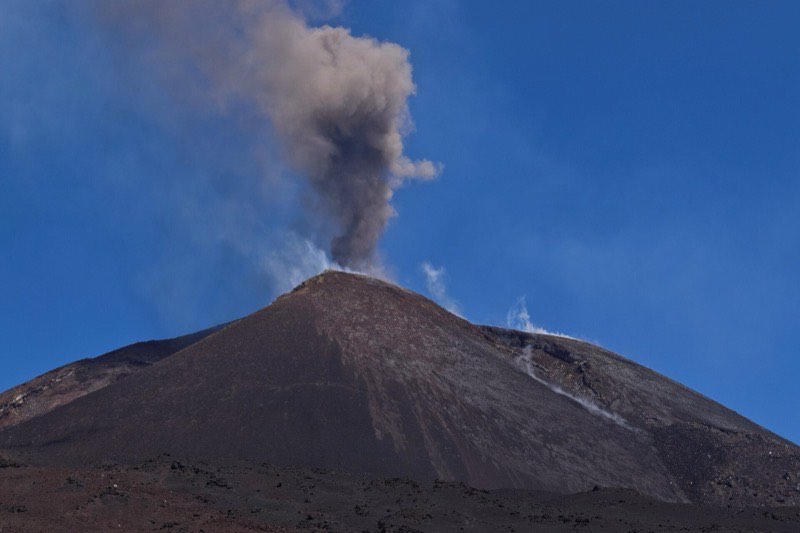
It is not the park that decides how far up you go: it is thirteen mayors, with thirteen different orders. The same crater has a minimum distance of 300 metres from the south and 500 from the north.
 Guide
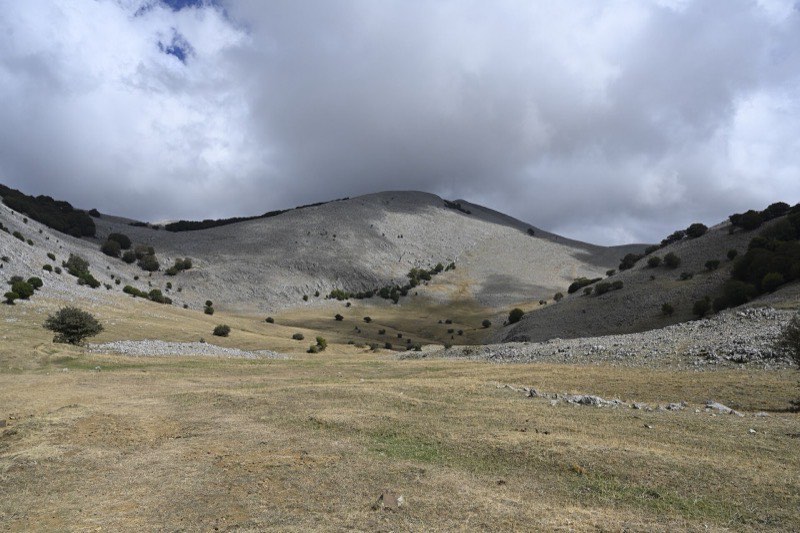
Nobody measures the depth of the snow in the Madonie. The webcams, the park’s notices and the orders on the roads are the addresses to open before driving up, and then your pace changes.
GuideWaymarking in Sicily is patchy and changes from park to park. How it is read, where it is missing and when the GPS track stops being optional.
 Guide
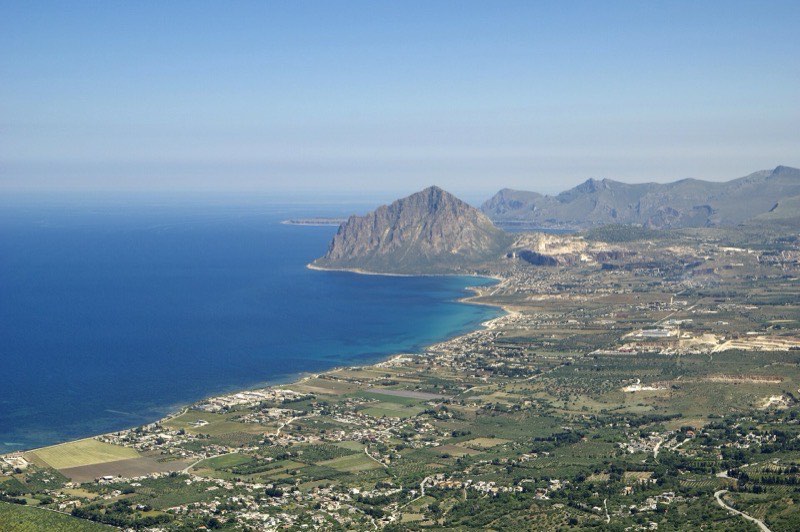
It is the question that comes up most often about every area of the island. The honest answer is that Sicilian hiking grew up linear, and that changes how you plan the day.
 Guide
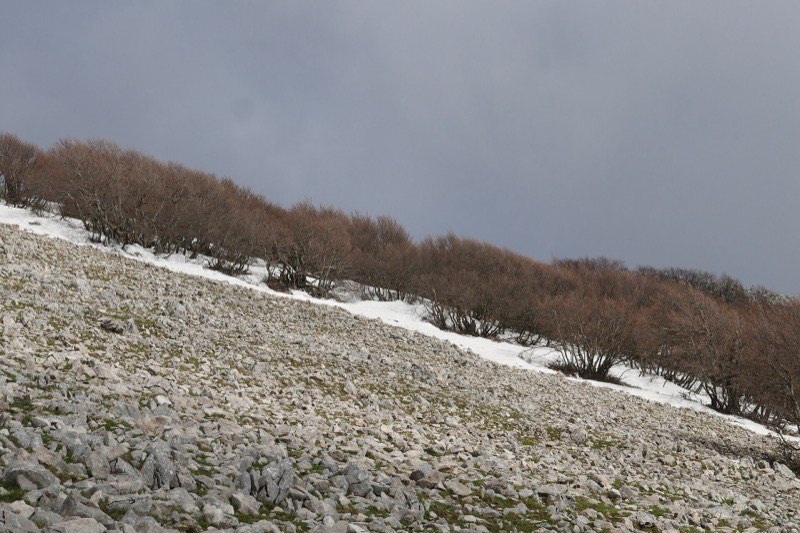
Polished limestone, volcanic sand, karst rock, muddy forest roads. Four surfaces that call for four different ways of walking, and that decide your footwear more than the altitude does.
GuideA ticket for a regional nature reserve is valid at all of its entrances for the whole day: it is the rule that makes the most expensive mistake, arriving on the wrong side, recoverable.
 Guide
Since the regional decree of 2025 the rule no longer depends on the type of protected area but on the individual path. What has changed, where the ban is still total, and the two problems that are specific to the island.
GuideDownloading the file is the easy part. The problem is having the map when the phone has no signal, which in Sicily happens more often than people expect.
GuideIn the Alps there is hiking mapping that covers everything. In Sicily there is not, and that changes the way you prepare.
GuideThe ground where people really get lost in Sicily is not the steepest: it is the flattest. Sinkholes, fog, and a landscape that repeats itself exactly.
 Guide
The national report on landslides works out the Sicilian landslide index rock by rock: 4.1 per cent on the sandstone-and-clay flysch, 0.3 on the lavas of Etna. Between the least stable ground on the island and the most stable there is a factor of fourteen, and you walk on both within two hours of driving.
GuideAt the coastal points, in thirty years of data, there has not been a single night of frost, and four winter days out of five have a high between 12 and 18 degrees: on the coast winter is the best season of the year, while at 1,900 m on Etna it freezes 117 days a year.
 Guide
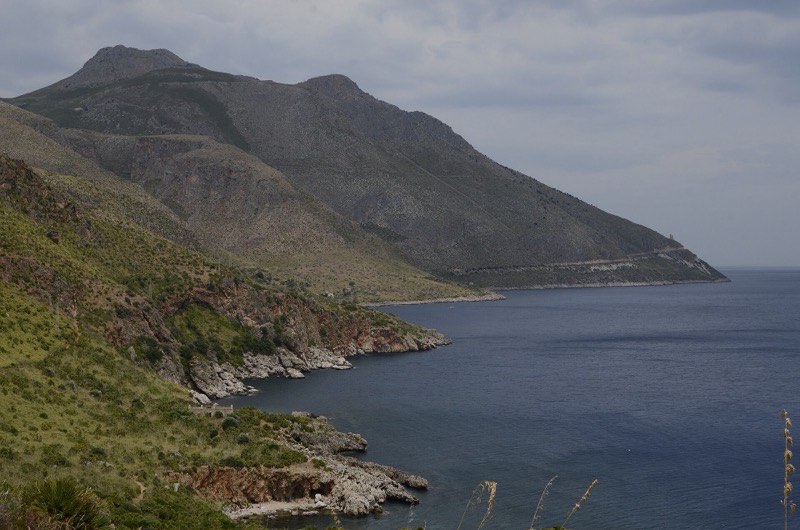
On the circuit of Monte Cofano you climb about 300 m without ever going above 262 m of height, and in the Zingaro Natura 2000 site woodland covers 5 per cent: the Sicilian coast is walked with the figures for the sun, not the figures for ascent.
 Guide
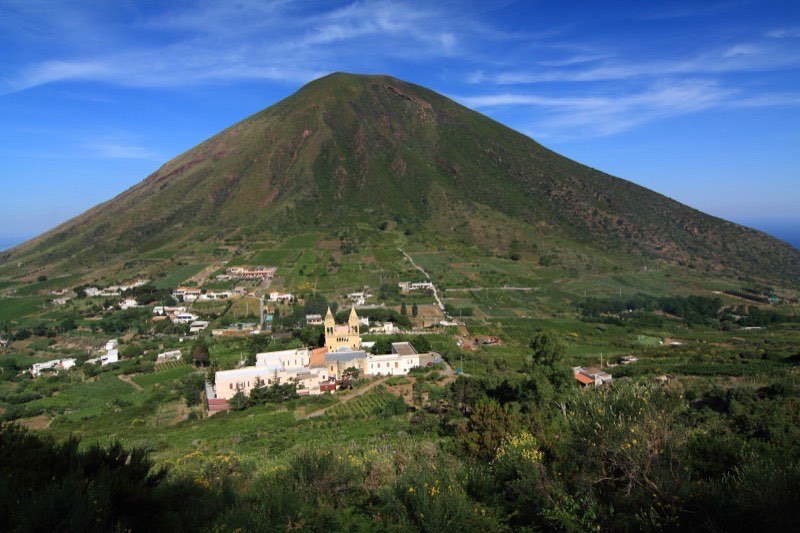
On the smaller islands the climb is the easy part: what wrecks the outing is the connection, and the connection is a public contract with seasons, lots and force majeure clauses.
GuideEtna, Stromboli and Vulcano are read against three different alert scales, which on the same day can give opposite colours. They are public, free, and almost nobody opens them.
 Guide
Sicily does not come into flower all at once: it flowers in stages that climb with height from February to June, and walkers can follow them.
GuideAt Vendicari flamingos are counted in hundreds and the numbers sit in a public form; over the Strait of Messina the raptor passage is a spring event, not an autumn one.
 Guide
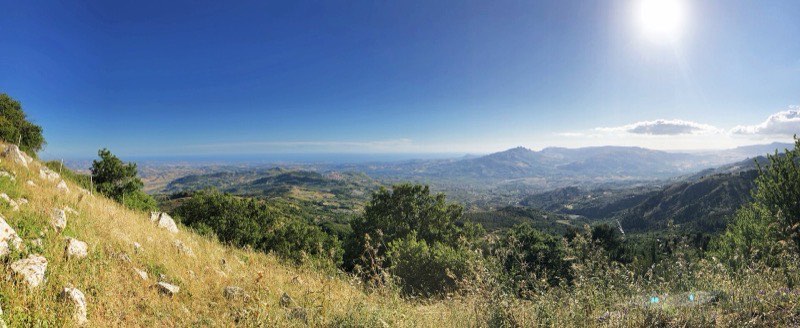
Eleven thousand kilometres of public land 37.68 metres wide, no consultable map and no waymarks: the most extensive network of routes in Sicily is also the one whose whereabouts nobody knows.
 Guide
Magna Via Francigena, Via dei Frati, Itinerarium Rosaliae. Several days back to back change everything: the weight you carry, the water, the pace and the way you get it wrong.
GuideThe ascent here is modest. What catches out even fit walkers is the heat, and heat adaptation takes a measurable amount of time: days, not hours.
GuideThe light that makes the island recognisable does not last long, and it is not the light of midday. When to go and what to look for, area by area.
GuideIn Sicily you work out how much water to carry as though there were nothing along the route, because almost always there is not: the geology sends the water underground and gives it back down in the valley, where it is no use to anyone on the way up.
 Guide
In the Nebrodi and the Madonie livestock graze loose and are guarded. What those dogs are doing, why they do it, and the few rules that head off the problem.
GuideOnly two things on Sicilian paths deserve real attention, and on both of them the guides copy material written for the north of Italy. In Sicily the tick-borne disease is a different one, and the viper is here.
GuideThe number is 112, and it goes through with no SIM and no credit. What changes the response time is what you say in the first thirty seconds, and in what order.
GuideIn summer almost the whole island sits steadily on amber, and that is not an emergency. Understanding the alert system is what lets you tell the routine from a real signal.
GuideOn bivouacking there is a rule going round that does not exist in Sicily. On fire, on the other hand, the law is clear and almost nobody knows it.
GuideIt is compulsory, you apply for it at your comune of residence, and visitors need one too. Almost nobody knows that, and the penalties are real.
In more depth
 Guide
Seven winter starting points with the route, the terminus and the time of the last service back, plus the ones that do not exist in January: the Madonie, the northern entrance of the Zingaro, Piano Provenzana. Read operator by operator on 24 November 2026.
GuideIn the Madonie the trails have numbers, but no authority publishes the list or the maps. The real starting points with measured lengths, the ten bans in force, how to read a wildlife-control notice and what is recorded as closed.
 Guide
One mining park open with free entry, a nature reserve where the mines are looked at from the outside, a museum with a ticket, and a list of mine-museums that never opened. Opening hours, rules, and why nobody goes down the shafts.
GuideIn mid-December the sun sets at 16:43 in Siracusa and at 16:51 in Trapani, and half an hour later you need a lamp. The month-by-month table calculated by us, the arithmetic of the hour beyond which you turn back, and what the light you carry has to do.
GuideIn fourteen days there are seven working days, the parks do not publish their opening hours and the bus to Etna skips 25 December and 1 January. What stays open, by when you have to ask, and what you can do without booking anything.
GuideA guide is required inside a perimeter, not above an altitude, and the act in force on the south side is Nicolosi order no. 21 of 20 August 2026. Also here: what is left to walk when the wind stops the lifts and the guides cancel, refunds included.
GuideThe island’s largest presepi viventi, the living nativity plays, are staged inside a collapse cave, on the flank of a canyon, in a cave-dwelling quarter. Published dates, shuttle buses, the ground underfoot and what is in those places during the other eleven months.
GuideIn Sicily the word rifugio covers a hotel, a forestry room with a fireplace, or a house that has been shut for years. Massif by massif: who runs it, when it is open, how to book, whether there is water.
GuideIn Sicily the leaves turn late and in few woods: beech, Turkey oak and oak woods above a thousand metres. The dates as the satellite measures them, the woods one by one, the rules and the routes.
 Guide
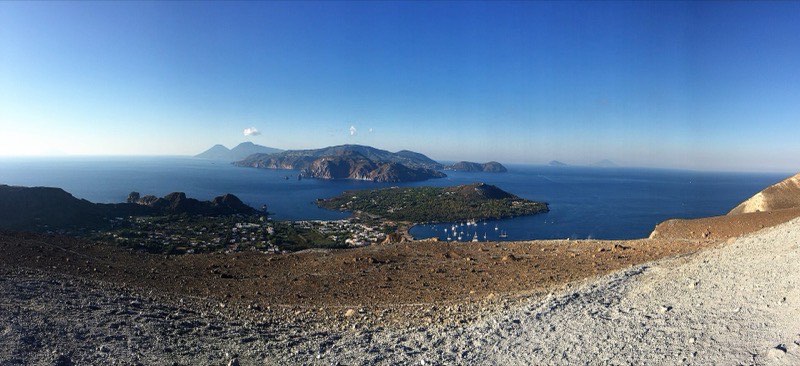
Three islands far out at sea, three different authorities. Where you walk, what is closed or forbidden, and which sailings are left when the summer ends.
GuideEtna’s caves are reached on foot, but inside they are dark, low and sometimes iced. Which ones have a park path, what to carry, and which karst caves are visited only with the managing body.
 Guide
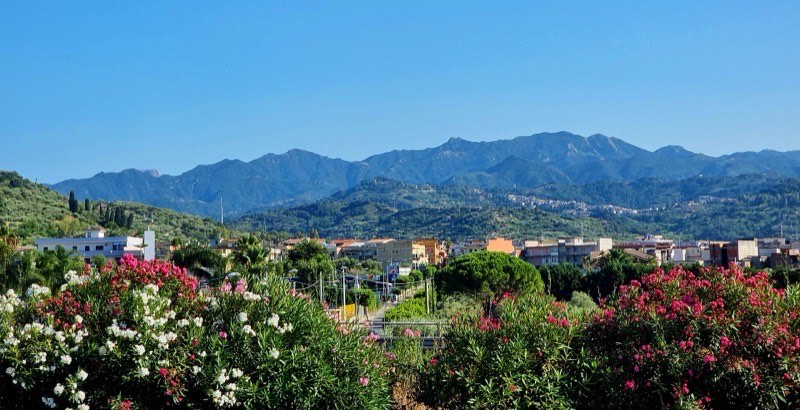
Six walks up that start in the centre of a tourist village: Castelmola and Monte Venere, the Rocca di Cefalù, Gibilmanna, the two San Calogero, Erice. Where the path starts, tickets, opening hours, times.
GuideFrom Trapani to Messina in 29 stages, plus the Etna variant: the Sicilian stages of the Sentiero Italia CAI with the figures from the official stage sheets, where to sleep, where the waymarking is missing and what is closed today.
 Guide
On Stromboli you walk up to 290 m on your own, on Vulcano only on a green light, on Alicudi and Filicudi you walk the mule tracks. Rules read in the acts themselves, and the October timetables.
GuideCapo Gallo, Pizzo Sella, Monte Cuccio, Monte Grifone and Portella della Ginestra: where each walk starts, which bus gets you there, and which bans and closures matter before you set out.
 Guide
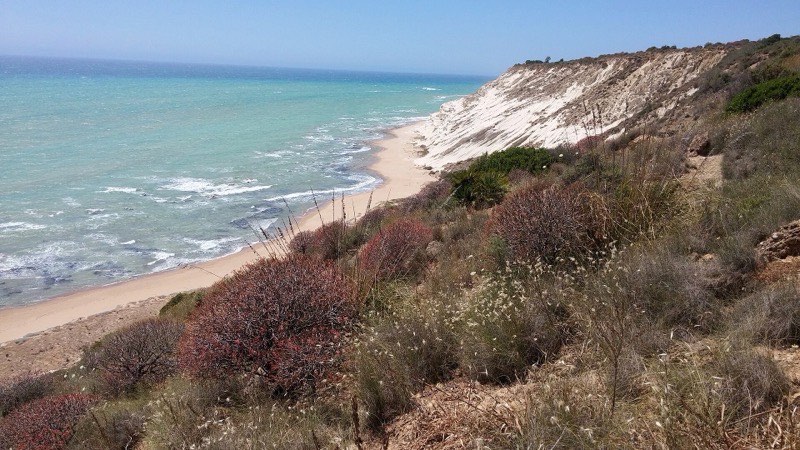
Where you can really walk between Realmonte, Siculiana, Eraclea Minoa and Punta Bianca: orders on the marl, reserve opening hours, a military firing range and the Macalube.
GuideIn the Iblei you walk by going down, into the cave: narrow valleys cut into the limestone, which are gorges and not quarries. Which ones have a ticket and opening hours, which rules apply inside, how you plan the climb back out.
GuideNearly every Sicilian lake is a dam, with a managing body and a level that changes from month to month. Lake by lake: where you start from, what you can do, what is prohibited.
GuideFrom 20 September to 31 January there is shooting on up to three days a week, never on Tuesday or Friday. Wild boar control, on the other hand, does not follow the calendar. Where people shoot, at what times, and what to do when you meet a drive.
GuideHow to read the regional notice, what each colour means for a day on foot, which nature reserves close, and why in autumn the danger is the torrents and the fiumare.
 Guide
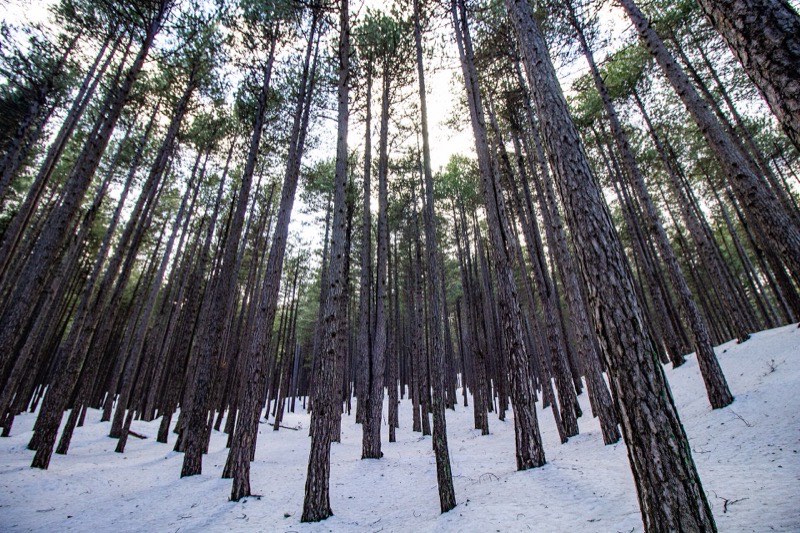
The Sundays of October at Zafferana and the festival at Trecastagni, with the chestnut woods of the east side: where you walk, how you get there, what is closed, and why the chestnuts on other people’s land are not picked.
GuideIn the summer of 2023 the three Sicilian cities with a health alert system counted 37 days at the top level, and 31 of them fell in July. The summer after, two of those three had none at all. There is no typical Sicilian summer: there is a day to read.
GuideThe right kit here is not the Alpine kit. The weight changes, the priorities change, and two things count more than all the rest.
 Guide
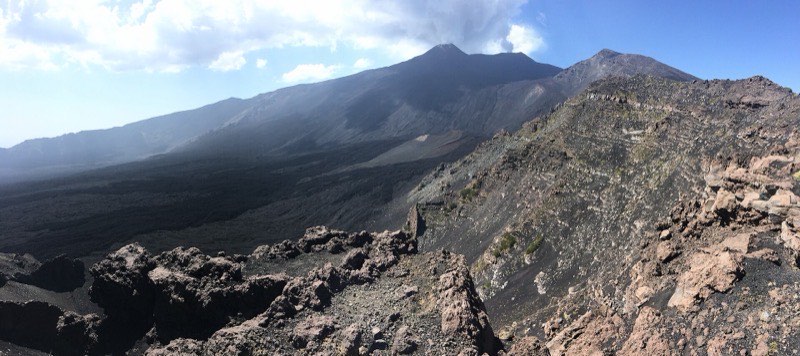
An eruption does not close the mountain, it changes where you can be. How the alert system works and what it means in practice.