Guide
The flowering seasons, and why they move the good season
Sicily does not come into flower all at once: it flowers in stages that climb with height from February to June, and walkers can follow them.
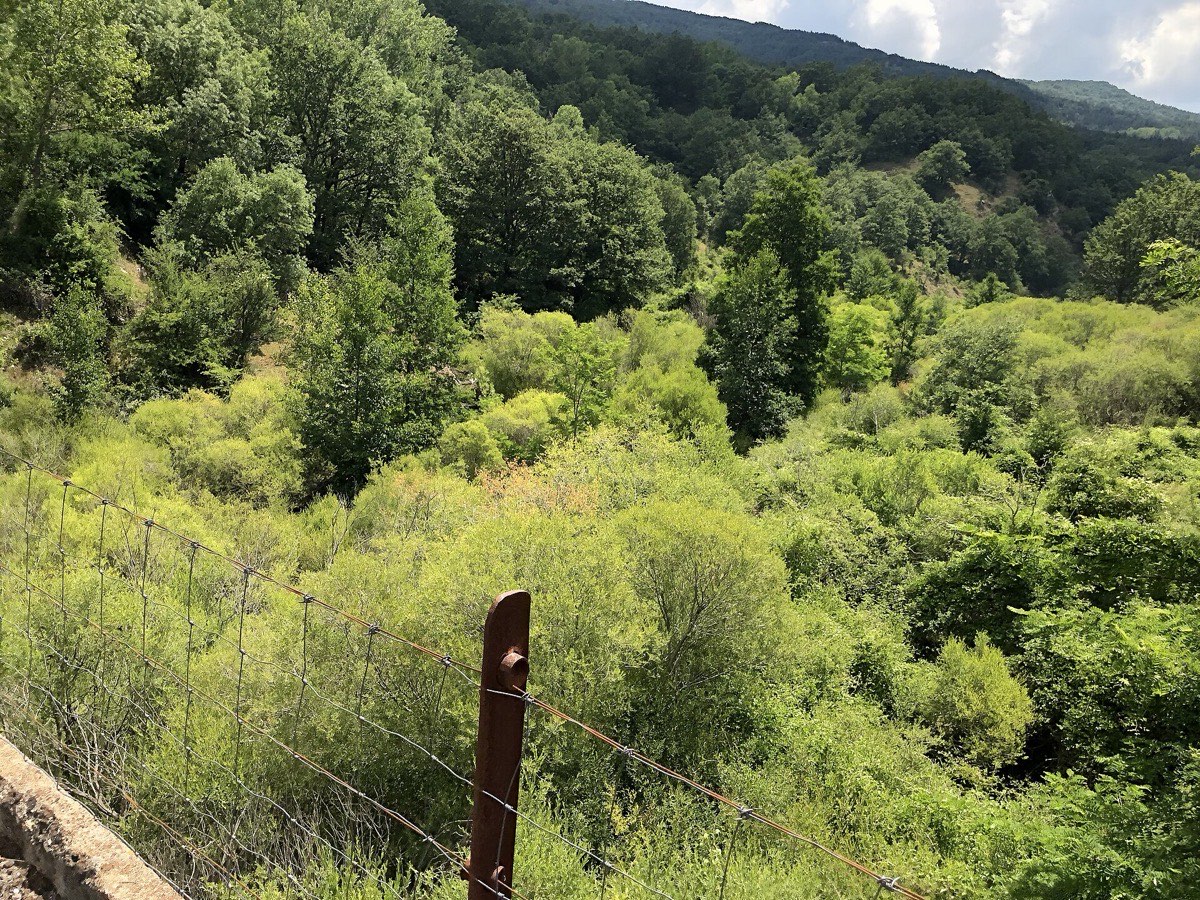
Sicily does not come into flower all at once. It flowers in stages, and the stage moves upwards as the season goes on. That is why the same week of flowering can be followed for three months, if you gain height as time passes. This guide puts the heights, the months and the names of the species in place of generalities.
The staging by height, with the real figures
The best documented case is Etna, because it has been remapped. A study by the University of Catania published in PeerJ in 2020 divided the volcano into 33 bands of a hundred metres and counted the species in each: 1,055 taxa from 121 families, 92 of them endemic. Richness rises up to a thousand metres; set against the surface available, the curve peaks between 1,200 and 1,500 m. Above 1,500 m what mostly remains are the 29 species endemic to the volcano alone.
Higher up the list gets shorter. The Parco dell’Etna places the cushion formations of the spino santo, the Sicilian milk-vetch (*Astragalus siculus*), between 2,450 and 3,000 m, and above 3,000 m it speaks of volcanic desert. Beech and the Etna birch (*Betula aetnensis*) grow around and above 2,000 m, and it is there that beech reaches its southern limit.
In the Nebrodi the bands are wider. The park’s page puts the Mediterranean belt up to 600-800 m, the supra-Mediterranean belt of deciduous oaks between 800 and 1,200-1,400 m, and the beech woods above 1,200-1,400 m. The beech forest covers more than 10,000 hectares, with Monte Soro at 1,847 m.
In the Madonie the reference points are Piano Battaglia, 1,572 m, and Pizzo Carbonara, 1,979 m. The park takes up 2 per cent of the island’s surface and its official page states that more than half of all Sicilian plant species are found in it. Translated into a calendar: when it is over lower down, higher up it has not started yet.
How many wild orchids there are, and which ones you see
The count for the island exists and has been published. The check-list of Sicilian orchids by Bartolo and Pulvirenti, published in Bocconea in 1997, lists 90 species and subspecies plus 59 hybrids, in 18 genera; the richest genus is *Ophrys* with 34 taxa, then *Orchis* with 21. The 2010 check-list of the Sicilian vascular flora gives the Orchidaceae 12 genera and 82 taxa. The difference lies in the taxonomic criteria.
For the Madonie the count is finer. A study of the Madonie Orchidaceae, hosted in the theses section of the Italian parks portal, records 16 genera and 51 entities, 47 of them at species rank: *Ophrys* 15, *Orchis* 10, *Serapias* 4, *Cephalanthera* and *Dactylorhiza* 3, *Epipactis* 2. The group flowers from February to July, from sea level to above 1,300 m. Eight entities are endemic, four of them given as Sicilian only: *Orchis commutata*, *Ophrys mirabilis*, *Ophrys pallida*, *Ophrys lunulata*.
On two of these the taxonomy has moved. The Portale della Flora d’Italia, the Italian flora portal, no longer marks *Ophrys pallida* as endemic, gives it as present in North Africa too and classes it as vulnerable, and puts *Orchis commutata* in synonymy with *Neotinea tridentata*. The endemism that holds is *Ophrys lunulata*. It should also be said that the figure of 65 which circulates for the Madonie is, in that same thesis, the figure for the whole of Sicily: it was copied without the sentence around it.
The ones a walker actually meets between late winter and May are few and recognisable. The giant orchid (*Himantoglossum robertianum*) opens the season, from January to April, along hedgerows and dry grassland up to a thousand metres: it is the largest and you notice it without looking for it. The mirror orchid (*Ophrys speculum*) and *Ophrys lunulata* fall in March and April, in limestone garrigue. The naked man orchid (*Orchis italica*) runs from March to May in meadows and abandoned fields. April and May bring the pink butterfly orchid (*Anacamptis papilionacea*), the tongue orchid (*Serapias lingua*) in damp grassland, and the pyramidal orchid (*Anacamptis pyramidalis*).
*Ophrys lunulata* has the strictest protection of all. It flowers between late March and early May, with its peak in the first half of April, from sea level to about 800 m. It is in annex II of the Habitats Directive 92/43/EEC, and it is the only Sicilian orchid named in annex A of European Regulation 338/97, the level reserved for species threatened with extinction.
On the coast the count is lower but easier to see. The Riserva dello Zingaro, the Zingaro nature reserve, states 25 orchid species and some forty endemic plants on its own ground, flowering in spring. There the background of the landscape is garrigue of dwarf fan palm (*Chamaerops humilis*), the only palm that grows wild in Sicily, which in the reserve reaches two or three metres.
Thirty trees: the Madonie fir
The most quotable botanical fact on the island is a tree that has almost gone. The Madonie fir (*Abies nebrodensis*) was given up as extinct from the start of the twentieth century and found again in 1957 in the Vallone Madonna degli Angeli, at Polizzi Generosa. The surviving population lies between the valley, Monte Scalone, Monte dei Pini and Monte Cavallo, inside zone A of the park. The dialect name recorded by the park is arvulu cruci cruci.
How many there are depends on who is counting and when. ISPRA in January 2024, the LIFE4FIR project and a 2025 study in the journal Plants say 30 adult trees over about 84 hectares; the page on the valley on the parks portal gives 29; in 1958, 25 were recorded. The band of altitude varies too: 1,400-1,600 m for the Parco delle Madonie, 1,400-1,650 m for the 2025 study, 1,350-1,700 m for the IUCN assessment.
The IUCN assessment puts it as critically endangered, category CR, applying the criterion for populations under 50 mature individuals; of the thirty adults, 24 are reproductive. It is a priority species under the Habitats Directive 92/43/EEC. The threats listed are trampling of the young trees by introduced wild boar and fallow deer, hybridisation with non-native firs, and fire.
The European LIFE4FIR project worked on it from 2019 to 2024: fencing, video surveillance, a clonal field representing all thirty trees, and about 4,000 seedlings planted out in ten plots. Natural regeneration under monitoring went from 274 seedlings in 2014 to 522 in December 2024.
A path goes through it. The Parco delle Madonie publishes the Madonie fir nature trail, in zone A: it starts at kilometre 8 of the SP 119 road from Polizzi Generosa, at Quacella, where a forestry service road is closed by a gate; 8.3 km there and back, 400 m of ascent, three hours, difficulty given as moderate. The leaflet notes that on the wooded stretch at the start, in spring, you meet a good many wild orchids, some of them endemic.
The Etna broom makes the soil somebody else will use
The Etna broom (*Genista aetnensis*) is a legume endemic to the three large islands of the western Mediterranean, Sicily, Sardinia and Corsica, with the type subspecies found only in Sicily. It is considered a relict of the Tertiary flora, evidence of links between land masses now separated. In Sicily it grows on Etna, where it is the species that first takes hold on bare lava, and the Sardinian forestry agency describes it as a pioneer species, a coloniser of bare, dry slopes.
The reason it manages this can be measured, because on Vesuvius the same plant was introduced in 1906 for a reforestation scheme and there it could be followed on a volcanic substrate from zero. A study in PLOS ONE in 2015 reports that total soil nitrogen goes from 0.34 grams per kilo under the seedlings to 4.44 under the adults in about forty years. Under adult canopies living biomass is 5.5 times greater and species richness 2.2 times higher. It is a legume: it fixes atmospheric nitrogen, and that nitrogen stays for the plants that come later.
On the months the sources disagree. The Sardinian forestry agency gives flowering from June to August and a usual band between 500 and 800 m; descriptions referring to Etna more often place it between late May and July. Anyone after the yellow on the lava flows should work on June and check the year.
The other endemic plants you really do meet
In the Nebrodi there is a plant that exists nowhere else: *Petagnaea gussonei*, a relict palaeoendemic of the Sicilian Tertiary flora, confined to an area less than twenty kilometres across. A 2024 study in Scientific Reports documents 26 sites for it between 300 and 1,400 m, in cool, shady places along streams. It flowers from early February to May, so it opens the season. It is endangered, category EN, on the IUCN red list, and it is in annexes II and IV of the Habitats Directive.
At the Zingaro, besides the orchids, the reserve’s page names Todaro’s sea lavender (*Limonium flagellare*), the cliff pink (*Dianthus rupicola*), the Sicilian knapweed (*Centaurea ucriae*), a wild cabbage (*Brassica drepanensis*) and the Sicilian iris (*Iris pseudopumila*). On Etna the most visible of the species found only there are the Sicilian milk-vetch, the Etna birch, *Anthemis aetnensis*, *Rumex aetnensis* and *Senecio aethnensis*. For the Madonie the regional protected areas portal names the Nebrodi garlic, the Nebrodi milk-vetch and the Madonie hare’s-ear, without the binomials.
To set the scale: the ISPRA indicator on plant species richness, built on the check-list of the Italian vascular flora updated to 2024, gives Sicily 415 endemic species, 292 of them found only in the region. It means that on a Sicilian path the chance of walking past a plant that grows nowhere else is high.
What you may pick in protected areas
Nothing. Article 17 of Sicilian regional law no. 98 of 6 May 1981, in the text as coordinated with regional law 14/1988, bans in the regional parks and reserves any activity that harms the protection of the landscape, of natural habitats and of vegetation, and under letter a it lists among the prohibitions the picking and damaging of plant species. It makes no exception for a small bunch.
The same law, in article 8, defines the zones: A is a strict reserve, where the natural environment is conserved whole; B is a general reserve, where new building and changes of land use are banned. The fir trail is in zone A. The regulations of individual authorities can add further requirements, so the check has to be made with the managing authority.
For orchids there is a second level, which applies outside protected areas too. The whole family is listed in appendix II of CITES, and in European Regulation 338/97 it falls under annex B, except for the species listed in annex A, among them *Ophrys lunulata*. Taking a bulb home for the garden is not a clever move.
The other side of the good season
The same vegetation that is in flower in March is dry by June. In Sicily the regional fire season has been brought forward to 15 May and extended to 31 October by departmental decree, and the dates for each year have to be checked because they change. From then on come the temporary closures of the reserves and the bans on lighting fires. The flowering window and the window in which walking costs little effort are the same thing, and they end together.
Real cases
Case
Thirty trees and a European project worth 1.7 million
The Madonie fir was given up as extinct for half a century and found again in 1957 in the Vallone Madonna degli Angeli, at Polizzi Generosa. In 1958, 25 trees were recorded and catalogued. Today the natural population is thirty adult trees over about 84 hectares, in zone A of the park.
- The IUCN classes it as critically endangered (CR), applying the criterion for populations under 50 mature individuals; 24 of the 30 adults are sexually reproductive.
- The LIFE4FIR project (LIFE18 NAT/IT/000164) ran from August 2019 to December 2024, with the CNR as coordinator and 1,745,894 euro of eligible budget, of which 1,309,419 was the EU contribution.
- The works: 3,750 m of fencing over 14,000 square metres, video surveillance, a clonal field with 333 grafts from all 30 trees, about 5,000 plants raised, about 4,000 of them planted out in ten plots.
- Natural regeneration under monitoring went from 274 seedlings in 2014 to 522 in December 2024.
- The sources disagree on the count: 30 for ISPRA, LIFE4FIR and a 2025 study, 29 on the page about the valley on the parks portal.
What this tells you. When a population is thirty individuals, the difference between 29 and 30 is not pedantry: it is the measure by which you judge whether a species is surviving. It is worth reporting the number with its source and its year, instead of picking one.
The MadonieCase
Etna remapped, and what it says about staging
Between 2010 and 2020 a group at the University of Catania reconstructed the vascular flora of Etna by putting together the literature, herbaria, seed collections and hundreds of original surveys, and divided the volcano into 33 altitude bands of a hundred metres to count the species in each.
- The result: 1,055 taxa from 121 families, 92 of them endemic, that is about 8.7 per cent.
- The species found only on Etna number 29; to these are added 27 Sicilian endemics and 36 Italian ones.
- Total richness rises up to 1,000 m; set against the surface available, the curve peaks between 1,200 and 1,500 m.
- The species found only on Etna are mostly above 1,500 m; chamaephytes such as the Sicilian milk-vetch reach extreme heights, and above 3,000 m the volcanic desert begins.
- The study was published in PeerJ on 18 November 2020.
What this tells you. The staging of flowering by height is not a walker’s impression: it follows from how the species are distributed along the altitude gradient, and it has been counted band by band on at least one Sicilian massif.
EtnaFrequently asked questions
Do you need a permit to walk the Madonie fir trail?
The trail is published by the Parco delle Madonie as a nature trail and it crosses zone A, that is the strict reserve. The trees are individually fenced and watched by cameras installed during the LIFE4FIR project, and the park runs guided visits to the Vallone Madonna degli Angeli. Whether free access will be allowed at the time of your own visit is not something that can be taken as settled: it has to be asked of the Ente Parco delle Madonie, at its Petralia Sottana office.
How demanding is that trail, and can it be done with children?
The park gives it as 8.3 km there and back, 400 m of ascent, three hours’ walking, moderate difficulty, starting at kilometre 8 of the SP 119 road from Polizzi Generosa. Those are figures for half a day of real walking, not for a stroll: with children it depends on how much they usually walk, not on their age. The equipment indicated is walking boots and clothing suited to the season.
Is the fir trail waymarked? How do you recognise the start?
According to the park’s description you start by going past the forestry service gate at Quacella, walk a stretch under a mixed wood of black pine and cedars, and the real start of the path is marked by a sign placed on the right on the elbow of a hairpin bend. Further on there is a stretch protected by a wooden rail, then you go down and cross the Vallone Madonna degli Angeli. The first fir is recognisable by the metal fence around it.
Are there any Abies nebrodensis outside the Vallone Madonna degli Angeli?
Yes, but not wild ones. ISPRA notes that ex situ conservation includes a seed bank, cultivation in nurseries and specimens kept in botanical gardens in southern Italy, and the LIFE4FIR project created a clonal field with 333 grafts representing all thirty adult trees, as well as about 4,000 seedlings planted out in ten plots inside the park. The natural population, the one of thirty trees, is still only there.
Is the best month for orchids the same at every height?
No, and the difference is about a month. For the Madonie the guidance is April for the low-lying areas and May for the mountain ones, within an overall flowering of the group that runs from February to July. Above a thousand metres, and in the beech woods above 1,300 m, different genera appear, *Epipactis*, *Cephalanthera* and *Limodorum*, which fall in May and June. Gaining height does not show you the same orchids later: it shows you different ones.
Do you need a field guide to identify them on the spot?
The Parco delle Madonie has published a field photo guide to the orchids of its own territory, "Parco delle Madonie: le orchidee, conoscerle per proteggerle" by A. Falci and S. A. Giardina, Paruzzo, 2004, 96 pages with 89 colour photographs, in the Natura di Sicilia series. How many species the book covers cannot be verified online, because it has not been digitised. For availability it is best to ask the park authority.
The flowering windows are given as ranges and not as dates, because they vary with the winter rains and with altitude. The heights, the species counts and the data on Abies nebrodensis come from primary sources cited one by one: the Ente Parco delle Madonie, the Parco dell’Etna and the Parco dei Nebrodi (their parks.it pages), ISPRA, the IUCN, the LIFE4FIR project in the European Commission’s LIFE database, and peer-reviewed botanical publications. Where the sources give different numbers, for example on how many surviving firs there are and on the band of altitude they grow in, the text reports the disagreement instead of picking one of them.
Written and checked by the Redazione Sentieri Siciliani. Published on 1 September 2026, updated on 2 September 2026. How we work.
Sources
- Parco delle Madonie, the Madonie park authority — the path network, the rules and the state of the routes in the Madonie
- Parco dell’Etna, the Etna park authority — the park rules, the authorised paths and access to the volcano
- Parco dei Nebrodi, the Nebrodi park authority — access, forest tracks and the rules of the Nebrodi park
- ISPRA, the national institute for environmental protection and research — protected areas, biodiversity and environmental data
- Parks.it — a directory of Italian protected areas
- Regione Siciliana, the Sicilian regional government — regional orders, nature reserves and state forest land
- Riserva Naturale Orientata dello Zingaro, the Zingaro managed nature reserve — entrances, opening hours, prices and the routes inside the reserve
- European Environment Agency — European data on climate and the environment
- Ministero dell’Ambiente e della Sicurezza Energetica, the Italian ministry for the environment and energy security — legislation on protected areas and environmental protection
Where to go from here
In more depth
Next step
From the principles to the places
Rules are worth little until they apply to a precise spot. From here you reach the pages with access points, parking and tracks.