Guide
Getting ready to walk in Sicily
The ascent here is modest. What catches out even fit walkers is the heat, and heat adaptation takes a measurable amount of time: days, not hours.
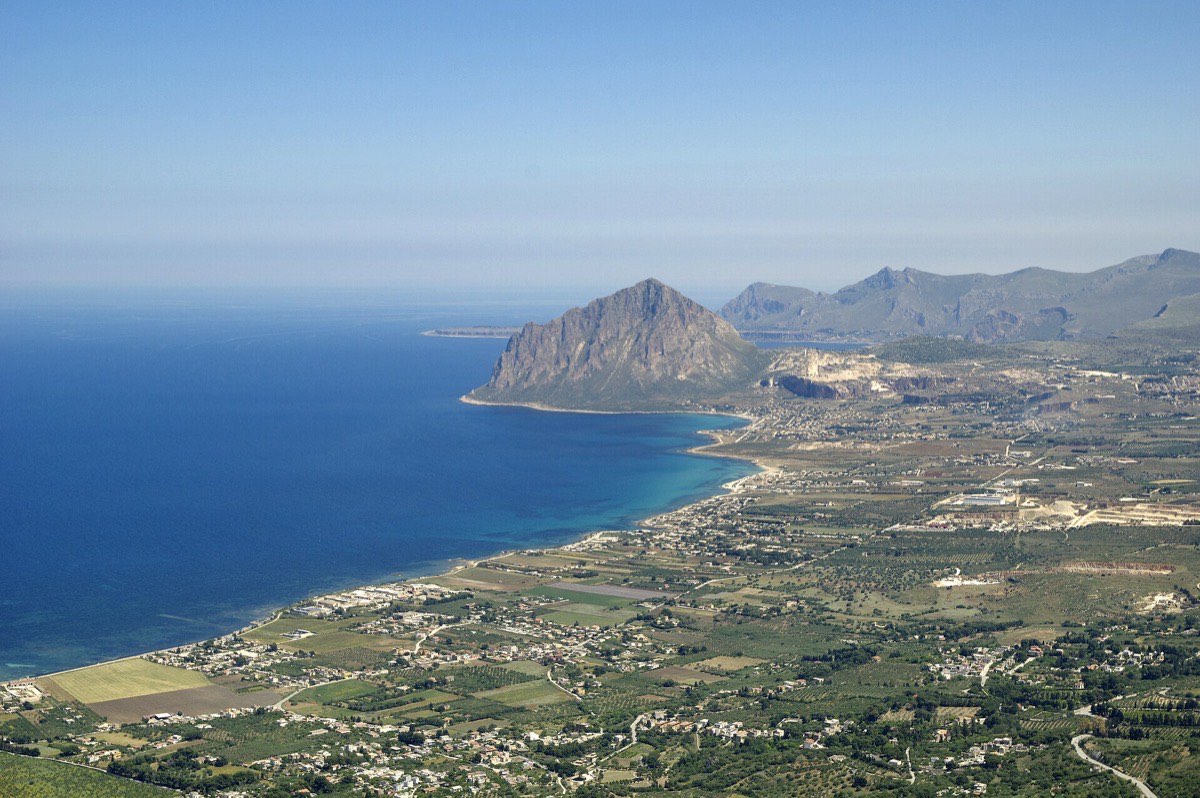
People training for the mountains think about two things: legs and lungs. In Sicily a third is needed, and unlike the first two it runs on a clock you can count. It is not a question of willpower: it is an adaptation that takes days of exposure and that is lost if you stop.
Below are the figures sports medicine gives for that adaptation, for fluid needs and for the warning signs. Where the sources disagree we say so. None of what follows is medical advice: anyone with a medical condition, anyone on medication and anyone who has not walked for years should talk to their own doctor first, not afterwards.
How many days heat acclimatisation takes
The consensus recommendations on training in hot environments (Racinais and others, 2015) point to one to two weeks of repeated exposure while exercising. Most of the adaptations, meaning a lower heart rate, lower skin and rectal temperature, greater sweating and greater capacity for work, develop in the first week. It takes 6 to 10 days for near-complete cardiovascular and sweating adaptations, and about two weeks to optimise aerobic performance. The 2015 NATA position statement gives the same order of magnitude, 7 to 14 days; the ACSM in 2021 writes one to two weeks.
The same consensus adds a condition almost nobody reports: the sessions have to last at least 60 minutes a day and genuinely raise core and skin temperature enough to drive sweating. Twenty minutes in the shade produces no acclimatisation. The consequence is blunt: a week in Sicily coincides with the period of adaptation, not with the period in which you are already adapted. Anyone who arrives on the Saturday and walks the longest route on the Sunday does it unacclimatised, however fit they are.
What changes in the body, and by how much
The adaptations listed by the 2021 ACSM consensus and by the NATA position statement are four: expanded plasma volume and greater cardiovascular stability, increased sweating and skin blood flow, reduced sodium in sweat and urine, and lower heart rate and lower core and skin temperature for the same workload. They are measured, not felt.
A concrete order of magnitude comes from a study published in Frontiers in Physiology in 2019: six consecutive days of hot water immersion after training lowered resting rectal temperature by 0.36 °C, core temperature at the sweating threshold by 0.26 °C and end-of-exercise temperature by 0.36 °C. These are tenths of a degree. You do not notice them while walking, but they are the margin that is missing when the day turns bad.
How long it lasts, if you stop
On this point the literature does not give a single answer. The 2015 consensus says that most of the benefits, particularly on heart rate and core temperature, are kept for 2 to 4 weeks after acclimatisation ends. The NATA position statement says that if acclimatisation is not maintained the benefits decay within 3 weeks.
The meta-analysis by Daanen, Racinais and Périard, in Sports Medicine in 2018, quantifies the decay differently: end-of-exercise heart rate adaptations fall by 2.3% for every day without heat exposure and core temperature adaptations by 2.6% a day; five or more days of acclimatisation are enough to produce stable adaptations in those two measures; re-acclimatisation is 8 to 12 times faster than the decay, so much so that four days of renewed exposure make up for about a month of loss. The two readings do not entirely contradict each other, because one measures how much remains and the other how much is lost per day. Someone coming back to Sicily after three weeks does not start from zero and does not start from where they left off.
How much water you lose in an hour
The 2015 consensus reports that sweat rates between 1.0 and 1.5 litres an hour are common in intense exercise in the heat, and that some people go beyond 2.5 litres an hour. Sweat is not water: it contains sodium at between 20 and 70 mEq/L, and for efforts beyond an hour the consensus recommends solutions with 0.5 to 0.7 g/L of sodium. A deficit above about 2% of body mass worsens aerobic performance in the heat.
Put in terms of objects: a litre-and-a-half bottle covers about an hour of heavy sweating, not a day. The reference figure of at least a litre and a half a day that appears in heatwave guidance is for everyday life, not a hiking ration.
Why drinking only water, in large amounts, is a risk of its own
The 2015 international consensus defines exercise-associated hyponatraemia as a blood sodium concentration below 135 mmol/L appearing during physical activity or within 24 hours of it. The main mechanism is relatively excessive intake of hypotonic fluids. Symptoms range from nausea, vomiting, headache and confusion through to seizures, with pulmonary and cerebral oedema in severe cases.
The practical problem is that those symptoms look like the symptoms of dehydration. Anyone who reads them wrongly drinks more and makes their condition worse instead of correcting it. The 2015 panel concludes that the safest individual strategy before, during and immediately after exertion is to drink palatable fluids when thirsty.
Here too the sources do not say the same thing: the consensus on exercise in hot environments warns that drinking to thirst often leaves deficits above 2 to 3% of body mass when sweat rates are high. The two recommendations protect against two opposite risks and neither is an individual prescription. Anyone taking diuretics or other medication, anyone with kidney or heart conditions and anyone who has already been unwell under exertion should talk to their own doctor.
The signs of exertional heat stroke, and the point at which you call
There is an error in circulation here that is worth taking apart. In exertional heat stroke the person usually goes on sweating: among the common signs of exertional heat illnesses the ACSM lists "wet (not dry) skin", hot or cold to the touch. Hot dry skin is typical of classic heat stroke, the kind that affects frail people at rest during a heatwave. Waiting for someone to stop sweating means waiting too long.
The guiding sign is altered mental state. The NATA position statement gives two main diagnostic criteria, central nervous system dysfunction and a core temperature above 40.5 °C, and notes that the first sign is often the neurological one: collapse, aggression, irritability, confusion, seizures, altered consciousness. The 2021 ACSM consensus lists persistent changes in mental state, personality changes, inappropriate or aggressive behaviour, delirium and a rectal temperature above 40 °C. The two temperature thresholds do not match, 40 against 40.5 °C, and NATA adds that with neurological dysfunction and a rectal temperature of even 40 °C it is prudent to treat it as heat stroke.
None of these temperatures is measured on a footpath. On the footpath you watch behaviour. If a companion becomes confused, aggressive or incoherent during exertion in the heat, you call 112 and follow what the operator says, meanwhile getting the person into the shade. NATA is explicit: the risk grows the longer the temperature stays above the threshold and falls significantly if it is brought down promptly. You do not wait until the end of the route.
Why it is the descent that leaves a mark
Going down costs little and breaks a lot. Minetti and others, in the Journal of Applied Physiology in 2002, measured the energy cost of walking on gradients between -45% and +45%. The absolute minimum is not on the flat: it is downhill at around -10%, at 0.81 joules per kilogram per metre against 1.64 on the flat. From there it rises again, and at -45% it is back to 3.46 J/kg/m, more than twice the flat figure and over four times the minimum.
The energy cost is not the problem, though: the type of contraction is. Proske and Morgan, in a review in the Journal of Physiology in 2001, use downhill walking as the typical example of eccentric exercise: at every step the quadriceps contracts while being lengthened, to brake the bending of the knee against gravity. The primary damage is disruption of the sarcomeres in the fibres. The soreness appears 6 to 8 hours later, peaks at around 48 hours and lasts a few days. This, not breathing, is what ruins the second and third day of a walking trip.
The useful part is that the adaptation is quick. A second eccentric session a week after the first produces far less damage, and among the proposed mechanisms is the addition of sarcomeres in series within the fibres. Two or three long descents in the weeks before you leave change the second day of the walk.
What to train, and in what order
First: the descent. It combines an adaptation documented within a week and a direct bearing on what you are about to do. Look for height difference downwards as well, not only uphill.
Second: walks of at least an hour that really make you sweat, in the hot part of the day and not at dawn. It is not a test of character: it is the minimum dose the acclimatisation protocols call for. Anyone who has no heat where they live has documented alternatives, with a sauna or hot water immediately after training.
Third: ankles and footing on unstable ground. In 2025 the Corpo Nazionale Soccorso Alpino e Speleologico, the national mountain and cave rescue service, carried out 13,037 missions, the highest figure ever recorded. Hiking generates 43.6% of callouts, and the most frequent cause is a fall or slip, at 45.0%, ahead of becoming unwell (14.1%) and being unable to carry on with the activity (8.1%). In 2024, the last year for which we have the monthly breakdown, July, August and September accounted for 41% of callouts. The dominant risk, in numbers, is not collapse from exhaustion: it is putting a foot down badly when tired.
What ascent you are preparing for, in Sicily
Of the 72 tracks published here, outside the summit crater area of Etna only nine go beyond a thousand metres of ascent or of descent, and nearly all of them are long traverses or stages of a long-distance route. On the CAI scale most of them fall between T, routes on roads, mule tracks and comfortable, well waymarked paths, and E, routes on paths or clear traces across varied ground. That does not mean easy: it means the limiting factor is not altitude.
The exception is Etna, and it is not a small one. Its summit moves: according to INGV measurements the highest point was the Cratere di Nord-Est, the north-east crater, at 3,347 m until 2021, then the Cratere di Sud-Est, the south-east crater, at 3,357 m in August 2021, and in July 2024 the eastern rim of the Voragine reached about 3,369 m, and in September 2024, in a drone survey, 3,403 m, the highest figure ever measured on the volcano. A summit route does not have the same ascent as the year before, and in any case it is subject to access rules of its own.
How you work out how long you will be out
Times here are worked out with a single rule: 4 km/h on the flat, plus an hour for every 400 metres of ascent. On a 12 km loop with 600 m of ascent that gives 3 hours of walking plus an hour and a half for the climb, meaning four and a half hours of net movement. With two stops and lunch it becomes six real hours.
The rule is not there to tell you when you will arrive. It is there to tell you which hours you are exposed. If those six hours start at 10 in the morning, four of them fall inside the hours the national heatwave guidance says to cut back on risky days, from 11 to 18. Moving the start two hours earlier does not shorten the route: it changes how many hours you spend under a high sun, and that is the variable you decide on the evening before.
Real cases
Case
The mountain rescue figures, 2025
The CNSAS publishes aggregate figures for its own callouts every year. They are useful for understanding what actually happens to people who walk, instead of what people fear will happen.
- 13,037 rescue missions in 2025, the highest figure ever recorded, up 8% on the 12,063 of 2024.
- Hiking is the activity that generates the most callouts: 43.6% of cases.
- First cause: fall or slip, 45.0%. Second: becoming unwell, 14.1%. Third: being unable to carry on with the activity, 8.1%.
- The distribution is seasonal, and the most recent monthly breakdown published is the one for 2024: August 18%, July 14.4%, September 8.6%, meaning 41% of the year in three months.
- In 2025 the CNSAS recorded 528 deaths, against 466 in 2024 and 491 in 2023.
What this tells you. The preparation that cuts the risk most is not the kind that raises your tolerance for effort. It is the kind that keeps the foot steady and the time estimate honest, because most callouts begin with a fall or with a route longer than people thought.
What ground you walk onCase
Three Sicilian cities in the heat warning system
The health ministry, with support from the epidemiology department of the Lazio regional health service, runs a national forecasting and warning system for the effects of heatwaves. It is not designed for walkers, but it is the only public daily forecast of thermal risk that exists.
- The system covers 27 Italian cities. Palermo, Catania and Messina are among them.
- The bulletins have four levels, from 0 to 3, and cover 24, 48 and 72 hours.
- In 2026 they come out Monday to Friday, from 11 in the morning, from 25 May to 20 September.
- At levels 2 and 3 the guidance is to cut outdoor exposure between 11 and 18 and to avoid intense outdoor physical activity in the hottest hours.
What this tells you. The window the bulletins cover, late May to mid September, coincides almost exactly with the period in which walking in Sicily calls for a different kind of preparation. Checking the level the day before costs thirty seconds and moves the start time, which is the most effective variable available.
When to go to SicilyCase
The summit of Etna that keeps changing height
The INGV re-measures the highest point of the volcano periodically, with satellite imagery and drone surveys. Eruptions move it, in height and from one crater to another.
- Until 2021 the highest point was the Cratere di Nord-Est, with a calculated height of 3,347 m.
- On 10 August 2021 the Cratere di Sud-Est came out at 3,357 m, with an uncertainty of 3 metres, from processing of Pléiades satellite images acquired on 13 and 25 July 2021.
- In December 2023, after a paroxysm on 1 December, the same crater was measured at 3,354 m.
- In July 2024, after the paroxysms of 4 and 7 July, the eastern rim of the Voragine reached about 3,369 m, in surveys by the INGV cartography and drone laboratory.
What this tells you. The ascent of a summit route on Etna is not a constant and is not to be copied from a guidebook three years old. For the rest of the island the opposite applies: the heights are stable and modest, and the mistake is not underestimating the ascent but underestimating the hours of exposure.
EtnaFrequently asked questions
Do you need a medical certificate to go hiking?
For recreational and amateur activity the certification requirement was abolished by article 42-bis, paragraph 1, of decree-law 69 of 2013; the requirement remains for non-competitive sporting activity by registered members taking part in regulated activities, under the guidelines of the ministerial decree of 8 August 2014. The absence of a legal requirement is not clinical clearance. Anyone with heart or respiratory conditions, anyone on medication and anyone starting again after years of inactivity should speak to their own doctor, all the more so if the outing is in summer.
Can you acclimatise to heat before you leave, without going somewhere hot?
The literature says you can, with passive protocols after training. A study published in Frontiers in Physiology in 2019 obtained adaptations with six consecutive days of hot water immersion immediately after exercise, with reductions of 0.36 °C in resting rectal temperature and of 0.26 °C in temperature at the sweating threshold, held for at least two weeks. A study in a military setting obtained comparable results with five days of sauna or hot water. These are protocols studied on healthy adults in a sporting context, not prescriptions: anyone with cardiovascular problems should not improvise sauna sessions on the strength of a guide.
How many days before the outing should you start?
If the aim is to arrive adapted, one to two weeks of daily exposures of at least an hour. If only a few days are left, five days are enough to produce stable adaptations in heart rate and core temperature according to the 2018 meta-analysis, and they are better than none. If not even that is left, the only lever remaining is the clock: start earlier, go shorter, and keep the longest route for the last day of the trip rather than the first.
Does this apply to children and to people over 65 as well?
The national heatwave prevention plans identify people over 64, children, people with chronic conditions and pregnant women as the groups at greatest risk. The physiological literature cited in this guide, on the other hand, is largely derived from healthy adults and from athletes, and does not transfer directly to those groups. For a summer outing with children or with older people, the choice of the hour and of the length has to be made with wider margins, and the view of your own doctor counts for more than any numerical threshold.
Do people walk in Sicily in winter too? Does it call for different preparation?
Yes, and the winter window turns the problem round: the heat constraint disappears and the hours of daylight, the wind and, on the Madonie, snow appear instead. The peak of rescue callouts nationally is still in summer all the same, with 41% of the year concentrated between July and September. For winter preparation, the hours of daylight available and an honest estimate of timings count for more than acclimatisation.
Does the timing rule apply to the descent too?
No, and that is a stated limit. The rule we use, 4 km/h on the flat plus an hour for every 400 metres of ascent, assigns no time to the descent. On a loop with a long or steep descent the estimate comes out optimistic, both on timings and on effort: the energy cost of walking rises again below a -10% gradient and muscle damage from eccentric contraction builds up exactly there. On routes with a steep descent it is worth adding a margin and not planning the last hour for sunset.
The physiological thresholds cited here come from consensus documents and from peer-reviewed sports medicine literature: the NATA position statement on exertional heat illnesses (2015), the ACSM Expert Consensus Statement on exertional heat illness (2021), the consensus recommendations by Racinais and others on training in hot environments (2015), the meta-analysis by Daanen, Racinais and Périard on the decay of heat acclimatisation (2018), the 2015 consensus statement on exercise-associated hyponatraemia, Minetti and others on the energy cost of walking on gradients (2002) and Proske and Morgan on muscle damage from eccentric contraction (2001). Where the sources give different figures we say so instead of picking one. The guidance on the risky hours and on the bulletins comes from the national heat forecasting and warning system of the Italian health ministry. The heights on Etna are INGV measurements and change over time. This guide is not medical advice and does not replace the advice of your own doctor. The rescue figures are the CNSAS ones for 2025, the latest published; where a monthly breakdown appears, the year it refers to is stated.
Written and checked by the Redazione Sentieri Siciliani. Published on 1 September 2026, updated on 2 September 2026. How we work.
Sources
- Istituto Superiore di Sanità, EpiCentro, the epidemiology portal of the national institute of health — ticks, vector-borne diseases and heatwaves
- Ministero della Salute, the Italian health ministry — recommendations on heatwaves and first aid
- Dipartimento della Protezione Civile, the national civil protection department — the national alert system and its colour codes
- Corpo Nazionale Soccorso Alpino e Speleologico, the national mountain and cave rescue service — mountain rescue procedures and the statistics of call-outs
- Club Alpino Italiano, the Italian alpine club — the hiking grading scale, waymarking and the Sentiero Italia
- INGV, Osservatorio Etneo, the Etna observatory — the state of activity of Etna and Stromboli, bulletins and alert levels
- Parco dell’Etna, the Etna park authority — the park rules, the authorised paths and access to the volcano
Where to go from here
Next step
From the principles to the places
Rules are worth little until they apply to a precise spot. From here you reach the pages with access points, parking and tracks.