Guide
Huts and bivouac huts in Sicily: who runs them and where you can really sleep
In Sicily the word rifugio covers a hotel, a forestry room with a fireplace, or a house that has been shut for years. Massif by massif: who runs it, when it is open, how to book, whether there is water.
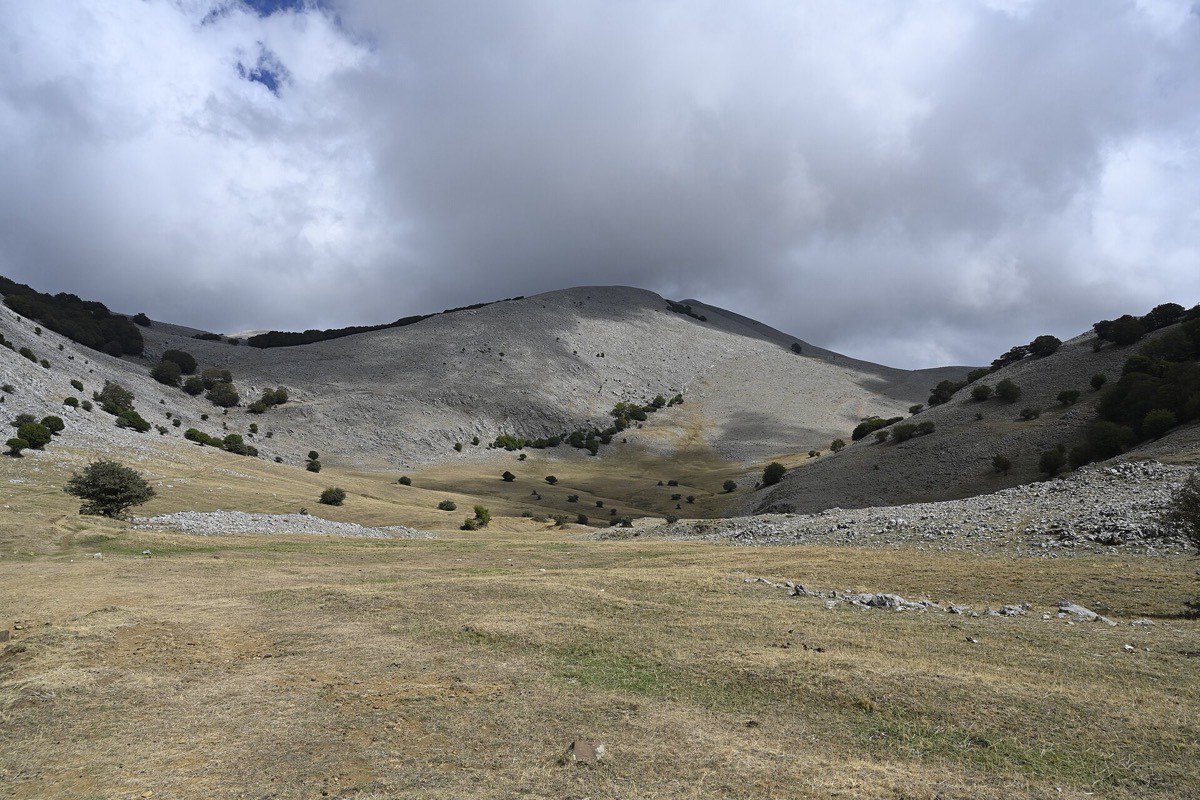
In Sicily the word rifugio covers things that have nothing in common. It can be a hotel with a restaurant at 1,900 m, a forestry room with a fireplace and a water tank, the premises of a club that opens only to its members, or a house restored with public money and shut for years. This guide separates them, massif by massif, and for each one says who runs it, whether it is open, how you book and whether there is water. The figures were read on 17 September 2026 on the pages of the operators and the authorities. Where the source is old we say so, with the date.
Staffed hut, forestry hut, bivouac hut: what is the difference?
A staffed hut has an operator, beds, a kitchen and a telephone. High up, the CAI’s staffed huts are three: the Sapienza and the Citelli on Etna, belonging to the Catania branch, and the Marini at Piano Battaglia, belonging to the Palermo branch. All three are graded category A, that is reachable by car. You book, you pay, and CAI members get a reduced rate.
The rifugio forestale, the forestry hut, which on Etna is almost always called a bivacco forestale, a forestry bivouac hut, is a building on the regional public estate, today in the hands of the Department for Rural and Territorial Development, the former Azienda Foreste Demaniali. Nobody looks after it. In January 2025 the CAI counted 43 of them usable only as temporary shelters, with a fireplace, some furniture inside and a tank for rainwater. The regional dataset divides these buildings into equipped areas, rifugi, bivacchi and pagliai, the old hay huts, and writes that access, above all to the rifugi, depends on the rules of use and on the authorisations of the provincial offices. That dataset, though, stops in April 2015.
Then there are the club huts, the cabins belonging to the clubs: the F. Tropea hut of CAI Petralia, the Club Alpino Siciliano huts in the Madonie. They are not public buildings and they are not always open. And there are the hotels and restaurants that are called rifugio by tradition, like the Ragabo or the Brunek on the north side of Etna. The name on the sign does not tell you which category a building belongs to. The operator does.
The overall picture was drawn by CAI Sicilia in a survey published on 28 April 2023. Parco delle Madonie: 22 buildings, 3 open to the public and another 10 potentially usable on request. Parco dei Nebrodi: 31 buildings, 8 open. Parco dell’Etna: 78 buildings, 32 open, almost all of them forestry bivouac huts. Parco dell’Alcantara: no hut and no bivouac hut at all. Pantelleria national park: a single building, closed. By January 2025 the count had risen to 130 public buildings in the four regional parks, and only three were being run on a stable basis to offer accommodation.
Rifugio Sapienza: a hotel, a bus and a starting point
The Rifugio Giovanni Sapienza stands at 1,910 m in the Nicolosi Nord tourist station, on the south side of Etna. It belongs to the CAI branch in Catania and is run by Volcanic s.r.l.s. as a hotel with a bar and restaurant. The branch page, updated 7 May 2026, gives it as open all year and gives the telephone number 095 915321 and the address info@rifugiosapienza.com. The park tells its origin: a small barracks left unfinished during the war, then handed to the CAI, which completed it and doubled it in the 1960s. It is a stage point of the Sentiero Italia on the Etna variant.
It is the only Etna hut served by a scheduled bus. The Azienda Siciliana Trasporti leaves Catania, piazza Giovanni XXIII, at 8:15 and leaves the Sapienza again at 16:30, every day except 25 December, 1 January, 1 May, 15 August and Easter Sunday. The journey takes about two hours and the return ticket costs 6.60 euros, on board as well. Buying the ticket in advance does not guarantee a seat.
The walking side of the Sapienza is another matter. From here you climb towards the Zona Sommitale, the regulated summit zone, and the rules are made by the orders of the comuni, not by the hut or the cable car: we have collected them in the guide on Etna permits. And from here, according to the park, runs the Pista Altomontana, which our own track starts a little further west, from Piano Vetore. Stage V23C of the Sentiero Italia links the Monte Scavo bivouac hut to the Sapienza along that track, but the CAI sheet declares it not passable because of a lava flow, without saying which one or since when.
Rifugio Citelli: closed for works, and the road was banned in August
The Rifugio Salvatore Citelli stands at 1,741 m on the edge of Monte Concazze, on the north-east side. The page of the CAI branch in Catania places it in the comune of Milo. It is a category A hut with accommodation, bar and restaurant, Punto Base no. 15 of the park and a stage point of the Sentiero Italia. But the same page, updated 28 April 2026, states: temporarily closed for internal works. To find out when it reopens the branch gives 328 458 9043 and segreteria@caicatania.it.
There is a second reason to ring ahead. On 8 August 2026 an eruptive vent opened between Monte Rittmann and Monte Simone, and on 13 August the mayor of Milo, with order no. 41, banned traffic on via Mareneve from Fornazzo to the Rifugio Citelli, with immediate effect and until further notice, and banned approaching the lava front within 200 m. On 19 August 2026, though, the same mayor withdrew that order and the road reopened: the withdrawal is in the albo online, the comune’s official register of acts, of Milo, where as of 13 November 2026 no later act appears that closes it again. The Parco dell’Etna orders page, on the other hand, still shows only the one of 13 August, and it is the source that misled us: with the volcano active the road closes and reopens within a few days, so you look at the comune’s register. When it reopens, the CAI rates published on Prenota Rifugi are 30 euros a night in the dormitory for non-members, 24 for members and 21 for members under 25; in a room of up to four beds, 34.50, 27.60 and 24.15 euros.
Piano Provenzana: where to sleep on the north side
Piano Provenzana, at about 1,800 m in the territory of Linguaglossa, is the tourist station of the north side and the point the authorised off-road vehicles leave from towards Piano delle Concazze. For a walker it is a junction of paths, not a place to sleep high up. CAI Sicilia wrote in 2023 that on the west and north sides of the park there is not one staffed hut with heated rooms, washing facilities and hot meals.
Around Provenzana there are four buildings that call themselves rifugio, and they are four different things. The Rifugio Monte Baracca, at 1,767 m, according to the park page was built by the Region around 1950, passed to the province, now the metropolitan city, and is today in the care of CAI Linguaglossa: a water tank, toilets, a fireplace, a kitchen and two small rooms with eight places. The Rifugio Timparossa, at 1,840 m, is a bivouac hut in the beech forest, in zone A of the park, on variant 724A of the Sentiero Italia; from the Pista Altomontana it is reached by a link of a little over a kilometre with about 150 m of ascent. Both pages are from 2020, and for neither of them did we find a more recent page from the operator.
Lower down, along the Mareneve, there are the Rifugio Ragabo, a family-run hotel with a restaurant, and the Rifugio Brunek, which the park places at 1,418 m. The Brunek belongs to the comune of Linguaglossa: the previous concession was ended in 2019 and, according to La Sicilia of 13 December 2025, the comune reassigned it through a thirty-year tender to three businessmen, who announced its reopening with rooms, a bar and food. That is a newspaper report: its state today has to be asked of the operator. Stage V23E of the Sentiero Italia, which finishes at Piano Provenzana, gives the Citelli and the Ragabo among its accommodation points.
Etna bivouac huts along the Pista Altomontana
The Pista Altomontana, trail 701, in our track runs from Piano Vetore to Piano della Pernicana: 34.2 km between 1,416 and 1,940 m, with 666 m of ascent and 1,004 m of descent in that direction. With the site’s formula that is about 11 hours of walking, that is two or three days on foot. CAI Sicilia wrote in 2023 that the high bivouac huts along the track were all open and in good condition. It is the closest thing to a staged traverse that Sicily has, with one limit that the CAI itself recalls: there is often no supply of drinking water.
The park pages, published between 2019 and 2020, describe the main ones like this, from south to north. The Galvarina is the best known: always open, day and night, with tank water and no toilets, an hour and a half from Piano Vetore; it can also be reached from Piano Fiera, above Adrano, on trail 707. The title of the page says 1,987 m, the text 1,878, the Sentiero Italia sheet 1,879. Poggio La Caccia, or Monte Palestra, is at 1,917 m: 10 places, a tank and a fireplace. Monte Scavo, at 1,740 m, has 10 places, a tank, a fireplace and basic furniture, and it is the stage end of the V23B of the Sentiero Italia; the CAI V23C sheet gives it as always open, with firewood and with an outside tank of rainwater that is not drinking water.
Monte Maletto, at about 1,700 m in a Corsican pine wood in zone A, is the largest: 16 places, a tank and a fireplace. Trail 714 leads there, a loop that leaves the track and rejoins it near Monte Scavo: in our track 5.1 km between 1,621 and 1,854 m, with 252 m of ascent, about two hours. Further north Monte Spagnolo, at 1,440 m in zone B, has 8 places with a tank and a fireplace, and Monte Santa Maria, at 1,630 m in zone A, is described as recently restored. The Saletti, at 1,350 m above Randazzo, is a room left always open inside a forestry building.
Not everything on the track is open. The V23C sheet gives the San Giovanni Gualberto hut as closed. The Caserma Pitarrone belongs to the comune of Castiglione di Sicilia, and for its use the park refers you to the comune. The small barracks at Piano dei Grilli, above Bronte, belongs to the comune and is kept going by an association. Among the CAI pickets of 12 January 2025 the Casermetta di Monte Spagnolo and Case Nave also appear as closed buildings: we do not know whether the casermetta is the same building as the room the park describes as an open bivouac hut. On the east side, stage V23E gives the Pietracannone hut as not usable.
None of these buildings, in the pages we read, can be booked. The park pages say open and give a maximum capacity: the place belongs to whoever gets there first, and a group may find it full. Several are in zone A or B of the park, where the rules forbid camping: a tent pitched outside is not an alternative. High up, the Nicolosi order asks people to refrain from bivouacking, but it concerns the Zona Sommitale, which in normal conditions lies above these huts. During an eruption the Zona Sommitale can come lower down, and the level in force has to be read on the notices of the regional civil protection service.
Madonie: one staffed hut only, at Piano Battaglia
The Rifugio Giuliano Marini belongs to the CAI branch in Palermo, was built in 1947 at Piano Battaglia, in the comune of Petralia Sottana, and is run by a private company: today Alte Madonie s.r.l. Its height changes according to who writes it down, 1,572 m for Prenota Rifugi and 1,590 for the V16 sheet of the Sentiero Italia. The operator’s site, updated 19 July 2026, gives 18 rooms and 68 beds, all with a bathroom, and a restaurant. CAI Sicilia gave it in 2023 as the only accommodation in the high Madonie not abandoned, as against those at Piano Zucchi, Piano Battaglia and Pomieri.
The Marini does not publish an opening calendar: Prenota Rifugi asks you to contact the operator on 335 777 2269 or 0921 649012. The CAI rates are the same as the Citelli’s, 30, 24 and 21 euros in the dormitory and 34.50, 27.60 and 24.15 in a room of up to four beds. Anyone booking online gets 30% of the deposit back if they cancel at least seven days ahead, less the cost of the payment. Dogs are allowed. The kitchen serves lunch from 13:00 to 14:30 and dinner from 20:00 to 21:30.
From the hut the Pizzo Carbonara circuit, trail 551, starts less than 500 m away: in our track 7.1 km between 1,630 and 1,962 m, with 369 m of ascent, about 2 hours 45. Trail 552 links Piano Battaglia to Piano Sempria instead in 8.1 km, with 747 m of ascent and 388 m of descent climbing from Piano Sempria, about four hours. On the high paths there is no water: the V16 sheet gives as water points the start, the Faguara area about three kilometres along, and the hospital at Petralia Sottana.
Madonie huts with nobody in charge
For the forestry buildings of the Madonie the most recent figure is the CAI one from 2023: three open and ten usable on request, according to the intentions the authority declared. We found no public list saying which. Stage V15 of the Sentiero Italia passes the Vallone Giumenta forestry hut before reaching Piano Battaglia, but the sheet does not say whether it is open.
The F. Tropea hut of CAI Petralia stands in the Pomieri woods, along stage V16, at around 1,400 m. The page describes it as unstaffed, with 10 camp beds, a kitchen, a sink, a fireplace, a washbasin and a toilet, and says the key is asked for on 349 222 7262. In June 2021 the park announced a volunteer maintenance day there. It is the club hut model: you use it by asking, not by finding it open.
The Club Alpino Siciliano has several huts in the Madonie. Among the places to sleep the park lists the Rifugio Francesco Crispi at Piano Sempria, 1,300 m, in the comune of Castelbuono, with the telephone number 0921 672279, and no dates or periods. In 2017 the club’s president wrote that the Piero Merlino youth hostel at Piano Battaglia and the Rifugio Luigi Orestano at Piano Zucchi were closed. In September 2021 the club explained that its huts open for club activities and that they do not work on a money-for-keys basis, that the Merlino was no longer usable after its concession expired, and that the Scalonazzo hut, on Pizzo Carbonara, had had its roof torn off by a storm. After 2021 we found no further updates from the club on these buildings: anyone wanting to use them has to ask the CAS directly.
Nebrodi: park huts and old forestry barracks
The Parco dei Nebrodi lists four buildings among its places to sleep. The Rifugio del Parco, at Casello Muto, 1,276 m, in the comune of San Fratello along the SS289, is described as a building of the park authority run all year. CAI Sicilia, though, in 2023 put Casello Muto among the park properties that were closed or vandalised. The two sources cannot be reconciled: before counting on it, ring the park on 0921 333015.
The Rifugio Trearie, 1,264 m, in the comune of Randazzo, is a small hut that the park says is always open, inside an equipped forestry area near the lake of the same name. La Casermetta at Petrosino, at 840 m in the comune of Maniace, is run by the comune, open all year and used above all by scout and other groups, at the start of the Sentiero delle Sorgenti. The Caserma Bracallà, 1,174 m, in the comune of Cesarò, is a former forestry barracks run by the silvo-pastoral enterprise of Troina and reserved for groups, associations and schools. The park pages give no beds, no water and no way of booking.
For anyone walking the ridge the problem is the stage end. The CAI wrote in 2023 that the Sentiero Italia in the Nebrodi still has no stage points. The V21 sheet finishes at Case Cartolari Liperni, and Case Cartolari Liperni was one of the five places the CAI chose for its pickets of 12 January 2025 against closed public buildings. The only accommodation point the sheet gives is Villa Miraglia, a private place.
And in the other massifs?
The pickets of January 2025 give the measure. Besides Etna and the Nebrodi, the CAI held them at Piano dei Cervi in the Madonie, at Case Giarranauti in the Iblei and at Monte Carcaci in the Sicani: public buildings the CAI is asking to have opened. In the Riserva dello Zingaro the bivouac huts are buildings, and according to our trail status page, checked on 16 September 2026, their use is suspended after the fire of July 2025. For the Bosco della Ficuzza and for the Peloritani we found no recent source from an operator giving a hut as open.
How to ask to sleep in a forestry hut
Here the honest answer is that there is no public procedure. CAI Sicilia wrote in 2023 that no publicised procedure exists for obtaining the use of the forestry huts, that the reference has disappeared from the forestry agency’s site and that every provincial office behaves differently. The regional dataset refers you to the authorisations of the provincial offices and to the local CAI representatives. We found no form.
In practice there are two cases. For the bivouac huts the Parco dell’Etna describes as always open, the pages ask for no authorisation: you arrive and you find a place, if there is one. For all the other forestry buildings, locked, you ask the provincial office of the Department for Rural and Territorial Development responsible for that estate, or else the local CAI branch, and you set off only with a written answer. A building with a padlock on it is not a bivouac hut.
What to take to a bivouac hut
A forestry bivouac hut is a roof, nothing more. You need a sleeping bag and a sleeping mat, because the pages speak of places without saying whether there are mattresses. You need all your water: the tanks collect rain and the Monte Scavo page says it is not drinking water. You need a headtorch and one extra warm layer, because at 1,900 m on Etna it freezes on average 117 days a year, as we explained in the guide on winter. Firewood found on the spot should not be taken for granted.
On fire the rules of the protected areas hold: forbidden in the open, and in the period of high fire risk the fire-prevention bans are added. We found no act specifically regulating the use of the fireplace inside the huts: in the dry months it is worth asking the local forestry station. You leave the hut clean, with the door shut, and you carry everything back down. Before setting off you tell somebody where you are sleeping, because high up the phone signal comes and goes.
In practice
Anyone wanting a bed, a shower and a dinner has three CAI addresses high up: the Sapienza, open, the Marini, to be rung for dates, and the Citelli, closed for works as of 17 September 2026. Anyone wanting to walk for several days on Etna has the bivouac huts of the Pista Altomontana, with no booking, no drinking water and park pages six years old. In the Madonie and the Nebrodi the unstaffed buildings have to be asked about one by one, and the answer has to be in hand before the pack goes on your back.
Real cases
Case
One hundred and thirty public buildings, three of them run
CAI Sicilia surveyed the public accommodation buildings in the island’s parks and published the results at two moments, in 2023 and in 2025.
- On 28 April 2023 the survey counted 78 buildings on Etna with 32 open, 31 in the Nebrodi with 8 open and 22 in the Madonie with 3 open.
- The same text reported that the forestry department declared 26 Etna buildings closed, to be handed over for management in ways still to be decided.
- By January 2025 the survey had reached 130 public buildings in the four regional parks: 43 forestry bivouac huts, 84 buildings never brought into use for accommodation and only three run on a stable basis.
- On 12 January 2025 CAI members held pickets outside the Casermetta di Monte Spagnolo and Case Nave on Etna, Case Cartolari Liperni in the Nebrodi, Case Giarranauti in the Iblei, Piano dei Cervi in the Madonie and Monte Carcaci in the Sicani.
What this tells you. A building marked on the map as a hut, in Sicily, is more often shut than open. The question to ask is not where the nearest hut is, but who opens it and whether they are doing so today.
Parks and reserves: how they workCase
The Brunek: six years shut, then a thirty-year tender
The Rifugio Brunek stands along the Mareneve, a few hundred metres from the turning for Piano Provenzana, and it is one of the best known names on the north side.
- The building belongs to the comune of Linguaglossa; according to La Sicilia the same company ran it from 1987 to 2019.
- In 2019 the comune ended the concession, and a legal dispute followed that the newspaper still gave as open in December 2025.
- After works paid for with regional funds the comune put a thirty-year concession out to tender, won with a bid of 22,800 euros a year.
- On 13 December 2025 the newspaper announced the reopening with rooms, a bar and food.
What this tells you. A publicly owned hut opens and closes with its concessions, not with the seasons. A review from a few years ago says nothing about the state of things today.
EtnaCase
Citelli, August 2026: the road closed by the eruption
The Rifugio Citelli is reached by the Mareneve provincial road, which climbs from Fornazzo on the north-east side.
- The page of the CAI branch in Catania, updated 28 April 2026, gives the hut as temporarily closed for internal works.
- On 8 August 2026 an eruptive vent opened between Monte Rittmann and Monte Simone.
- On 13 August 2026 order no. 41 of the comune of Milo banned traffic on the Mareneve from Fornazzo to the Citelli, until further notice, and banned approaching the lava front within 200 m. On 19 August 2026 the same mayor withdrew it and the road reopened: the withdrawal is in the comune’s albo online, while the Parco dell’Etna orders page still shows only the act of 13 August.
- The order notes that the eruption was drawing visitors without equipment or knowledge of the ground.
What this tells you. On Etna access to a hut can change in a day for reasons that have nothing to do with the hut. Before setting off you check the operator, the state of the volcano and the register of acts of the comune the road passes through.
Active volcanoesFrequently asked questions
Can you sleep at the Rifugio Sapienza?
Yes. The Rifugio Sapienza, at 1,910 m at Nicolosi Nord, is a hotel with a bar and restaurant belonging to the CAI branch in Catania and run by Volcanic s.r.l.s. The CAI page, updated 7 May 2026, gives it as open all year. You book on 095 915321 or at info@rifugiosapienza.com.
How do you get to the Rifugio Sapienza without a car?
By the Azienda Siciliana Trasporti bus, which leaves Catania, piazza Giovanni XXIII, at 8:15 and leaves the hut again at 16:30. The journey takes about two hours and the return ticket costs 6.60 euros. The service runs daily, except on 25 December, 1 January, 1 May, 15 August and Easter Sunday.
Are there huts at Piano Provenzana?
In the station itself there is no staffed CAI hut. Higher up there are the Rifugio Monte Baracca, in the care of CAI Linguaglossa, and the Timparossa bivouac hut in the beech forest; lower down, along the Mareneve, the Rifugio Ragabo, which is a hotel, and the Brunek, belonging to the comune of Linguaglossa, whose reopening the press announced in December 2025. The state of each has to be asked of the operator.
Is the Rifugio Marini at Piano Battaglia open?
The operator, Alte Madonie s.r.l., does not publish a calendar: the opening periods have to be asked on 335 777 2269 or 0921 649012. The operator’s site was live and up to date in July 2026, with 18 rooms and 68 beds. The hut belongs to the CAI branch in Palermo and applies the CAI rates, with a discount for members; dogs are allowed.
Can the Etna bivouac huts be booked?
In the Parco dell’Etna pages the forestry bivouac huts of the Pista Altomontana, such as Galvarina, Monte Scavo and Monte Maletto, are described as always open, with no booking, with a capacity of between 8 and 16 places. The place belongs to whoever gets there first. Those pages date from 2019-2020, and the CAI confirmed their good condition in 2023.
Is the water in the bivouac huts drinkable?
No. The forestry bivouac huts have tanks that collect rainwater, and the Sentiero Italia sheet for Monte Scavo declares it not drinking water. CAI Sicilia also reports that on Etna there is often no supply of drinking water. All drinking water has to be carried in.
Which huts are there in the Madonie?
The only one with rooms and a restaurant is the Rifugio Marini at Piano Battaglia. Then there are the F. Tropea hut of CAI Petralia, unstaffed, with the key to be asked for, the Club Alpino Siciliano huts such as the Crispi at Piano Sempria, and some twenty forestry buildings, of which the CAI gave only three as open in 2023. The Orestano at Piano Zucchi and the Merlino hostel at Piano Battaglia are given as closed.
Do you need a permit to sleep in a forestry hut?
For the bivouac huts the Parco dell’Etna says are always open, the pages ask for none. For the locked forestry buildings, use depends on the provincial offices of the Department for Rural and Territorial Development, but no public procedure exists: the CAI writes that every office behaves differently. You ask in writing and you set off only with the answer.
Can I pitch a tent next to a bivouac hut?
In protected areas, as a rule no. Many Etna bivouac huts are in zone A or B of the park, where the rules forbid camping, and the Parco delle Madonie code of conduct forbids bivouacking and camping with no exceptions. The bivacco forestale is the building: you sleep inside it, if there is room.
On 17 September 2026 we read the hut pages of the CAI branch in Catania (Sapienza, updated 7 May 2026, and Citelli, updated 28 April 2026), the CAI Prenota Rifugi pages for the Citelli and the Marini, the site of the Marini’s operator (updated 19 July 2026), the CAI Sicilia survey of 28 April 2023 and the January 2025 article in Lo Scarpone, the Sentiero Italia CAI stage sheets V15, V16, V21, V23B, V23C and V23E, the Milo order no. 41 of 13 August 2026, the AST bus page for Etna, the pages of the Parco dei Nebrodi and the Parco delle Madonie, the Club Alpino Siciliano pages from 2017 and 2021, and the regional dataset of forestry huts, which stops in April 2015. The pages for the Etna bivouac huts published by the Parco dell’Etna date from 2019-2020: we give them with their date. The reopening of the Rifugio Brunek comes from a newspaper article of December 2025, not from the operator. Distances, heights and ascent figures for the routes come from our own tracks, and the times are worked out with the site’s formula. We could not verify: the present state of the individual forestry huts, any written procedure for asking to use them, the Marini’s opening periods for the winter of 2026-2027, or the current state of the Rifugio del Parco at Casello Muto, of the Rifugio Crispi and of the Club Alpino Siciliano huts. None of the tank water mentioned here is declared drinkable.
Written and checked by the Redazione Sentieri Siciliani. Published on 16 October 2026, updated on 16 October 2026. How we work.
Sources
- Club Alpino Italiano, the Italian alpine club — the hiking grading scale, waymarking and the Sentiero Italia
- Parco dell’Etna, the Etna park authority — the park rules, the authorised paths and access to the volcano
- Parco delle Madonie, the Madonie park authority — the path network, the rules and the state of the routes in the Madonie
- Parco dei Nebrodi, the Nebrodi park authority — access, forest tracks and the rules of the Nebrodi park
- Regione Siciliana, the Sicilian regional government — regional orders, nature reserves and state forest land
- Protezione Civile della Regione Siciliana, the Sicilian civil protection department — weather warnings and forest fire risk notices for Sicily
- CAI Gruppo Regionale Sicilia, the club’s Sicilian regional group, Osservatorio aree protette, its protected areas observatory: “Bivacchi e rifugi, quasi tutti chiusi nei parchi siciliani”, bivouacs and huts, almost all of them closed in the Sicilian parks (28 April 2023, edited by Carmelo Bucolo) — the number of publicly owned buildings and of those open, park by park, the state of the bivouacs along the Pista Altomontana, and the absence of any procedure for the forestry huts
- CAI, Lo Scarpone, the club’s magazine: “Rifugi aperti e gestiti in Sicilia, contro l’abbandono delle Terre Alte”, huts open and staffed in Sicily, against the abandonment of the high country (January 2025) — the census of the 130 publicly owned buildings, the 43 forestry bivouacs and the three buildings staffed all the time, and where those outposts stood on 12 January 2025
- Regione Siciliana, Osservatorio turistico, its tourism observatory, Geoportale: picnic areas and huts on the state forest land (data updated to April 2015) — the types of forestry building, and the conditions of access, which hang on authorisation from the provincial offices
- CAI Sezione di Catania, the club’s Catania section, entry for the Rifugio Giovanni Sapienza (updated 7 May 2026) — the height, the category, the keeper, opening all year, the status given as open, the contact details, and the Sentiero Italia stage
- CAI Sezione di Catania, entry for the Rifugio Salvatore Citelli (updated 28 April 2026) — the height, the comune, the category, the temporary closure for internal works, the contact details, and the approach from the Mareneve
- CAI, Prenota Rifugi, the club’s hut booking service, entry for the Rifugio Citelli — the CAI price list for members, non-members and under-25s, and the services stated
- CAI, Prenota Rifugi, entry for the Rifugio Marini (the English version) — the height, the owning section, the prices, the kitchen hours, dogs allowed, the opening periods to be asked of the keeper, and the refund of the deposit
- Alte Madonie s.r.l., the site of the Rifugio Marini (page updated 19 July 2026) — the rooms, the beds, the restaurant and the contact details of the keeper
- Parco dell’Etna, Sito UNESCO Monte Etna portal, the World Heritage site portal: the archive of huts and bivouacs (entries from 2019-2020) — the list of the park’s buildings with their heights and descriptions
- Parco dell’Etna, Sito UNESCO portal: entry for the Rifugio Galvarina — a bivouac always open, water from a cistern, no toilet, an hour and a half from Piano Vetore
- Parco dell’Etna, Sito UNESCO portal: entry for the Rifugio Monte Maletto — a forestry bivouac, open, with 16 places in zone A, a cistern and a fireplace
- Parco dell’Etna, Sito UNESCO portal: entry for the Rifugio Monte Scavo — a forestry bivouac, open, with 10 places, a cistern, a fireplace and the barest furniture
- Parco dell’Etna, Sito UNESCO portal: entry for the Bivacco Monte Palestra, or Poggio La Caccia — a forestry bivouac, open, with 10 places at 1,917 m, a cistern and a fireplace
- Parco dell’Etna, Sito UNESCO portal: entry for the Bivacco Monte Spagnolo — a forestry bivouac, open, with 8 places in zone B
- Parco dell’Etna, Sito UNESCO portal: entry for the Rifugio Monte Santa Maria — a bivouac in zone A on the Pista Altomontana, refurbished
- Parco dell’Etna, Sito UNESCO portal: entry for the Rifugio Saletti — a room always open in a building of the Dipartimento dello Sviluppo Rurale, the regional rural development department, at Randazzo
- Parco dell’Etna, Sito UNESCO portal: entry for the Rifugio Timparossa — a bivouac in zone A on the Sentiero Italia, and the links with Piano Provenzana and the Grotta del Gelo
- Parco dell’Etna, Sito UNESCO portal: path Rifugio Timparossa, Pista Altomontana — a spur of a little over a kilometre and about 150 m of ascent
- Parco dell’Etna, Sito UNESCO portal: entry for the Rifugio Monte Baracca — who owns it, the care of it entrusted to the CAI section of Linguaglossa, the fittings and the beds
- Parco dell’Etna, Sito UNESCO portal: entry for the Caserma Forestale Pitarrone — a building of the Comune di Castiglione di Sicilia, whose use is to be asked of the comune
- Parco dell’Etna, Sito UNESCO portal: entry for the Rifugio Piano dei Grilli — the small barracks of the Comune di Bronte, Punto Base no. 6
- Parco dell’Etna, Sito UNESCO portal: entry for the Rifugio Sapienza — the history of the hut-hotel, and the Pista Altomontana passing by it
- Parco dell’Etna, Sito UNESCO portal: path Piano Fiera, Rifugio Galvarina — the approach to the Galvarina from Piano Fiera on path 707
- Parco dell’Etna, Sito UNESCO portal: path Pista Altomontana, Rifugio Monte Maletto — the forestry ownership of the Monte Maletto bivouac and the line of path 714
- CAI, Sentiero Italia CAI, stage entry SI V23B Randazzo-Bivacco forestale di Monte Scavo — the night planned at the Monte Scavo bivouac
- CAI, Sentiero Italia CAI, stage entry SI V23C Monte Scavo-Rifugio Sapienza — the stage not passable because of a lava flow, rainwater not drinkable at Monte Scavo, and the Rifugio San Giovanni Gualberto closed
- CAI, Sentiero Italia CAI, stage entry SI V23E Ballo-Piano Provenzana — Pietracannone not usable, Case Paternò Castello, the Citelli as a stage stop, and the places to stay on the north side
- CAI, Sentiero Italia CAI, stage entry SI V15 Scillato-Piano Battaglia — the route past the forestry hut at Vallone Giumenta, and the night at the Rifugio Marini
- CAI, Sentiero Italia CAI, stage entry SI V16 Piano Battaglia-Petralia Sottana — the Rifugio Marini run privately, the capanna F. Tropea of CAI Petralia with the key on request, and the water points
- CAI, Sentiero Italia CAI, stage entry SI V21 Portella Femmina Morta-Case Cartolari Liperni — the stage ending at Case Cartolari Liperni, and the place to stay in the Nebrodi
- Azienda Siciliana Trasporti, the Sicilian bus company, page Bus Catania, Etna — the times, the days of service and the fare of the bus from Catania to the Rifugio Sapienza
- Comune di Milo, ordinanza sindacale no. 41 of 13 August 2026, a mayoral order, published by Parco dell’Etna — the ban on using the via Mareneve from Fornazzo to the Rifugio Citelli while the eruption lasted
- La Sicilia, a Sicilian daily: “Etna: riapre il rifugio Brunek”, the Brunek hut reopens (13 December 2025) — the hut owned by the comune, closed since 2019, and the new thirty-year concession of the Rifugio Brunek
- Rifugio Ragabo, the site of the place itself — that the place is private: a family-run hotel and restaurant
- Parco dei Nebrodi, Dove dormire, where to sleep: huts and bivouacs — the list of the buildings the park points to
- Parco dei Nebrodi, entry for the Rifugio del Parco (Casello Muto) — a building of the park authority at San Fratello, described as run all year
- Parco dei Nebrodi, entry for the Rifugio La Casermetta — a hut of the Comune di Maniace at Petrosino, open all year
- Parco dei Nebrodi, entry for the Rifugio Caserma Bracallà — a former forestry barracks at Cesarò run by the silvo-pastoral company of Troina, for groups
- Parco delle Madonie, entry for the Rifugio Francesco Crispi — the locality, the height and the telephone number of the hut at Piano Sempria
- Parco delle Madonie, volunteer day at the capanna rifugio Tropea (6 June 2021) — the capanna Tropea of CAI Petralia in the Pomieri woods, kept up by volunteers
- Club Alpino Siciliano, the Sicilian alpine club: “In montagna, nonostante tutto”, in the mountains in spite of everything (24 September 2021) — how the CAS huts are used, the Ostello Merlino not usable, and the roof of the Scalonazzo
- Club Alpino Siciliano, open letter from the president (6 January 2017) — the closure of the Ostello Merlino and of the Rifugio Orestano, and the years the huts at Piano Zucchi and Piano Battaglia were built
Where to go from here
In the same series
Next step
From the principles to the places
Rules are worth little until they apply to a precise spot. From here you reach the pages with access points, parking and tracks.