Guide
Parks and nature reserves in Sicily: who runs them, and why the rules change
Five parks, 75 reserves, 245 Natura 2000 sites and seventeen different managing bodies. What zones A, B, C and D mean, and why tickets, opening hours and the rules on dogs change from one place to the next.
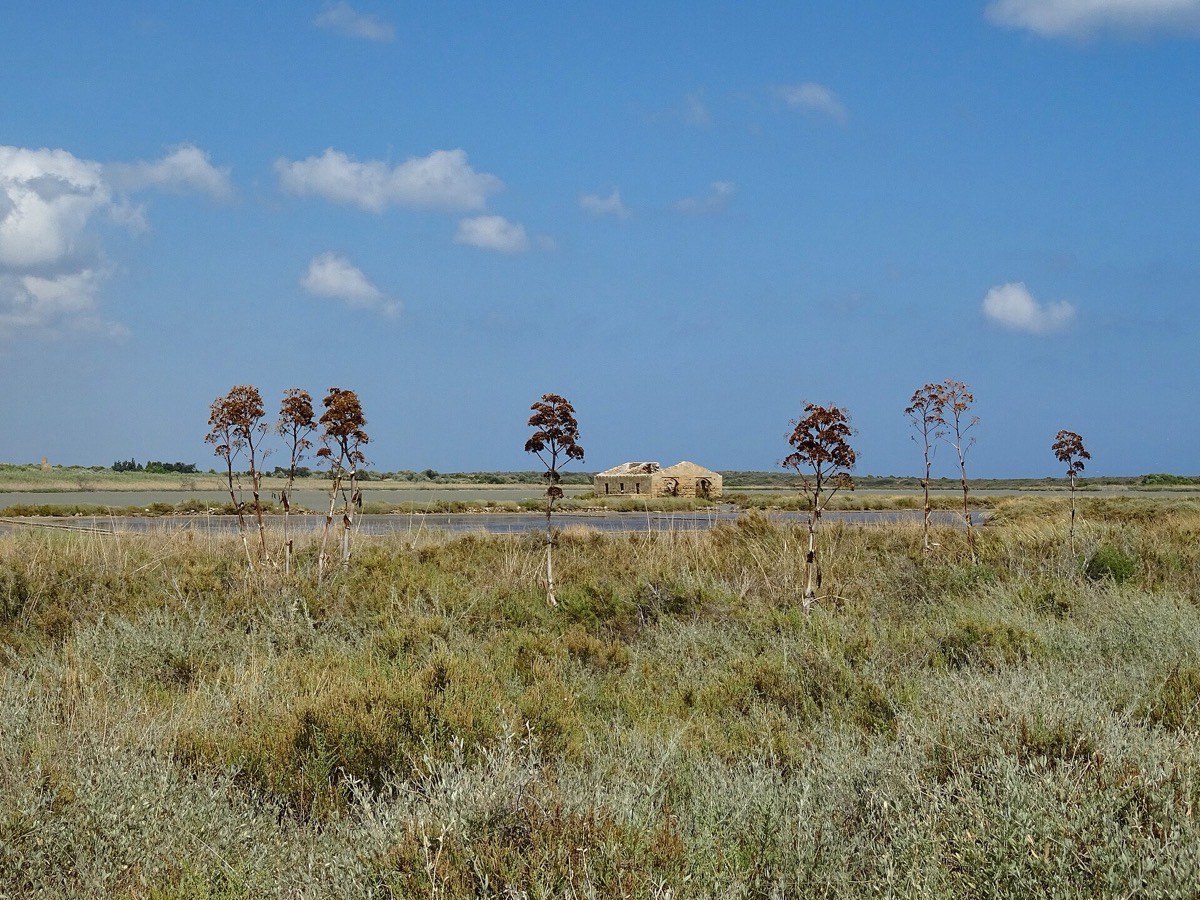
In Sicily a single path can cross a regional park, a reserve entrusted to a voluntary association and a Natura 2000 site on the same day, and in each of them the rules were written by someone different. This page explains how the system works: how many protected areas there are, who runs them, what zones A, B, C and D mean, and why tickets, opening hours and the rules on dogs change from one place to the next. The pages on individual places give the practical figures. This guide is about where those figures come from.
How many parks and nature reserves are there in Sicily?
According to the ORBS portal of the regional department for land and environment, the system takes in 4 regional parks, 1 national park, 75 regional nature reserves, 245 Natura 2000 sites and 7 marine protected areas, and covers around 20% of the region. The quadro sinottico, the same portal’s synoptic table, lists the 75 reserves one by one, with type, area, managing body and decree. Adding up the areas in the table gives about 78,500 hectares of reserves.
The table also lists ten reserves provided for by the regional plan but not yet established, among them Capo Murro di Porco e Penisola della Maddalena, Cava Randello, the Forre laviche del Simeto, the Isola di Capo Passero and the Isola di Lipari. On that ground the plan exists; the founding decree with its regulations does not. There are also three wetlands under the Ramsar Convention: Biviere di Gela, Vendicari and the Saline di Trapani e Paceco.
One caution about the figures. The synoptic table carries no date of revision, and the portal’s news archive stops in 2024. It is the most complete official picture we have found, but it is not a dated census: a change of managing body made recently might not appear in it.
Where the rules come from: the regional law of 1981
The basis is regional law no. 98 of 6 May 1981, largely rewritten by regional law no. 14 of 9 August 1988. The region points out that it came ten years before the national framework law on protected areas, no. 394 of 1991. That same 1981 law establishes the first reserve directly, the Riserva dello Zingaro, in article 33, and in article 31 lists a first group of reserves to be established by decree: among others Vendicari, Cavagrande del Cassibile, the Fiume Ciane, the Stagnone di Marsala and the Montagne delle Felci e dei Porri on Salina.
Article 2 draws the distinction between the two instruments. A park covers a large area of general interest for its landforms, flora, fauna and landscape, and among its purposes are also education and recreation. A reserve covers land withdrawn from uncontrolled human use in order to protect its natural character. The regional plan for parks and reserves, provided for by article 5, was approved by decreto assessoriale no. 970 of 1991, a decree of the regional department.
The point that explains nearly everything is in article 6: every reserve is created by a decree of its own, which fixes its boundaries, names the body it is entrusted to and carries the regulations as an annex, with the permitted uses and the prohibitions. Every park is created by a decree that divides it into zones and governs activities zone by zone. So there is no single set of regulations for Sicily’s protected areas. There are seventy-five sets of reserve regulations and one body of rules for each park, written in different years by different hands.
Above all of them sits a common core. Article 17 prohibits, in parks and reserves alike, anything that damages the landscape, natural habitats, flora and fauna, and in particular: catching, killing or disturbing animals, picking or damaging plants, introducing non-native species, altering the flow of water, opening quarries, bringing in weapons and explosives, and lighting fires in the open. Exemptions can only be set out in the founding decree and in the regulations. Article 23 fixes the penalties: in the consolidated text published by the region the amounts are still in lire, with a table for individual breaches and a general penalty of 50,000 to 2,000,000 lire for prohibitions in the regulations that the table does not list. Anyone at fault also has to put the place back as it was.
The parks: which they are and who runs them
There are four regional parks, each with its own Ente Parco, a park authority that the law defines as a public body under the supervision of the regional department for land. In the synoptic table they are the Parco dell’Etna, established by decree of the President of the Region no. 37 of 17 March 1987, about 58,000 hectares; the Parco delle Madonie, of 1989, about 40,000 hectares; the Parco dei Nebrodi, established on 4 August 1993 and the largest at about 86,000 hectares; and the Parco fluviale dell’Alcantara, of 2001, about 1,900 hectares along the river.
The fifth is the Parco nazionale Isola di Pantelleria, established by decree of the President of the Republic of 28 July 2016: 6,560 hectares, about 80% of the island according to the region. Being national, it follows the 1991 framework law and not the regional one. A second national park, for the Iblei, has been under discussion for nearly twenty years: according to the press, a ruling by the TAR, the regional administrative court, published on 9 June 2026 required the administrative stage to be completed within 180 days, that is by the first days of December 2026. As of 14 November 2026 the park has not been established, and the deadline is close.
Inside a park, reserves that were there first do not disappear altogether. The 1988 law provides that when a reserve already established falls inside a park, the park’s decree classifies it as zone A or B, and its old regulations cease to have effect. That is why some areas which the 1981 law listed among the reserves still to be created, such as Monte Soro, are today inside a park, in this case the Nebrodi, and follow its rules.
What zones A, B, C and D mean in a park
Article 8 of the regional law sets out four zones. Zone A is strict reserve: the natural environment is kept intact, and the park authority is to acquire the land there over time. Zone B is general reserve: new building and changes to the land are prohibited, while the authority may allow farming, forestry and grazing and the infrastructure strictly needed for them. Zone C is protection: only building that serves the purposes of the park is allowed, such as visitor accommodation and car parks. Zone D is control: activities compatible with the aims of the park are permitted.
The commonest mistake is to read zone A as a place you cannot enter. In the Parco dell’Etna the 1987 decree says the opposite: in zone A walking is unrestricted, and ski mountaineering and ski touring are allowed, while the authority may impose limits in particular areas or where there are too many visitors. In that same zone A it is prohibited to camp, light fires, collect rocks or minerals, damage plants, disturb animals or bring in motor vehicles. The park describes zones C and D as preparco, the belt around the park, a more settled area where the aim is compatible development. The limits on walking on the upper part of Etna, on the other hand, come not from the park but from the ordinanze of the comuni and from the civil protection service, and we deal with them in the guide on permits.
Each park applies the scheme in its own way. The Parco dell’Alcantara has a set of rules for zones A and B published in the regional gazette on 25 July 2014. In the Madonie the rules on activities allow camping in zone C only in equipped sites, as we explain in the guide on bivouacking. The national park of Pantelleria uses a different numbering: zone 1, of considerable interest with little or no human presence; zone 2, with limited human presence; zone 3, heavily settled. Marine protected areas have zones of their own, set by their national decrees, and those apply at sea.
In a reserve, zone A is the reserve and zone B the buffer
In reserves the letters mean something else. The decree for the Laghetti di Marinello reserve, of 10 December 1998, is a typical example: on the map annexed to it the letter A marks the area set aside as reserve and the letter B the preriserva, the protective strip around it. Article 7 of the regional law provides for these surrounding areas, preparco and preriserva, as zones of controlled development.
The same law distinguishes four kinds of reserve. A riserva integrale, a strict reserve, keeps the environment intact and allows only scientific work. A riserva orientata, a managed reserve, also allows compatible cultivation, farming, forestry and grazing. A riserva speciale has particular conservation duties, biological, geological or ethno-anthropological. A riserva genetica conserves the genetic stock of animal and plant populations. In the regional table 56 reserves are classed as orientate, 15 as integrali, 3 as mixed, orientate with strict sections, and one, the Lago di Pergusa, as speciale. The table has some inconsistencies between name and code, for instance the strict geological reserve of Contrada Scaleri, coded as orientata.
What changes for walkers is set by each reserve’s own regulations. Those of Marinello, in zone A, prohibit among other things leaving the laid-out paths, camping or bivouacking, lighting fires, using audio equipment other than with headphones, picking plants, collecting rocks and fossils, and disturbing wildlife. Any exemption the managing body grants has to be specific, named and limited in time. Many reserve regulations follow a similar structure, but the detail changes, and the version that counts is the one annexed to the decree of that reserve.
Who runs the reserves: the region, associations, universities, local authorities
Article 20 of the law allows reserves to be entrusted to the former provinces, to the regional state forestry agency, to conservation associations and to universities. The ORBS portal now counts 17 different managing bodies. Counting the rows of the synoptic table, the 75 reserves break down as follows.
The Dipartimento regionale dello Sviluppo rurale e territoriale, the former forestry agency, runs 31 of them: among these the Zingaro, Vendicari, Cavagrande del Cassibile, Pantalica, the Bosco della Ficuzza, Monte Cofano, Capo Gallo, Monte Cammarata and the reserves of Alicudi, Filicudi, Panarea, Stromboli and Vulcano. Associations run 20: Legambiente 6, among them the Macalube di Aragona, Lampedusa and the Grotta di Santa Ninfa; WWF 4, among them Torre Salsa, Capo Rama and the Saline di Trapani e Paceco; LIPU 3, among them the Biviere di Gela; the CAI 3, all tied to caves or to Monte Conca; GRE 2; Italia Nostra 1, Monte Capodarso e Valle dell’Imera meridionale; the Rangers d’Italia 1, Monte Pellegrino. The University of Catania, directly or through its CUTGANA centre, runs 7, nearly all caves and small islands. Local authorities run 17: 9 with the Liberi consorzi comunali, the former provinces, and 8 with the Città metropolitane, the metropolitan authorities, among them the Montagne delle Felci e dei Porri on Salina, Marinello and the Oasi del Simeto.
Being entrusted with a reserve is not for ever. The Marinello decree lays down that failure to meet the aims, or to keep to the obligations, means the management is withdrawn. With associations the relationship runs through an agreement with the regional department: the Rangers d’Italia, for example, write that they have run Monte Pellegrino since 27 January 2017 under an agreement of that kind.
Why every reserve has different tickets and opening hours
The ticket is not set by law for every reserve. For those run directly by the region, prices come from the plan for access to the nature reserves under direct regional management, approved by decreto assessoriale 85/Gab of March 2015, which the pages of the Siracusa body cite as their basis. For the others the basis is usually the founding decree: that of Marinello, for example, allows the managing body to charge for a visit, provided the amount is authorised by the regional department. Allowing is not the same as charging.
The result, read today, is patchy. At the Zingaro the full ticket is 5 euros and the reduced one 3, under-8s go in free, and since 2025 payment is by card only. At Vendicari the full ticket is 3.50 euros, at Cavagrande 2 euros, both with reduced and family tickets, free entry under 8 and electronic payment only. At Pantalica a price exists on paper, but the managing body writes that for now no ticket is required. Many reserves entrusted to associations or to local authorities have no ticket office: we have not checked them one by one, and the page for each place says what we found.
Opening hours follow the same logic. The Servizio per il Territorio di Siracusa publishes a single set of hours for its three reserves, changing with the months: 9:30 to 16:00 from November to March, until 20:00 from June to August, with entry closing an hour earlier, and staying inside after closing is not allowed. Where a reserve is open woodland, or a mountain above a city, there are often no hours at all. Where there are, they can go out of the window within the day because of a weather warning or fire risk.
Dogs in parks and reserves: what changed in October 2025
On 24 October 2025 the region announced a decree by the regional councillor for land allowing dogs on a lead on specific paths and areas of protected areas. The decree does not choose the paths, though: each managing body identifies them, on the basis of guidance from the department and after consulting the regional council for the protection of natural heritage. The ban remains in the zone A of parks, in the riserve integrali and in areas where access is not allowed, save for exemptions that are reasoned, specific and named. The bodies have to amend their own regulations.
In practice the decree opened a possibility; it did not change the rules everywhere in a day. On 17 September 2026 the rules page of the Siracusa reserves, Vendicari, Cavagrande and Pantalica, still said "do not bring in domestic animals". At the Zingaro, as far as we have checked on its own page, the regulations prohibit dogs even on a lead. The region did not publish the number of the decree in its announcement, and we have not found a regional list of paths open to dogs. There is only one useful rule: a dog goes where the body running that reserve or that park has written that it can, and nowhere else.
Natura 2000: a layer you cannot see on the path
Natura 2000 is the European network set up under the Habitats and Birds Directives. In Sicily it counts 245 sites, which the ORBS portal breaks down as follows: 117 special areas of conservation (ZSC), 102 sites that are both ZSC and special protection areas for birds (ZPS), 16 ZPS, 8 sites of community importance (SIC) still to be designated as ZSC, and 2 SIC that are also ZPS. According to the region, about 40% of the network’s surface is farmland.
Natura 2000 sites often overlap parks and reserves. Monte Pellegrino, for example, is a riserva orientata established in 1995 and also the ZSC ITA020014, designated by decree of the Ministry of the Environment of 21 December 2015. The parks of the Nebrodi, Etna and the Madonie each contain more than ten sites. A Natura 2000 site has conservation measures and management plans of its own, which the regional portal publishes, but it has no authority with a ticket office. For walkers, the rules you actually meet on the ground come nearly always from the park, the reserve, the comune or the civil protection service.
Not only the managing body: comuni, civil protection, forestry officers
Inside a protected area there can be prohibitions the managing body never signed. On Monte Pellegrino the ordinanza sindacale of the mayor of Palermo no. 80 of 5 June 2019, a mayoral order republished by the reserve in June 2026, prohibits walking on every path on the mountain when the regional civil protection service issues a yellow, amber or red weather warning, and prohibits organised walks and events with groups of more than six people. On Etna the rules for the summit area are in the ordinanze of the comuni. In summer, closures for fire risk can arrive within the day, and at sea in front of a reserve the orders of the Capitaneria di porto, the harbour master’s office, apply.
In practice: how to read the rules before you set out
First, work out what you are entering: a park, a reserve, or only a Natura 2000 site. Second, find out which body runs it, because the answers come from them and not from the region in general. Third, read that reserve’s regulations or the rules for that zone of the park, which the ORBS portal and the bodies’ own sites often publish as PDFs. Fourth, the day before, check the body’s page and the civil protection warning. Fifth, for dogs, bivouacking, groups and collecting, ask in writing when the regulations are unclear: the absence of a written prohibition is not a permission.
Real cases
Case
The Parco dei Monti Sicani: established, annulled, back on the drawing board
The Monti Sicani, between the provinces of Palermo and Agrigento, are the clearest example of how much a protected area depends on its founding decree being sound.
- In May 2019 the region opened the new offices of the Parco dei Sicani authority at Palazzo Adriano, then headed by a commissioner.
- According to the press, in late June 2019 the TAR held the decree setting up the park unlawful, and in August the regional department annulled the act, ordering the re-establishment of the reserves the park had absorbed.
- The regional synoptic table today lists Monte Cammarata, Monte Carcaci, Monti di Palazzo Adriano e Valle del Sosio, and Monte Genuardo e Santa Maria del Bosco as riserve orientate run by the Dipartimento Sviluppo rurale, and does not list the Parco dei Sicani.
- On 18 February 2025 the regional councillor for land met the mayors of the 12 comuni concerned about a fresh establishment, with a new boundary and a procedure involving local authorities and interested parties.
What this tells you. A protected area exists for as long as the act behind it holds. For anyone walking in the Sicani today the rules are those of the four reserves, not those of a park, and the position may change with the new establishment.
Sicani and AgrigentoCase
Macalube di Aragona: the mud volcano area, closed since 2014
The Macalube are a riserva naturale integrale, a strict nature reserve of about 256 hectares established in 1995 and entrusted to Legambiente, which protects the mud volcanoes of Aragona.
- On 27 September 2014 an eruption of mud inside the reserve engulfed a family who were visiting: two children, a brother and a sister, died, and the father was pulled out of the mud by rescuers.
- The area was closed and the public prosecutor in Agrigento opened an investigation.
- In 2024, ten years on, the local press reported three acquittals on appeal and a judicial seizure of the area not yet lifted, while the mayor of Aragona spoke of talks with the INGV, the national geophysics institute, about considering a reopening.
- Under decree no. 633 of 20 July 2015 of the regional department for the environment, zone A, about 93 hectares with the mud volcanoes, is set aside for conservation and research: no visits. The managing body allows walks only in zone B, the preriserva, on contacting the reserve office. As of 17 September 2026 we have not found any act reopening zone A.
What this tells you. A riserva integrale means that conservation, and here also natural danger, come before the visit. A reserve can stay closed for years, and the page on the regional portal does not always say so.
Sicani and AgrigentoCase
Monte Pellegrino: an association’s reserve, a prohibition from the comune
Monte Pellegrino is at once a riserva naturale orientata, established in 1995, and a special area of conservation. A voluntary association runs it, and some of the most important rules were not written by the managing body.
- The Rangers d’Italia, Sicily branch, have run the reserve since 27 January 2017 under an agreement with the regional department for land.
- The ordinanza of the mayor of Palermo no. 80 of 5 June 2019 came after a rockfall on 4 November 2018 near the Grotta Niscemi, in an area classed as P4 hazard for falling rock.
- The order prohibits walking on every path on the mountain under a yellow, amber or red weather warning, and prohibits organised outings with more than six participants, giving enforcement duties to the managing body as well.
- The reserve republished the order on its own site on 29 June 2026, together with the order of 22 December 2025 closing the Piano Landolina path.
What this tells you. In a protected area the rules stack up. The reserve’s regulations are only one part: the comune’s ordinanze and the civil protection warning can close a path even when the reserve is open.
Monte PellegrinoFrequently asked questions
How many nature reserves are there in Sicily?
The regional ORBS portal counts 75 established, covering about 78,500 hectares according to the areas in its synoptic table. Another ten are provided for by the regional plan but not yet established, among them Capo Murro di Porco, Cava Randello and the Isola di Lipari. The table does not give the date it was last revised.
Which are the natural parks of Sicily?
There are four regional parks: Etna, established in 1987, the Madonie, in 1989, the Nebrodi, in 1993, and the Parco fluviale dell’Alcantara, in 2001. To those is added the Parco nazionale Isola di Pantelleria, established in 2016. The Parco dei Monti Sicani was annulled in 2019 and the region began a fresh establishment in 2025, while the national park of the Iblei, as of 17 September 2026, has still not been established.
What does zone A mean in a Sicilian park?
It is the strict reserve zone, where the natural environment is kept intact. It does not necessarily mean no entry: in the Parco dell’Etna, for instance, walking in zone A is unrestricted, while camping, fires and motor vehicles are prohibited. Zones B, C and D are protected progressively less strictly. In reserves, by contrast, zone A is the reserve proper and zone B the preriserva, the buffer around it.
Who runs the nature reserves in Sicily?
Seventeen different bodies, according to the region. The Dipartimento regionale dello Sviluppo rurale e territoriale runs 31, among them the Zingaro, Vendicari and Cavagrande. Twenty are entrusted to associations such as Legambiente, WWF, LIPU, the CAI and the Rangers d’Italia, seven to the University of Catania and seventeen to the Liberi consorzi comunali and the Città metropolitane. The body running each reserve is named in its founding decree.
What is the difference between a riserva orientata and a riserva integrale?
A riserva integrale keeps the environment intact and allows only scientific work: access is generally more restricted. A riserva orientata also allows farming, cultivation, forestry and grazing compatible with protection, and usually has paths open to the public. In Sicily the orientate are the majority, 56 out of 75 in the regional table. What you can actually do is set by the regulations of the individual reserve.
Do you have to pay to enter the Sicilian reserves?
It depends on the reserve. In those run directly by the region, prices come from a plan of 2015: at the Zingaro the full ticket is 5 euros, at Vendicari 3.50, at Cavagrande 2, always with electronic payment only. At Pantalica a ticket exists on paper but for now there is nothing to pay. Many reserves run by associations or local authorities have no ticket office: the page for each place reports what we have checked.
Can you take a dog into the parks and reserves of Sicily?
Only where the managing body has provided for it. A regional decree announced on 24 October 2025 allows dogs on a lead on paths and areas that each body has to identify, but excludes them from the zone A of parks and from the riserve integrali. In September 2026 the Siracusa reserves still state that domestic animals may not be brought in. Before setting out, ask the body that runs the place.
What is a Natura 2000 site, and what difference does it make to walkers?
It is an area of the European ecological network: in Sicily there are 245 sites, among them ZSC, ZPS and SIC. They often overlap in part with parks and reserves, as at Monte Pellegrino. A Natura 2000 site has conservation measures of its own, but usually has neither tickets nor opening hours: on the path, the rules you meet come from the park or reserve authority, from the comune or from the civil protection service.
Can you camp in the parks and reserves of Sicily?
As a rule no, outside the places provided for it. In the Parco dell’Etna camping is prohibited in zone A and in zone B, in the Madonie it is allowed in zone C only in equipped sites, and the Marinello regulations prohibit camping and bivouacking in zone A, save for exemptions from the managing body. Fires in the open are prohibited by law in all parks and reserves, save for written exemptions.
Read on 17 September 2026, with a re-check on 14 November 2026 of the status of the Iblei park: the consolidated text of regional laws 98/1981 and 14/1988 published by the region’s ORBS portal; the ORBS pages on protected areas, on the Natura 2000 network, on the parks, and the quadro sinottico, the synoptic table listing the reserves, from which we counted types and managing bodies; the 1987 decree establishing the Parco dell’Etna; the rules for zones A and B of the Parco dell’Alcantara published in the regional gazette on 25 July 2014; the founding decree and the regulations of the Laghetti di Marinello reserve; the regional announcement of 24 October 2025 on dogs; the pages on prices, opening hours and rules of the Siracusa reserves and of the Zingaro; the page of the body managing Monte Pellegrino and the Comune di Palermo’s ordinanza no. 80 of 2019. The ORBS portal puts no date on the synoptic table, and its news archive stops in 2024: the counts should be read as the picture the region has published, not as a census current today. On two points the portal is not consistent with itself: the details of the decree establishing the Madonie park (D.A.R. 1489 of 9 November 1989 in the table, D.A. no. 9 of 1 December 1989 on the park’s own page) and the areas of Etna and the Nebrodi, rounded in different ways. We have not read the text of the decree on dogs, whose number the region does not publish in its announcement, nor the TAR rulings on the Sicani and the Iblei, which we report from the press and say so. The penalties in the regional law are given as they appear in the consolidated text, in lire.
Written and checked by the Redazione Sentieri Siciliani. Published on 12 October 2026, updated on 12 October 2026. How we work.
Sources
- Regione Siciliana, ORBS portal, consolidated text of L.R. 98/1981 and L.R. 14/1988, the regional laws on parks and reserves — the bans on picking plants in the Sicilian parks and reserves
- Regione Siciliana, ORBS portal, page on the protected natural areas — the number of parks, reserves, Natura 2000 sites and marine areas; the regional plan D.A. 970/91; and the authorities that manage the reserves
- Regione Siciliana, ORBS portal, synoptic table of the protected natural areas — the list of the 75 reserves established, with type, area, managing authority and decree; the reserves still only in the plan; the parks; the marine protected areas; the Ramsar sites
- Regione Siciliana, ORBS portal, page on the Natura 2000 network — the number and the type of the 245 Sicilian Natura 2000 sites
- Regione Siciliana, ORBS portal, entry for the Parco nazionale Isola di Pantelleria — the decree establishing it, the area, and zones 1, 2 and 3 of the national park
- Regione Siciliana, ORBS portal, entry for the Parco delle Madonie — the comuni, the area and the details of the decree establishing the Parco delle Madonie
- Parco dell’Etna, decree of the President of the Region of 17 March 1987 no. 37, which established the park — what is allowed and what is forbidden in zones A, B, C and D of the Parco dell’Etna
- Parco dell’Etna, page Il Parco — the division of the park into four zones, and what each one means
- Gazzetta Ufficiale della Regione Siciliana, the official gazette of the Sicilian region, 25 July 2014, the rules on activities in the zones of the Parco fluviale dell’Alcantara (the copy on the park’s site) — the rules for zones A and B of the Parco dell’Alcantara
- Regione Siciliana, ORBS portal, the decree establishing the Riserva Laghetti di Marinello and its rules (10 December 1998) — the bans in zone A and zone B, walking, boats, camping
- Regione Siciliana, press release of 24 October 2025 on the decree allowing dogs on the lead in protected areas — what the assessorial decree on dogs says: paths picked out by the managing authorities, and zone A and the strict reserves left out
- Regione Siciliana, press release of 9 May 2019 on the new offices of the Parco dei Sicani at Palazzo Adriano — that the Parco dei Sicani authority existed, with a commissioner, in the spring of 2019
- Regione Siciliana, press release of 18 February 2025 on establishing the Parco dei Monti Sicani afresh — the start of a fresh establishment of the park, and the comuni involved
- AgrigentoNotizie, a local news site, article of 6 August 2019 on the annulment of the Parco dei Monti Sicani — the ruling of the TAR, the regional administrative court, of late June 2019, the annulment of the act, and the four reserves brought back (a press source)
- WordNews, a news site, article of 17 August 2026 on the Parco nazionale degli Iblei — the TAR ruling of 9 June 2026 on the process of establishing the Iblei national park (a press source)
- Regione Siciliana, Servizio per il Territorio di Siracusa, the regional land office for Syracuse, page on the prices for the reserves — the tickets for Vendicari, Cavagrande and Pantalica, and the reference to the 2015 access plan
- Regione Siciliana, Servizio per il Territorio di Siracusa, page on the rules of conduct — the ban on bringing pets, and the other rules of Vendicari, Cavagrande and Pantalica
- Regione Siciliana, Servizio per il Territorio di Siracusa, page on opening hours — the seasonal hours of the three Syracuse reserves
- Riserva naturale orientata dello Zingaro, information page — the prices, electronic payment only, and the regional body it answers to
- Riserva naturale orientata Monte Pellegrino, page on the managing body — management entrusted to Rangers d’Italia under an agreement running from 27 January 2017
- Riserva naturale orientata Monte Pellegrino, home page — the decree establishing it, of 1995, and its designation as a Special Area of Conservation
- Comune di Palermo, ordinanza sindacale no. 80/OS of 5 June 2019, a mayoral order (the copy published by the Riserva Monte Pellegrino) — the ban on using the paths of Monte Pellegrino when a weather warning is in force, and the limit of six people for organised outings
- ANSA, the Italian news agency, news item of 27 September 2014 on the explosion of one of the mud cones at the Macalube — what happened on 27 September 2014, the closure of the area, and the investigation (a press source)
- AgrigentoNotizie, article of 2024 on the plan to reopen the Maccalube — the seizure still in force, the acquittals on appeal, and the idea of reopening (a press source)
- Regione Siciliana, ORBS portal, entry for the Riserva naturale Macalube di Aragona — the type and the managing authority of the Macalube reserve
- Parco dell’Etna, the Etna park authority — the park rules, the authorised paths and access to the volcano
- Parco delle Madonie, the Madonie park authority — the path network, the rules and the state of the routes in the Madonie
- Parco dei Nebrodi, the Nebrodi park authority — access, forest tracks and the rules of the Nebrodi park
- Parco Fluviale dell’Alcantara, the Alcantara river park authority — access to the gorge, the river park’s routes and the state of the river
- Riserva Naturale Orientata dello Zingaro, the Zingaro managed nature reserve — entrances, opening hours, prices and the routes inside the reserve
Where to go from here
In more depth
Next step
From the principles to the places
Rules are worth little until they apply to a precise spot. From here you reach the pages with access points, parking and tracks.