Guide
Islands and ferries: the logistics decide the walk
On the smaller islands the climb is the easy part: what wrecks the outing is the connection, and the connection is a public contract with seasons, lots and force majeure clauses.
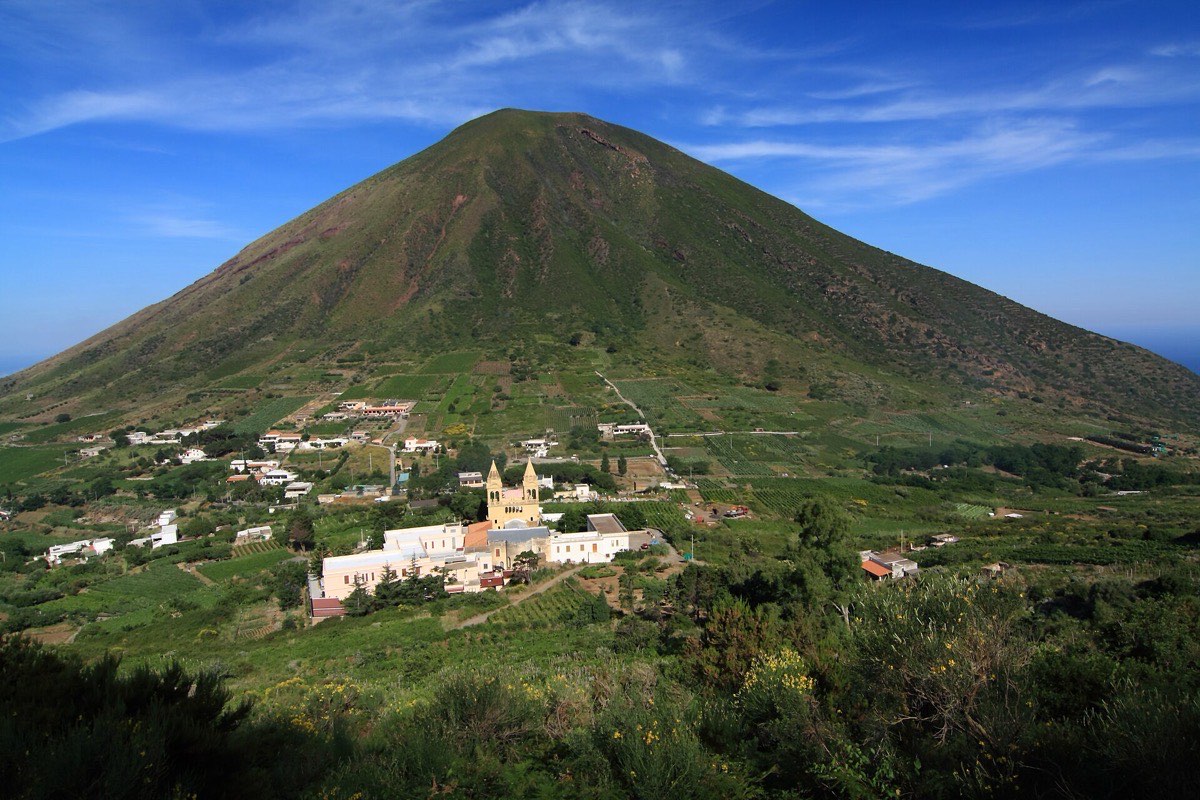
On an island the ascent starts at sea level and no road can break it up, but that is not what ruins outings. Walks on the smaller Sicilian islands fail earlier, on land, in front of a cancelled sailing or on a hydrofoil that puts you ashore somewhere else. There is no timetable here: there is how the service is built, what fails first, and what the passenger is entitled to.
The islands where you walk, and what you walk
In the Aeolian Islands the highest ground is Monte Fossa delle Felci on Salina, 962 m, inside the Riserva naturale orientata Le Montagne delle Felci e dei Porri, a managed nature reserve of 1,521.06 hectares across the comuni of Leni, Malfa and Santa Marina Salina, established by regional department decree no. 87/44 of 14 March 1984 and entrusted to the Città metropolitana di Messina, the metropolitan authority. You start at sea level, so the ascent is all of what the map says. Alicudi has neither roads nor vehicles: the houses are reached by stepped mule tracks, and the Filo dell’Arpa reaches 675 m.
On two islands the walker does not choose the path: an order fixes it. On Stromboli, order no. 16 of 5 May 2025 issued by the mayor of Lipari allows unaccompanied ascent up to the 290 m mark along the strada vicinale Parroco and the Salvatore Di Losa mule track, and up to 400 m only with an authorised guide; from the Ginostra side unaccompanied ascent stops at 130 m. The heights follow the state of the volcano, and the order in force is held in the archive of the INGV Centro Monitoraggio Eolie, the Aeolian monitoring centre. On Vulcano the crater of the Fossa stayed shut for sixteen months because of gas emissions and reopened on 24 April 2023 on a line that skirts the area affected, with an automatic traffic light at the access points driven by the wind direction: red or unlit, you stay down.
In the Egadi the real path network is on Marettimo, which climbs to Monte Falcone, 686 m, the highest point of the archipelago, with the Case Romane and the castle of Punta Troia on the way. Favignana is the opposite: low, with Monte Santa Caterina at 314 m, and more a place to cycle than to walk. Pantelleria has the best organised path system because it has a national park that publishes it: 23 paths for almost 130 km, all graded E, with the Montagna Grande route, the island’s summit at 836 m, given as 8 km and three and a half hours from the car park at Sibà alta.
Ustica is the island where there is least walking: the inland high point, the Guardia dei Turchi, reaches 244 m, and its marine protected area, dating from 1986, was the first in Italy. Lampedusa and Linosa are a night’s sailing from Porto Empedocle: they are a journey, not a day out.
The ports, and who decides which sailings exist
The fast connections to the smaller islands are not a commercial offer, they are a public service awarded by tender. In November 2022 the Regione Siciliana awarded six lots out of seven to Liberty Lines, for five years from 1 January 2023 and more than 157 million euro, and the lots describe the geography: the Aeolians from Milazzo and Vibo Valentia, 55 million; the Aeolians from Milazzo, Messina and Palermo, 42; Trapani for the Egadi, 26; Marsala for Favignana, Marettimo and Levanzo, 12; Trapani for Pantelleria, 7; Palermo for Ustica, 14. The seventh lot, the Pelagie from Porto Empedocle, went to the same operator shortly afterwards.
The ships are a separate agreement. Caronte & Tourist Isole Minori, which runs the Siremar brand, serves the Aeolians from Milazzo, the Egadi and Pantelleria from Trapani, the Pelagie from Porto Empedocle and Ustica from Palermo; NGI also operates in the Aeolians. Every archipelago has one main port and one or two secondary ones, and the secondary one is almost always the one that disappears out of season.
Hydrofoil or ship: this is where it is decided whether you get stuck
The hydrofoil is fast, costs more, takes no vehicles and takes no bicycles. The ship is slow, carries cars and freight, and holds a sea the hydrofoil cannot. This is not an impression: on 10 January 2026, with the small Aeolian islands cut off for more than sixty hours, the only vessel running was the ship Nerea of Caronte & Tourist Isole Minori, carrying passengers and goods to Vulcano, Lipari and Salina. On 12 February 2026, with west-north-westerly winds, the same scene repeated itself exactly: Nerea on the three large islands, and Filicudi, Alicudi, Panarea, Stromboli and Ginostra with no connection for more than twenty-four hours.
Anyone with a fixed commitment back on the mainland should therefore plan the return on the ship, even if it takes twice as long. The small islands are the most exposed. Ginostra is the extreme case: its landing place, the Pertuso, takes very few boats, and larger vessels still transfer passengers by a small boat brought alongside.
What you are entitled to when a sailing is cancelled
The Liberty Lines Carta dei servizi, edition 02 revision 10 of 3 March 2026, commits the operator to running 100% of scheduled sailings except in cases of force majeure, and puts adverse sea and weather conditions at the top of that list. The same document states 3,749,972 passengers carried in 2025 on 32 fast vessels and 29 destinations. When a sailing is cancelled because of the sea, the passenger is entitled to a full refund of the ticket. To that, and to nothing else.
The part almost nobody reads sits in the exemptions of European Regulation 1177/2010, reproduced in the same service charter: the carrier’s duty to provide accommodation, up to 80 euro a night for a maximum of three nights, does not apply if the carrier proves that the cancellation was caused by weather conditions endangering the safe operation of the ship. Nor does compensation apply. If the sea keeps you on the island and you miss your flight, the flight is your problem. That is why the return is not planned for the day you have to travel on.
August timetables do not describe November
The regional contract is built on three seasonal bands, low, mid and high, and on some routes the difference between the bands is not the number of sailings: it is whether the route exists at all. The service charter classes as year-round, with several departures a day, Trapani for the Egadi, Milazzo for the Aeolians, Palermo for Ustica and Marsala for the Egadi. It classes as seasonal three lines that do not exist in winter: Palermo-Aeolians-Milazzo, absent in winter and limited to Mondays and Fridays in the mid season; Trapani-Pantelleria, scheduled from 1 June to 31 October; Porto Empedocle for Lampedusa and Linosa, from 1 June to 30 September and until 15 October in the mid season.
In November, then, there is no hydrofoil to Pantelleria from Trapani and none to the Pelagie from Porto Empedocle either: what is left is the ships, slower and less frequent. The other way round, the switch to the summer timetable is not the operator’s decision. In 2025 the summer timetables came into force on 1 June with a stated 30% increase in sailings, and the end-of-season extension is ordered by the regional department for infrastructure and transport, in the past with different dates for the Aeolians and the Egadi.
The car: almost everywhere useless, often banned
Taking a car to the smaller islands is nearly always money spent for nothing, and in high season it is often banned. In the Aeolians the ban on landing and driving vehicles belonging to non-residents is issued every year by decree of the President of the Regione Siciliana, with different calendars from one island to the next: the one for 2026 is presidential decree no. 85 of 17 April 2026, and the fines run from 430 to 1,731 euro. The dates for each island change every year and the local press does not agree with itself: they have to be asked of the comune or of the operator before buying a vehicle place. In the Egadi the pattern is the same, with a decree of the Ministry of Infrastructure and Transport at the request of the Comune of Favignana and an exemption for anyone staying at least six days.
There is then a constraint that has nothing to do with bans and everything to do with the hold. Since 1 November 2025 the ship Laurana, 752 passengers and 272 vehicles, has been replaced in the Aeolians by the Pietro Novelli, which carries 106 vehicles, and in the same week the Naples-Aeolians connection went from two weekly sailings to one. Out of season the capacity to carry vehicles falls sooner and faster than the capacity to carry passengers.
Water, which on the small islands is a question of ships
On a good many of the smaller islands drinking water arrives by sea. The Ministry of Defence has extended for 2026 its contract with Marnavi and Vetor for carrying drinking water to the smaller Sicilian islands: 19.446 million euro, 14 tankers, 1.4 million cubic metres, 13.89 euro a cubic metre. Among the Aeolians, Stromboli, Alicudi, Filicudi and Panarea have no desalination plant and continue to be supplied this way; the desalination plants funded under the PNRR, Italy’s national recovery and resilience plan, started in 2026 at Alicudi, where the pipe and the tanks arrived by helicopter.
The consequence for walkers is direct: where water is a carried resource, the days when the sea stops the hydrofoils stop the tankers too. This is not the place to count on filling bottles halfway through the day.
Connections between islands are the part that fails
The connection between two islands of the same archipelago is almost always an intermediate leg of the line that starts from the mainland: it inherits all of that line’s problems and adds one, because if the sailing is diverted you end up on the wrong island. On 16 March 2026 three hydrofoils that had left Milazzo for Lipari could not berth at the open pier of Sottomonastero because of the sirocco, and put eighty people ashore at Rinella, on the island of Salina, because Lipari’s alternative berth of Punta Scaliddi had been closed for more than nine months with structural damage.
Out of season the island-to-island leg thins out until it becomes the main constraint on the trip. The Lampedusa-Linosa line is scheduled on three days a week from 1 November to 31 March and daily only from 1 June to 30 September: a two-island itinerary in low season is built around the days on which the sailing exists. Where there is only one island, as at Pantelleria and Ustica, the problem moves, because there is no other island to fall back on.
How an island outing is actually planned
You plan it on a window, not on a day, built backwards from the hardest constraint, which is usually a flight. There are five checks: that the line exists in the period you are going; that the return exists, since it often has fewer sailings than the outward leg; which ship covers the crossing on the days the hydrofoil stops; whether there is an order on the island regulating the paths; and whether your own transport, bicycle or car, is allowed on board and on the island in that month. On the islands plan B is not another path, it is an extra day.
Real cases
Case
Three hydrofoils, eighty people, the wrong island
Monday 16 March 2026, Milazzo-Lipari connections with the sirocco blowing.
- Three hydrofoils that had left Milazzo for Lipari could not berth at the open pier of Sottomonastero because of the sirocco.
- The eighty passengers on board were put ashore in the port of Rinella, on the island of Salina; about ten preferred to go back to Milazzo and some twenty commuters were taken back to the mainland.
- Lipari’s alternative berth, Punta Scaliddi, which would have allowed them to dock, had been closed for more than nine months with structural damage.
What this tells you. The sailing can run and still take you somewhere else. The risk is not only cancellation: it is being put ashore on an island other than the one you booked, with the onward connection stopped by the same wind. Knowing which back-up berth is usable is worth as much as knowing the timetable.
The smaller islandsCase
Sixty hours with nobody arriving
January and February 2026, the smaller islands of the Aeolian archipelago.
- On 10 January 2026 Alicudi, Filicudi, Panarea, Stromboli and Ginostra had been without connections for more than sixty hours because of adverse sea and weather conditions.
- In those days the only vessel running was the ship Nerea of Caronte & Tourist Isole Minori, which reached Vulcano, Lipari and Salina from Milazzo with a limited number of passengers and goods.
- On the cut-off islands basic supplies were running short, the medical staff at the out-of-hours care posts could not be changed over, and medical appointments booked off the island were missed.
- On 12 February 2026, with west-north-westerly winds, the same situation repeated itself for more than twenty-four hours, again with Nerea the only vessel serving the three largest islands.
What this tells you. A break in service does not hit the archipelago evenly: the large islands stay connected by ship, the small ones do not. If the itinerary takes in Alicudi, Filicudi, Panarea or Ginostra, the margin to allow for is not hours but days, and it has to be allowed in summer as well as in winter.
Walking without a carFrequently asked questions
Can I take my bicycle on the hydrofoil?
No. The Liberty Lines service charter of 3 March 2026 states that the company does not allow bicycles to be carried on its vessels, which are not fitted out for it. Scooters are only taken on board with a removable battery, inside a bag and on payment of the extra baggage ticket. If you need the bike, on Favignana for instance, it has to go on the ship or be hired on the island.
How big a pack can I take on board?
On the hydrofoil one piece of hand baggage free of charge, with a stated maximum size of 60x40x20 centimetres. A full walking pack is over those dimensions, and additional baggage is charged as set by the regional and ministerial tenders, not by a company price list. It is worth asking at the ticket office before joining the queue to board.
Can you get there by air?
Only to Pantelleria and Lampedusa, which have an airport and subsidised routes to Palermo and Catania, with Trapani in addition for Pantelleria. It is not a guaranteed way out: on 30 June 2025 the Region authorised an extra hydrofoil sailing from Trapani precisely because flights to Pantelleria had been diverted to Trapani-Birgi in bad weather. The Aeolians, the Egadi, Ustica and Linosa have no airport and can only be reached by sea.
How much does the crossing cost?
We do not publish fares, because they are set inside public contracts and move without notice: on 10 August 2026 an 18% increase came into force on the connections with the smaller islands, tied to the cost of fuel, and within a few hours the regional minister for infrastructure and transport ordered its immediate suspension. The price has to be read on the operator’s website on the day you buy. In general the hydrofoil costs more than the ship and takes about half the time.
Can I bring my dog?
On the hydrofoil yes, with a ticket of its own and on the terms of the service charter: dogs muzzled and on a lead, or inside a carrier if small, cats and birds always in a carrier or cage. The fast vessels are fitted out for passengers only and have no space set aside for animals. On the islands the rules of the reserves then apply, which are another matter and have to be asked of the managing authority.
If my itinerary takes in two islands close together, how much am I risking?
More than it looks, because the connection between two islands of the same archipelago is normally an intermediate leg of the line that starts from the mainland, so it fails along with it. Out of season it thins out a great deal: the Lampedusa-Linosa line, for example, is scheduled on three days a week from 1 November to 31 March and daily only from 1 June to 30 September. A two-island itinerary in low season has to be built around the days on which the sailing exists, not around the days you have off.
We publish neither timetables nor fares here: they change every season, and a wrong one makes you miss a boat. What we publish is the structure of the service, which is documented. The routes, how often they run and the period in which they exist come from the Liberty Lines Carta dei servizi, its service charter, edition 02 revision 10 of 3 March 2026, which lists them one by one and distinguishes year-round sailings from seasonal ones. The split of the fast connections into lots and ports comes from the Regione Siciliana statements of November and December 2022. The bans on landing vehicles come from the annual decrees and from municipal notices. Each case of disruption carries its date and its source. Everything else, which is departures, prices and connections, has to be checked on the operator’s website the day before and on the day itself.
Written and checked by the Redazione Sentieri Siciliani. Published on 1 September 2026, updated on 6 September 2026. How we work.
Sources
- Regione Siciliana, the Sicilian regional government — regional orders, nature reserves and state forest land
- Istituto Nazionale di Geofisica e Vulcanologia, the national institute of geophysics and volcanology — national volcanic and seismic monitoring
- Protezione Civile della Regione Siciliana, the Sicilian civil protection department — weather warnings and forest fire risk notices for Sicily
- Parks.it — a directory of Italian protected areas
- Servizio Meteorologico dell’Aeronautica Militare, the Italian Air Force weather service — official weather forecasts
Where to go from here
In more depth
 Guide
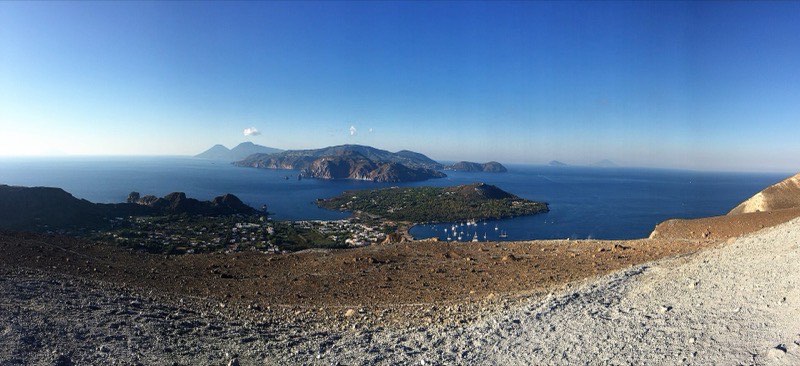
Three islands far out at sea, three different authorities. Where you walk, what is closed or forbidden, and which sailings are left when the summer ends.
 Guide
On Stromboli you walk up to 290 m on your own, on Vulcano only on a green light, on Alicudi and Filicudi you walk the mule tracks. Rules read in the acts themselves, and the October timetables.
Next step
From the principles to the places
Rules are worth little until they apply to a precise spot. From here you reach the pages with access points, parking and tracks.