Guide
Between Christmas and the Epifania: walking in Sicily when the offices are closed
In fourteen days there are seven working days, the parks do not publish their opening hours and the bus to Etna skips 25 December and 1 January. What stays open, by when you have to ask, and what you can do without booking anything.
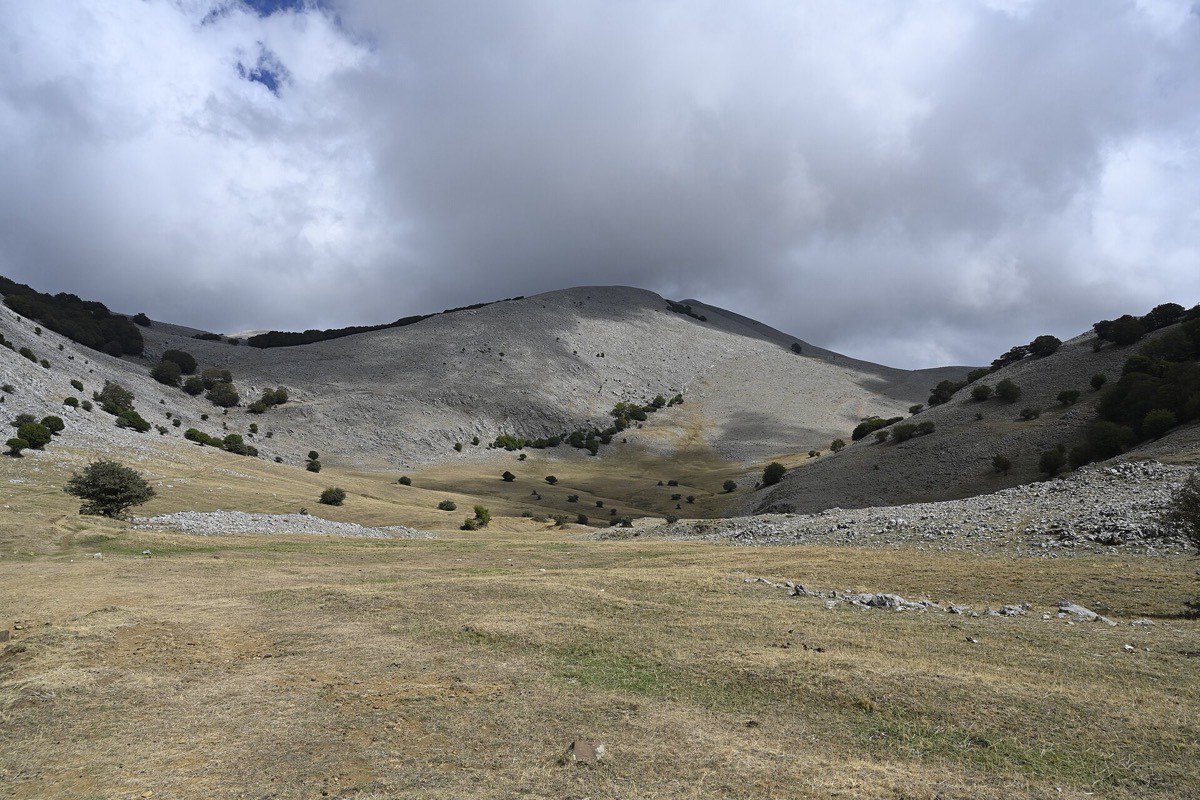
Between 24 December and 6 January the Sicilian paths do not close. Almost everything you need in order to organise a walk on them does: in fourteen calendar days there are seven working days, and none of the three park authorities publishes an opening time for the public, so you do not even know what hour to try telephoning. The coastal reserves stay open, on a short winter timetable. In the Nebrodi a walk has to be authorised in advance, and the application travels by post or by fax; the only bus service that climbs Etna does not run on 25 December or on 1 January. Here you have, area by area, what is really open, by when you have to move, and what you can do without booking anything. Read on 30 October 2026.
How many working days are there really between Christmas and the Epifania?
Seven out of fourteen. In 2026, 24 December falls on a Thursday and 25 December on a Friday, so Christmas Day, Santo Stefano on the 26th and the Sunday make a block of three days with no offices open; work goes on from the 28th to the 31st, before New Year’s Day, the Saturday and the Sunday close three more. That leaves Monday 4 and Tuesday 5 January, because the Epifania, the Epiphany on 6 January, falls on a Wednesday. Anyone waiting for an answer from an office has two windows, and the second is four days wide.
The same calendar weighs on tickets, since many authorities distinguish weekdays from Sundays and public holidays, and on the holidays they open in the morning only. In those two weeks the holidays are six: 25, 26 and 27 December, then 1, 3 and 6 January. Nearly one day in two therefore has its hours halved, with the last entry around lunchtime.
The real obstacle, though, is not the number of days: it is that nobody declares which are theirs. On the Nebrodi website there are four offices, from Caronia to Sant’Agata di Militello, each with its own telephone number and no hours for callers. In the Madonie the contacts give an address, a telephone number, an email and a PEC address, the Italian certified email, with no time band, while the URP of the Parco dell’Etna, its public information office, was still declared under construction on 30 October 2026. Without ordinary opening hours there is no Christmas timetable to compare them with. And nobody writes down the closure on 25 December, given that it is the one thing everybody takes for granted.
Notices, when they come, come late. In the Nebrodi index, office closures recur all year round, between patron saints, pest control and power cuts, with notice of between one and three days. The precedent to remember is from 30 December 2025, when the authority announced that on 2 January 2026 its premises would be closed for pest control: anyone with an application in the middle of those dates found out two days in advance.
By when do you have to ask for the Nebrodi permit?
Before Christmas, if the walk falls in the holidays. The page “Autorizzazione per la fruizione”, the authorisation for public use, citing article 17 of the founding decree no. 560 of 1993, writes that the hiking activities allowed in the park, among which it lists environmental education and outings on foot, by mountain bike and on horseback, need prior authorisation “as a rule, 7 (seven) days before”. Seven days before 2 January is 26 December, which is a Saturday and the day after Christmas; seven days before 27 December is the 20th, a Sunday. To have an office in front of you that will register the application, it has to be sent by Wednesday 23 December.
How it is sent, then, comes as a surprise. The form is collected at the park’s information centres or downloaded from the website, and the channels given for sending it are two: ordinary post to the Caronia office and the fax on 0921 335794. The address fruizione@parcodeinebrodi.it appears on the line below, with the telephone number 0921 333015, but as a contact “for information about that same authorisation”. That the application may be sent by email is not written, and neither is the opposite. It is worth telephoning before 24 December and having it confirmed, given that an envelope posted on the 28th arrives when it arrives.
On the outcome the authority is blunt: it examines, authorises or refuses, and it points out that “activities that are not authorised are subject to the relevant penalties”. Article 17 then has one line that in this period weighs more than the others, because the authority reserves the right to set limits or conditions “in zones of particular natural interest or because of excessive numbers, up to closing some areas to visitors altogether”. It is the rule that would allow a crowded area to be closed from one day to the next. An act applying it during the holidays we have not found.
One question stays unanswered, that is whether the obligation also applies to someone walking alone: the formula “hiking activities of public use allowed in the park” does not distinguish between an organised group and an individual. Until the authority clarifies it the application is made, given that the penalty is laid down and the office that could explain it to you does not answer from 25 December onwards.
Can you walk into the Madonie freely?
Yes, and here lies the difference between the island’s two largest parks. The Madonie rules on public use, on the page updated on 27 June 2026, are a list of ten prohibitions and provide for no prior authorisation to walk: no hunting and no firearms, no fires, no camping and no bivouacking, no picking plants, no entering natural cavities outside the marked places, no passing through burnt woodland and no parking outside the car parks. Anyone turning up on 27 December in boots asks nobody’s permission.
One prohibition, though, depends on the weather, and it is the one that is triggered most often in those days. In a notice of 12 September 2026 the acting director wrote that in alert conditions, naming “strong wind, heavy rain, thunderstorms or snow”, going into the woods is strictly prohibited, and he asked people not to stop or come close to the base of the monumental trees. Snow is named explicitly, so it applies to December and to January. There are also guidelines on behaviour under amber and red alert, approved in 2020 by the Autorità di bacino, the river basin authority, whose operational text sits in an annex we have not read.
What is missing is a quick way of knowing how the mountain is. On the plateau of Piano Battaglia the park announces a live stream, with a page from January 2022 and a webcam installed by Weather Sicily together with the Madonna delle Nevi parish, but the link to the video is written with two protocols stuck together and does not open. The webcams that do work are on the page where to look to see whether there is snow, while the mountain under snow has a guide of its own.
What changes on Etna between Christmas and the Epifania?
Not the rules on going up, because the park does not make them: how far you can get is decided by the ordinanze, the ordinances of the mayors of the Etna comuni, which apply on public holidays as on any other day, and which we have collected one by one in the guide on Etna permits. The authority publishes a nulla osta form, a clearance request, for scientific research or public use activities, dated February 2020, without saying in which cases it is needed or within how many days it has to be submitted.
What does change is how you get there. The Azienda Siciliana Trasporti writes that the Catania-Etna Rifugio Sapienza service “runs every day except on the following dates: 25 December, 1 January, 1 May, 15 August and Easter Sunday”. The only bus service that reaches 1,900 m therefore skips the two days when most people would like to go up. On the others it leaves piazza Giovanni XXIII at 8:15, leaves the Sapienza again at 16:30, and the return ticket costs €6.60 even if bought on board. The rest of the routes you can reach by bus are in the guide on walking without a car.
The cable car is private and publishes very little, and what little it publishes it publishes badly: the tickets page lists the products without prices, which appear only in the detail pages. There, on 13 November 2026, the gondola alone up to 2,500 m cost €54 return and the tour up to 3,000 m with off-road vehicles and a guide €82, with the service declared every day from 8:30 to 16:45 and the last descent at 17:15. What really does not exist is a calendar for the Christmas period, and there is no start date for the winter timetable either; the description of the packages says only that in winter the stretch between 2,500 and 2,800 m is covered by snowcat instead of by the off-road vehicles. Anyone counting on the cable car for 1 January has no document to count on. The snow-covered side is told by another guide, which comes out together with this one.
Do the coastal reserves stay open? On what timetable?
They stay open, and that is the good part of the news. The Servizio per il Territorio di Siracusa, the regional land service for the province of Siracusa, publishes a single timetable, month by month, for Vendicari, Cavagrande del Cassibile and Pantalica: from November to March it is 9:30-16:00. The line that shifts the day sits under the table, where the authority writes that “the entrances close one hour before the reserves close”. In December and in January, therefore, the last entry is at 15:00.
The ticket is paid at the gate and by card only, since cash is not accepted: Vendicari costs €3.50 full, €1.50 reduced and €7 for a family, Cavagrande €2, €1 and €4, while at Pantalica there is nothing to pay for now. Under the age of eight entry is free. On closures the authority stays vague, because the reserves are open every day “except for temporary closures in the event of exceptional circumstances”, and neither 25 December nor 1 January is named. What does really arrive, in those weeks, is closure for a weather alert.
At the Zingaro, on the other hand, the timetable depends on which document you read. The home page writes that the Zingaro and Monte Cofano reserves “are open every day from 8:00 to 16:00”; the trail map in PDF, published by that same home page, in its notices box writes “The reserve is open every day from 07.00 to 19.00”. Two documents from the same authority, two different timetables, and we are not going to choose for them. In December the difference is not theoretical, because sunset falls between 16:00 and 19:00.
The ticket costs €5, €3 reduced for students, police and armed forces, environmental associations and scouts, and it is free under the age of eight; here too cash is not accepted. The same map warns that “the routes currently open are the ones marked in red”, and no date is attached to that notice, so before planning the traverse from one entrance to the other it is worth looking at it and then ringing 0924 35108 or the freephone number 800 116616.
In the Iblei, what is open, and who says so?
In the Iblei the problem is the calendar that is not there. At Kamarina and Cava d’Ispica the archaeological park distinguishes weekdays from Sundays and public holidays and publishes the days one by one, but since 25 October 2026 the weekday opening of Cava d’Ispica has been in the morning only, and on the holidays, except for the dates expressly given, you go in from 9:00 to 13:30 with the last entry at 13:00. The calendar online stops at October 2026: on 30 October there was not a line about November, December or January. Fees and access to the Iblei valleys are in the guide on the Iblei gorges.
At Pantalica, instead, there is a free service that risks being missed precisely because it is booked. The authority offers one shuttle a day, at 9:00, for about three hours of touring including stops: on odd-numbered days it leaves from the Fusco entrance at Sortino, on even-numbered ones from Ponte Diga at Cassaro, and it always comes back to where it started. There are fourteen seats, plus two for wheelchairs. Booking is online only, uploading a copy of an identity document, and the form accepts dates from three days after the one on which you fill it in: for 2 January, therefore, you book by 30 December.
Two warnings hold up the rest. The authority does not publish a period of validity for the service and does not say whether the shuttle runs on public holidays, so confirmation has to be asked for; and in rain the reserve can close, and then the run is cancelled. The alternation between even and odd sends anyone setting off on 24, 26, 28 and 30 December, then on 2, 4 and 6 January, to Ponte Diga, and everybody else to the Fusco: that is arithmetic on the published rule, not a calendar from the authority.
What can you do without booking anything?
Almost everything, as long as you accept two constraints: you start early and you get back early. The Siracusa reserves, the Zingaro and Monte Cofano are paid for at the gate by card and ask for nothing in advance. In the Madonie there is no ticket and no authorisation; on Etna, below the boundary set by the ordinanze, you walk without permits. Anyone with three free days and no wish to telephone a closed office has almost the whole island in front of them.
The things that need an office, on the other hand, are four, and you recognise them at a glance: the Nebrodi permit, the Pantalica shuttle, a bed in a mountain hut, a guide. If you need one of those, the telephone call is made before 24 December and not on the 28th, because on the 28th somebody may answer or may not. When nobody answers you change the plan, rather than setting off and hoping: a rule misread above a closed door is one that nobody will correct for you afterwards.
One constraint is left that has nothing to do with offices, and that is the hours of daylight. At the end of December the dark comes shortly after five, while the sun leaves the shaded slopes earlier, and a round planned as if it were March ends with a head torch on. Winter light, and how you work out the hour at which to turn back, have a guide of their own, which comes out together with this one.
Huts and guides: what can you actually book?
Sleeping up high is settled with a telephone call, not with a calendar. The Rifugio Marini at Piano Battaglia, which belongs to the Palermo section of the CAI, the Italian Alpine Club, does not publish its opening periods on its Prenota Rifugi page and asks you to contact the management by email or on 335 7772269. The rates are €30 a night in the dormitory for non-members, €24 for members and €21 for members under 25, with a €30 supplement for heating. The deposit comes back at 30 per cent only if the cancellation arrives seven days ahead, that is with the same notice the Nebrodi ask for.
On the coast there is a place that would be perfect in winter and that is not in use at the moment. The Zingaro bivouac huts are in contrada Sughero, about two hours’ walk from the entrances, and the reserve grants them with authorisation from the Direzione “from 15 October to 15 May unless otherwise ordered”, for two nights at most and €10 per person, ticket included. The website, though, warns in two places that “use of the bivouac huts is suspended for the time being”, without saying from when or until when. The full picture is in the guide on huts and bivouac huts.
For guides the source is thinner still. In the Nebrodi the list counts fifteen associations and firms, with no hours and without saying whether being accompanied is compulsory; at the Zingaro you fill in a form and send it to the Direzione, the service is described as educational work for schools, and there is neither a minimum notice period nor a price. At the other end, in both cases, there is a person who in those days may be on holiday. You write early and you wait for an answer in writing, because a “we’ll be in touch” on the telephone on 23 December is not a booking.
Is there shooting during the holidays too?
Yes, the hunting season covers the whole period, and in the Madonie the days of wildlife control with firearms carry on, announced a couple of days in advance on the park website: the notice of 27 October 2026 concerned four contrade of Isnello for the 29th. Dates, days when shooting is not allowed and areas where nobody shoots are in the guide on the hunting season.
If something happens, who answers?
Rescue is the one thing that works as it always does: 112 answers on 25 December as on 7 January, it is free and it goes through even with no credit, and what to say in the first thirty seconds is explained in the guide on mountain rescue. What changes is the time it takes, because on those days the mountain roads fill up with cars that have driven up to see the snow, often without chains, and a vehicle that has to climb a blocked provincial road takes as long as it takes. The margin that saves you is the hour at which you have decided to turn back.
There is one information service that does not go on holiday, and that is the Meteomont bulletin of the Carabinieri, issued “every day at 14:00” for thirteen mountain sectors; for Etna and for the island’s other ranges the monitoring network belongs to the Corpo forestale della Regione Siciliana, the regional forestry corps. The hour of issue counts. The bulletin you read early in the morning is still the previous day’s, and between the afternoon and dawn it may have snowed.
In practice
Before 24 December you close everything that needs a human answer: the Nebrodi permit, the bed in a hut, the guide, the Pantalica shuttle if the date is settled. From the 24th onwards you work with what asks nothing of anybody, that is reserves with an electronic ticket at the gate, open paths, and getting back in daylight. The time to keep in mind in the Siracusa reserves is not the closing time but the time the entrances close, which in December and January is 15:00 exactly.
And one thing has to be taken for what it is: in those two weeks there is no margin for correction. An office that does not answer on 2 January is not an office that answers later, and a gate found closed at 15:10 stays closed. You set off with information verified two weeks earlier, or else you choose a route that depends on nobody.
What we were unable to find out
On 30 October 2026 none of the three park authorities had published its holiday closures, and none of the three publishes ordinary opening hours for the public: even the basis for comparison is missing. At Kamarina and Cava d’Ispica the calendar of holidays for November, December and January was not online; the Etna cable car keeps its prices only inside the pages of the individual products and publishes no Christmas calendar at all; the page of the Pantalica shuttle declares no period of validity. It is worth ringing again after 15 December, which is when these notices usually appear.
Other things stay open, and we list them so that somebody can close them. Whether the seven days of the Nebrodi are calendar days or working days is not written, and neither is whether the obligation applies to someone walking alone. Of the notice of 30 December 2025 we have the title, the date and the opening words, not the list of the offices that were closing. The suspension of the Zingaro bivouac huts has no start date and no end date, while the reserve’s two timetables go on contradicting each other. On rescues on those days there are only press reports, with different figures and different years, and the CNSAS does not publish statistics by region: we have left them out.
Real cases
Case
December 2025: the office closes on 2 January, and you find out on the 30th
The Parco dei Nebrodi is the only one of the Sicilian parks that requires prior authorisation to walk. During the holidays the office that issues it follows its own calendar.
- On 30 December 2025 the authority published a notice headed “2 gennaio 2026 - Chiusura locali dell’Ente Parco dei Nebrodi per attività di disinfestazione”, the closure of the park authority’s premises for pest control, with the dateline “Caronia, 30 Dicembre 2025”.
- The detail page does not display the body of the notice: of the list of offices involved you can read only the beginning, “Si comunica che gli Uffici dell’Ente Parco dei Nebrodi nelle sedi di S.A...”.
- Scrolling through the index of notices, office closures recur for patron saints, sanitising and pest control, with notice running from one to three days.
- On 30 October 2026 no notice concerned the 2026-2027 Christmas period.
What this tells you. The notice with which these authorities announce a closure is shorter than the deadline with which they ask for applications. Anyone who needs to obtain a formal act asks for it before Christmas, not between Christmas and the Epifania.
Parks and reserves: who runs themCase
The Zingaro, two official timetables that do not match
When two documents from the same authority say different things, the difference is paid for by whoever is planning the way back.
- The reserve’s home page, read on 30 October 2026, writes: “Le Riserve dello Zingaro e di Monte Cofano sono aperte tutti i giorni dalle 8:00 alle 16:00”, open every day from 8:00 to 16:00.
- The trail map in PDF, published on that same home page, in the box headed “AVVISO” writes: “La Riserva è aperta tutti i giorni dalle ore 07.00 alle ore 19.00”, open every day from 07.00 to 19.00.
- The same map warns that “the routes currently open are the ones marked in red”, with no date beside the notice.
- The ticket costs €5 full and €3 reduced, and the reserve does not accept cash.
What this tells you. In December sunset falls between 16:00 and 19:00: the traverse has to be planned on the more restrictive timetable and confirmed by telephone, on 0924 35108 or on the freephone number 800 116616.
The Zingaro pageCase
The bus to Etna skips exactly the 25th and the 1st
The south side of Etna has a single public bus service, and its calendar is published.
- The Azienda Siciliana Trasporti writes that the Catania-Etna Rifugio Sapienza service “runs every day except on the following dates: 25 December, 1 January, 1 May, 15 August and Easter Sunday”.
- On the other days the departure from Catania, piazza Giovanni XXIII, is at 8:15 and the return from the Rifugio Sapienza at 16:30.
- The return ticket costs €6.60 and can also be bought on board.
- The cable car, which is private, published neither opening hours nor fares on 30 October 2026; by 13 November 2026 the hours and fares were in the detail pages of the packages, while a calendar for the Christmas period still did not exist.
What this tells you. Anyone going up Etna without a car on 25 December or on 1 January has no public transport: either they make other arrangements, or they move the date by one day.
Walking without a carFrequently asked questions
Are the Sicilian parks closed between Christmas and the Epifania?
The land is not, the offices largely are. The reserves that charge for entry stay open every day on the winter timetable, while the authorities that issue permits work only on the seven working days of the period: 24, 28, 29, 30 and 31 December, 4 and 5 January. None of the three regional parks publishes its opening hours for the public, and on 30 October 2026 none had published its 2026-2027 Christmas closures.
Do you need a permit to walk in the Nebrodi at New Year?
The Parco dei Nebrodi requires prior authorisation for the hiking activities allowed in its territory, under article 17 of the founding decree no. 560/93, “as a rule, 7 (seven) days before”. The form has to be sent by post to the Caronia office or by fax on 0921 335794. For a walk in the first days of January the application has to be sent by 23 December, because between the 25th and the 27th and between the 1st and the 3rd there are no working days.
What time do the Vendicari, Cavagrande and Pantalica reserves close in December?
At 16:00, with the entrances closing one hour earlier, so at 15:00. The 9:30-16:00 timetable applies from November to March. The ticket is paid by card only: €3.50 full at Vendicari, €2 at Cavagrande del Cassibile, while at Pantalica there is nothing to pay for now. Under the age of eight entry is free.
Does the bus to Etna run on 25 December and 1 January?
No. The Azienda Siciliana Trasporti declares that the Catania-Etna Rifugio Sapienza service runs every day except 25 December, 1 January, 1 May, 15 August and Easter Sunday. On the other days it leaves piazza Giovanni XXIII at 8:15 and leaves the Sapienza again at 16:30, with a return ticket at €6.60.
Can you sleep in a Sicilian mountain hut during the holidays?
It depends on the keeper, and the calendar is not published. The page of the Rifugio Marini at Piano Battaglia, on the CAI Prenota Rifugi portal, invites you to ask the keeper about the opening periods by email or on 335 7772269, and flags a €30 supplement for heating. The bivouac huts of the Riserva dello Zingaro, which would be granted from 15 October to 15 May, were suspended as of 30 October 2026.
What can you do without booking and without ringing anybody?
The coastal reserves with a ticket at the gate, paid by card: Zingaro and Monte Cofano, Vendicari, Cavagrande del Cassibile, Pantalica. In the Madonie you need neither a ticket nor an authorisation, you only have to respect the ten prohibitions of the rules on public use. On Etna you walk freely below the boundary set by the mayors’ ordinanze.
Does the Pantalica shuttle run during the holidays?
We do not know: the authority does not publish a period of validity for the service and does not say whether it runs on public holidays. What is published is the rest: one run a day at 9:00, free, fourteen seats plus two for wheelchairs, booking online only with a copy of an identity document, and dates accepted from three days after the one on which you apply. On odd-numbered days it leaves from the Fusco, on even-numbered ones from Ponte Diga.
With snow or an alert, does the Parco delle Madonie close the paths?
In a notice of 12 September 2026 the park wrote that in alert conditions, naming strong wind, heavy rain, thunderstorms or snow, going into the woods is strictly prohibited, and it asked people not to come close to the base of the monumental trees. It is not a closure announced day by day: it is a prohibition that is triggered by an alert from the regional Protezione civile, the civil protection service.
All the pages cited were opened on 30 October 2026, and the Etna cable car page was opened again on 13 November 2026. From the Parco dei Nebrodi come the text of the page on the permit for public use, with the seven-day deadline and article 17 of the founding decree no. 560/93, the index of notices, the contacts page, the page of the information centres and the list of guides; the notice of 30 December 2025 about the closure of 2 January 2026 we read in its title, its date and its opening words, because the detail page does not display its body. From the Parco delle Madonie come the list of prohibitions updated on 27 June 2026, the notice to walkers of 12 September 2026, the page of the guidelines on land instability (whose operational annex we have not read), the contacts, the page of the Piano Battaglia webcam and a danger zone notice of 27 October 2026. Of the Parco dell’Etna we read the home page, the URP page, which is declared under construction, and the page of rules and forms. The days, times and price of the bus to the Rifugio Sapienza come from the page of the Azienda Siciliana Trasporti, read over HTTP because the site presents a self-signed certificate. Opening hours, fees and shuttle services of the Siracusa reserves come from the website of the Servizio per il Territorio; opening hours, fees, bivouac huts and guided visits of the Zingaro from the reserve’s own website, where the home page and the trail map in PDF give two different opening times, and we write that down instead of choosing. The Iblei opening hours come from the page of the Parco archeologico di Kamarina e Cava d’Ispica, the Piano Battaglia hut from the CAI Prenota Rifugi page, the snow bulletin from the page of the Meteomont service. We were unable to verify: the 2026-2027 Christmas closures of any of the three parks, because none of them had published them; the ordinary opening hours for the public of the three authorities, which none of them publishes; the calendar of Sundays and public holidays for November, December and January of the archaeological park; the Christmas calendar of the Etna cable car, which does not exist, nor any date on which the winter timetable starts; the period of validity of the Pantalica shuttle service and how it works on public holidays; the start and end date of the suspension of the Zingaro bivouac huts; whether the seven days of the Nebrodi are calendar days or working days, and whether the obligation also applies to someone walking alone. On rescues in the Christmas period there are only press reports, with different figures and different years, and we have not used them.
Written and checked by the Redazione Sentieri Siciliani. Published on 5 November 2026, updated on 5 November 2026. How we work.
Sources
- Parco dei Nebrodi, page on the authorisation needed to use the park — the duty to obtain authorisation in advance for walking activities, the usual seven days’ notice, sending it by post or fax, the contact details, and the text of art. 17 point 1 of the decree establishing the park, no. 560/93
- Parco dei Nebrodi, notice of 30 December 2025 on the offices closing on 2 January 2026 — the closure of the authority’s offices on 2 January 2026 for pest control, announced on 30 December 2025
- Parco dei Nebrodi, index of its Avvisi, the notices — how often the offices closed in 2025 and in 2026 and how much warning was given, and the absence of any notice about the Christmas period 2026-2027
- Parco dei Nebrodi, contacts page — the authority’s four offices with addresses and telephone numbers, and the absence of any opening hours
- Parco dei Nebrodi, page on the park’s information centres — the three information centres at Mistretta and Cesarò, with no full addresses, no hours and no telephone numbers
- Parco dei Nebrodi, page on guides and leaders — the fifteen bodies the park lists as guides and leaders, with no hours and no stated duties
- Parco delle Madonie, Fruizione del Parco, use of the park: the list of bans (27 June 2026) — the ten bans in the rules on use of the park, and the absence of any authorisation in advance for walking
- Parco delle Madonie, notice to walkers of 12 September 2026 — the ban on going into the woods when a warning is in force, with snow named among the events, and keeping a distance from the monumental trees
- Parco delle Madonie, the guidelines approved by D.S.G. no. 174/2020 of 17 August 2020 on how to behave under orange and red warnings — that guidelines on how visitors should behave where there is ground instability and a hydrogeological warning exist, and what they cover
- Parco delle Madonie, contacts page — the authority’s address, telephone number, email and PEC, its certified email address, and the absence of any opening hours
- Parco delle Madonie, page Pianoro di Piano Battaglia Live Streaming (21 January 2022) — the webcam installed by Weather Sicily together with the Madonna delle Nevi parish, and the link to the video written wrongly
- Parco delle Madonie, Zona di pericolo notice of 27 October 2026 for Isnello, a danger area notice — the form these notices of wildlife control with firearms take, and how much warning they give: published on 27 October for the 29th, for the districts of Isnello
- Parco dell’Etna, URP page, its public enquiries office — the page declared under construction and carrying no opening hours, and the authority’s contact details
- Parco dell’Etna, page on rules and forms — the form of 18 February 2020 for requesting a nulla osta, a clearance, for scientific research and for use of the park, with no deadline in days, and the suspension of urgent requests
- Azienda Siciliana Trasporti, the Sicilian bus company, page Bus Catania Etna — the days on which the service to the Rifugio Sapienza does not run (25 December, 1 January, 1 May, 15 August, Easter Sunday), the times and the fare
- Funivia dell’Etna, the Etna cable car, Tickets page — the description of the packages, the snowcat in place of the off-road vehicles in winter, and the absence of hours, prices and a Christmas calendar
- Regione Siciliana, Servizio per il Territorio di Siracusa, the regional land office for Syracuse, page on opening hours — 9:30-16:00 from November to March for Vendicari, Cavagrande and Pantalica, the entrances closing an hour earlier, and opening every day barring exceptional events
- Regione Siciliana, Servizio per il Territorio di Siracusa, page on prices — the prices for Vendicari and Cavagrande, the absence of a ticket at Pantalica, free entry under the age of eight, and no payment in cash
- Regione Siciliana, Servizio per il Territorio di Siracusa, page on the shuttle tour (Valle dell’Anapo) — the single departure at 9:00, the alternation between the Fusco entrance on odd days and Ponte Diga on even ones, free entry, fourteen seats, and booking online from three days after today’s date
- Riserva naturale orientata dello Zingaro, the Zingaro managed nature reserve, home page — the hours given as 8:00-16:00 for the Zingaro and for Monte Cofano, and the notice suspending the use of the bivouacs
- Riserva naturale orientata dello Zingaro, the map of the routes, as a PDF linked from the home page — the notice box with the hours 07.00-19.00 and the warning that the routes that can be used are the ones picked out in red, and the key to the paths
- Riserva naturale orientata dello Zingaro, information page — a full ticket of 5 euros and a reduced one of 3, free entry, no payment in cash, and the contact details of the management and the freephone number
- Riserva naturale orientata dello Zingaro, page on the bivouacs — bivouacs in contrada Sughero allowed with authorisation from 15 October to 15 May, two nights, 10 euros a person, and the suspension now in force
- Riserva naturale orientata dello Zingaro, page on booking a visit and a guide — the form to send to the management for a guided visit, with no minimum notice, no costs and no days stated
- Parco archeologico di Kamarina e Cava d’Ispica, the archaeological park authority, hours page — Cava d’Ispica open only in the mornings from 25 October 2026, holiday hours of 9:00-13:30 with last entry at 13:00, and a calendar that stops at October 2026
- CAI, Prenota Rifugi, the club’s hut booking service, entry for the Rifugio Marini at Piano Battaglia — opening periods not published and to be asked of the keeper, the prices, the 30 euro heating supplement, and the deposit refunded at 30% with seven days’ notice
- Aeronautica Militare, the Italian Air Force, page on the Servizio Meteomont, the snow and avalanche service — the bulletin issued every day at 14:00 for thirteen mountain sectors, and the Sicilian network run by the Corpo forestale della Regione Siciliana, the regional forestry corps
- Parco dei Nebrodi, the Nebrodi park authority — access, forest tracks and the rules of the Nebrodi park
- Parco delle Madonie, the Madonie park authority — the path network, the rules and the state of the routes in the Madonie
- Parco dell’Etna, the Etna park authority — the park rules, the authorised paths and access to the volcano
- Protezione Civile della Regione Siciliana, the Sicilian civil protection department — weather warnings and forest fire risk notices for Sicily
- Corpo Nazionale Soccorso Alpino e Speleologico, the national mountain and cave rescue service — mountain rescue procedures and the statistics of call-outs
- Club Alpino Italiano, the Italian alpine club — the hiking grading scale, waymarking and the Sentiero Italia
- Regione Siciliana, the Sicilian regional government — regional orders, nature reserves and state forest land
Where to go from here
In the same series
Next step
From the principles to the places
Rules are worth little until they apply to a precise spot. From here you reach the pages with access points, parking and tracks.