Guide
Picking mushrooms in Sicily: you need the tesserino
It is compulsory, you apply for it at your comune of residence, and visitors need one too. Almost nobody knows that, and the penalties are real.
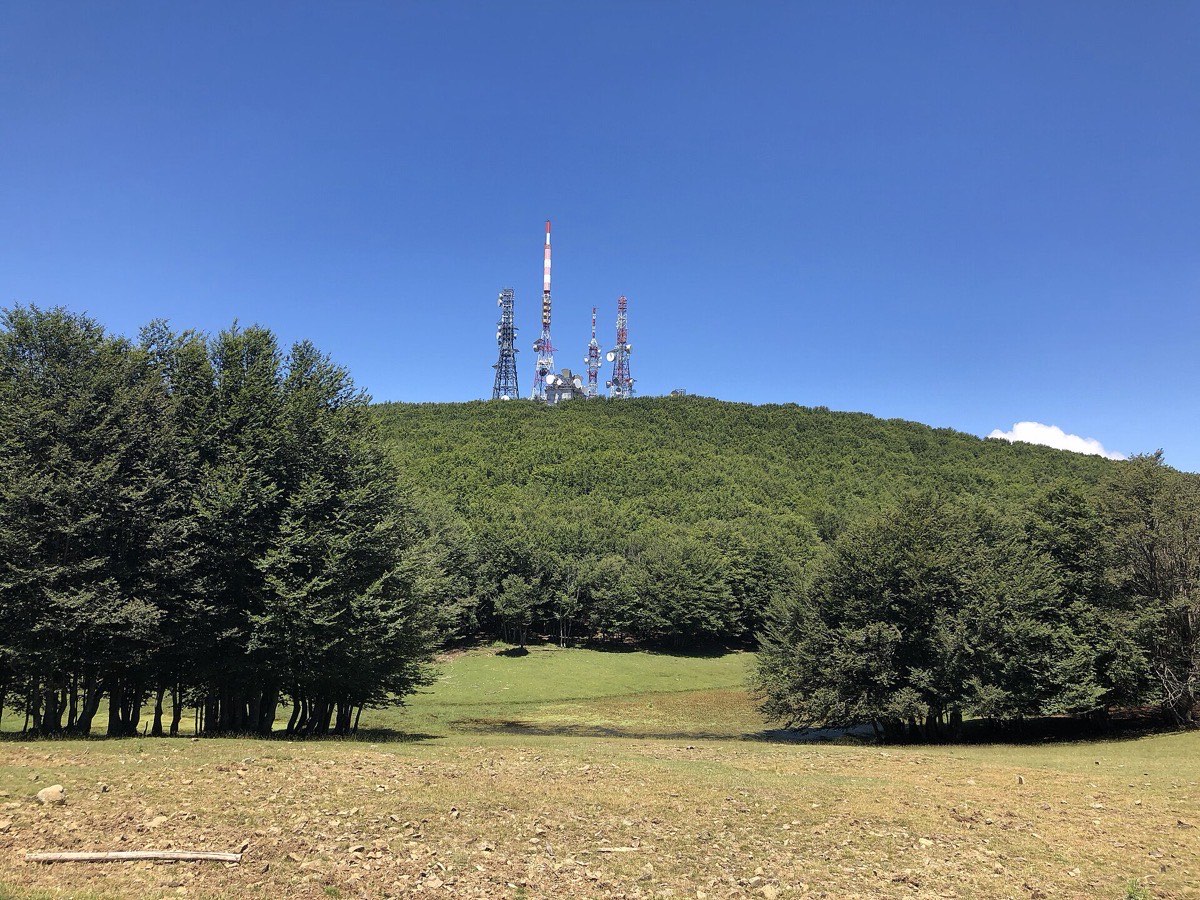
In the woods of the Nebrodi and the Madonie, in autumn, you come across a fair number of people with baskets. Some of those people are within the rules, and some are not and do not know it.
Do you need the tesserino?
In Sicily picking wild mushrooms requires a tesserino, a personal permit card, compulsory since 2008. It is issued by the comune where you live and is valid across the whole region.
People who do not live in Sicily, visitors included, have to be authorised as well. Not being able to apply for the tesserino at their own comune, they apply to a Sicilian comune for an annual authorisation, which allows the same four kilos a day as the amateur tesserino.
It is not issued to anyone under fourteen, who may pick only when accompanied by an adult holding a tesserino, and whose pickings count towards the accompanying adult’s limit.
How much can you pick?
The Sicilian amateur limit is four kilos a day, the professional one twelve. The tesserino costs a modest annual fee, is issued after a training course of at least fifteen hours and has to be stamped every year at the comune: without that stamp it is not valid even if it has not expired.
The application has to be submitted by 31 October each year.
The limit may be exceeded only where what takes you over it is a single specimen or a single cluster.
A discrepancy we cannot explain
The national framework law requires the regions to set the daily limit up to a maximum of three kilos. Sicily allows four.
The plausible explanation is the exclusive competence of a region with special status in agriculture and forestry, but we have not found a ruling that confirms it. We flag it because it is the kind of thing on which, if you are checked, it is better to have the tesserino than the legal argument.
How do you pick?
The rules on method are precise and the strictest of them concerns the ground.
Rakes and hooks are prohibited, and so is removing the surface turf layer: it is the breach punished most heavily, because raking the leaf litter destroys the mycelium, that is the organism that will produce the mushrooms of the years to come.
Ventilated containers, preferably of woven natural fibre, so that the spores scatter along the way. The national law is sharper and prohibits plastic containers in all cases: the plastic bag is against the law.
Picking at night is prohibited.
Picking Amanita caesarea in the closed egg stage is prohibited: it is allowed only once the veil has torn naturally. It is a conservation rule that is also a safety rule, because the closed egg is the stage at which the good ovolo looks most like Amanita phalloides.
For the ovolo buono, the porcini, the prugnolo, the gallinaccio and the fungo di basilisco of the Madonie, a local species, there is a prohibition on picking specimens with a cap under three centimetres.
And deliberately damaging or destroying the fruiting bodies of any species is prohibited, including the inedible ones: the rule is aimed at people who kick the poisonous mushrooms over.
What changes inside the parks?
The Parco dei Nebrodi has made clear that no park tesserino is needed: the regional one applies, with the regional limits. The park’s old set of rules still circulates online, with paid permits and a limit of three kilos: it has been superseded, and the regional law expressly prohibits setting up paid reserves for picking.
The Parco delle Madonie, on the other hand, still publishes rules of its own on mushrooms, declared valid for the parts not in conflict with the regional law. They prohibit picking the fungo di basilisco in zone A of the park and allow picking from six in the morning until an hour before sunset. They also provide for paid permits and a limit of two and a half kilos for anyone not resident in the park’s comuni, two rules that look to be in conflict with the regional law: before going, it is worth asking the park authority which ones it applies today.
Picking remains prohibited in any case in the riserve naturali integrali, the strict nature reserves.
Having them checked is free
This is the piece of information most often missing. The ispettorati micologici, the mycological inspectorates of the local health authorities, check pickings intended for your own consumption free of charge, and issue a certificate.
You need to bring the mushrooms fresh, whole and cleaned of soil and leaves. It is the simplest way of staying out of the figures: a twenty-year study by the Milan poison control centre counted more than six hundred confirmed amatoxin poisonings, with forty deaths.
The rest of the undergrowth
On wild asparagus, oregano, capers and chestnuts we have not found regional legislation with quantity limits, and we do not invent figures. What remains is the rules of the parks, those of the state-owned woodland and the rights of the owner on private land. In the Parco delle Madonie, for instance, the rules on woodland produce set half a kilo a day of wild asparagus and of pungitopo, butcher’s broom, prohibit picking in zone A and in areas burned less than five years ago, and exclude a long list of endemic species; residents of the park’s comuni have exemptions.
On protected wild plants the position is a particular one: Sicily appears to be among the few Italian regions without a regional law on the protection of flora. Protection therefore comes through the rules of the individual protected areas and through the European habitats legislation. The information comes from an ISPRA survey that is not very recent and would need checking again.
Frequently asked questions
Do you need a permit to pick mushrooms in Sicily?
Yes, the regional tesserino, compulsory since 2008. It is issued by your comune of residence after a training course, it is valid across the region and it has to be stamped every year. People who do not live in Sicily, visitors included, apply instead to a Sicilian comune for an annual authorisation, which allows the same four kilos a day.
How many mushrooms can you pick?
Four kilos a day with the amateur tesserino, twelve with the professional one. The limit may be exceeded only where what takes you over it is a single specimen or a single cluster. It should be flagged that the national law sets a ceiling of three kilos: the discrepancy with the Sicilian limit is not resolved by any ruling we have found.
Can you use a plastic bag?
No. You need ventilated containers, preferably of woven natural fibre, so that the spores scatter along the way. The national law prohibits plastic containers in all cases.
Do you need a specific permit for the Nebrodi or the Madonie?
No. The Parco dei Nebrodi has made clear that the regional tesserino applies, while the Parco delle Madonie still publishes rules of its own, with the prohibition on picking the fungo di basilisco in zone A and its own hours: before going, it is worth asking the authority which rules it applies today. The old Nebrodi rules with paid permits that circulate online have been superseded: the regional law expressly prohibits paid reserves for picking.
Where can I have mushrooms checked?
At the mycological inspectorates of the local health authorities, which check pickings intended for your own consumption free of charge and issue a certificate. The mushrooms have to be brought in fresh, whole and cleaned of soil and leaves.
Documentary check on the 2006 Sicilian regional law and on its implementing decrees. A discrepancy between the national limit and the Sicilian limit is still unresolved, and we flag it instead of picking whichever figure suits us.
Written and checked by the Redazione Sentieri Siciliani. Published on 1 September 2026, updated on 1 September 2026. How we work.
Sources
- Regione Siciliana, the Sicilian regional government — regional orders, nature reserves and state forest land
- ISPRA, the national institute for environmental protection and research — protected areas, biodiversity and environmental data
- Istituto Superiore di Sanità, the national institute of health — reference health guidance
- CREA, the Italian council for research in agriculture and the analysis of the agricultural economy — research on agriculture, forests and grazing land
Where to go from here
Next step
From the principles to the places
Rules are worth little until they apply to a precise spot. From here you reach the pages with access points, parking and tracks.