Locality · Iblei and Val di Noto
Tonnara di Vendicari: which entrance, how far on foot and what you pay
The tonnara di Vendicari, the reserve’s old tuna-fishing station, stands inside the reserve in the municipality of Noto, a little over six hundred metres from the central entrance on the SP19: the path is flat and runs alongside the Pantano Grande, the big lagoon. The ticket costs €3.50 and between November and December you can go in from 9:30 to 15:00, because the entrances close an hour before the reserve does. Data verified on 24 November 2026.
The entrance to take is the central one, which the authority calls Vendicari and which is the main one, while the other four lead to their own beaches and reach the tonnara only from a distance. These are distances that change the shape of the day: from the Cittadella entrance, to the south, it is about 4.2 km of path, from Calamosche 3.2, from Marianelli 4.8 and from Eloro, the furthest north, 5.6. We measured them ourselves on 24 November 2026, on the paths mapped in OpenStreetMap. The authority in fact publishes only the 3.5 km between the Cittadella junction and the tonnara, and over that stretch the two measurements are close: 4.2 km against the authority’s 4.1.
Calamosche, meanwhile, is closed. In a notice dated 24 November 2026 the authority states that this entrance “will remain temporarily closed to the public” until further notice, without saying why, and specifies that the main Vendicari Centro entrance stays open as normal. Anyone setting off with Calamosche in the satnav therefore has to be redirected to the central entrance.
On the opening hours the same authority contradicts itself, and it is worth knowing beforehand. The seasonal table on the opening hours page gives 9:30-16:00 for November and December, with the entrances closing an hour earlier, while the reserve’s own page, two clicks away, says 7:00-20:00 with no distinction between seasons. We read both on 24 November 2026 and neither carries a date: the seasonal one is the only one that takes winter into account, so it is the one to work your return time out from.
There is a lot to see of the remains and not much to go inside. The processing complex, the malfaraggio, stretches about a hundred metres towards the sea, with the pillars that held up the roof and the chimney. They were restored and made safe by the Soprintendenza of Siracusa, the state heritage office. Beside them stands the tower, rectangular in plan, 18.15 by 16.80 metres, with walls that in places reach 3.15. Whether you can climb it or go inside, though, the authority does not say. Nor does it forbid it: it publishes no opening hours, it does not list the tower among the buildings open to visitors, while the regulations forbid leaving the marked paths.
A page by the Sentieri Siciliani editors
Before you go
Checked on 24 November 2026 · source: Servizio per il Territorio di Siracusa, Dipartimento regionale dello Sviluppo Rurale e Territoriale, the Siracusa office of the Sicilian regional department for rural and land development: the reserve, opening hours and ticket pages and the notice to visitors of 24 November 2026; distances from the five entrances measured by us on the OpenStreetMap paths on 24 November 2026- Entrances
- Vendicari Centro (main entrance) 36.8043, 15.0928 This is the one the tonnara is reached from: about 650 metres of flat path along the Pantano Grande, measured by us on the OpenStreetMap paths on 24 November 2026. The authority publishes only the 500 metres between the entrance and the beach. Open as of 24 November 2026.
- Calamosche 36.8187, 15.0977 Closed to the public until further notice, under a notice from the authority of 24 November 2026. When it is open, the authority gives 1,200 metres of path to the beach; from there to the tonnara is another 3.2 km by our measurement.
- Cittadella (south) 36.7761, 15.0951 From the entrance it is 300 metres to the Case Cittadella and another 300 to the junction, where the stretch of about 3.5 km that the authority gives for the Tonnara begins on the right: 4.1 km in all according to the authority, 4.2 according to our measurement of 24 November 2026. Straight on, after 200 metres, you reach the Cittadella dei Maccari.
- Eloro (north) 36.8411, 15.1040 About 300 metres to the beach at Eloro, along the San Nicola stream. To the tonnara it is 5.6 km, measured by us on 24 November 2026: it is the entrance furthest from the ruins.
- Marianelli 36.8323, 15.1004 Reached by 1.5 km of unsurfaced road off the SP19, then 450 metres to the ticket office and another 400 to the beach. From the ticket office to the tonnara is 4.8 km, our measurement of 24 November 2026.
- Parking
- A parking area in front of the central entrance, along the SP19 between Noto and Pachino; the authority does not publish whether parking is charged.
- By public transport
- The authority publishes no public transport services as far as the entrances: you need a car.
- Water
- No water point on the paths inside the reserve.
- Shade
- None on the path across the lagoons. A little cover only among the ruins.
- Permits
- The ticket is all you need to get in. A permit to visit the inside of the tower or the warehouses is not provided for by any act the authority publishes, but nor does the authority state the opposite.
- With children
- Yes
From the central entrance it is six hundred flat metres, which makes it one of the easiest places in Sicily to take small children. From the other entrances, with three to five kilometres to walk, it is not.
- With a dog
- No
The reserve’s regulations forbid bringing in pets.
- Entry fee and opening hours
- Full price €3.50, reduced €1.50 (police and armed forces, environmental associations, students, scouts), family €7.00, free under the age of 8, for disabled visitors with a companion and, with the authority’s prior permission, for anyone there to study or do research. Electronic payment only at the ticket offices at the entrances, no cash. The ticket is valid on the day it is issued and allows entry from any entrance of the reserve. The authority cites D.A. no. 85/Gab of 18 March 2015, which approves the access plan for the regionally managed reserves. Read on 24 November 2026. · November and December 9:30-16:00, with the entrances closing an hour earlier, so the last admission is at 15:00. The same table gives 9:30-16:00 from January to March as well, 7:00-19:30 in April and May, 7:00-20:00 from June to August, 7:00-19:00 in September and 7:00-18:00 in October. The reserve’s own page, on the same website, says 7:00-20:00 all year instead: the two pages do not agree and neither of them is dated. Read on 24 November 2026.
The practical details for Tonnara di Vendicari change over time. If you find something that does not match, please tell us.
What to expect
Fishing here ended with the Allied landings, in July 1943: the nets were never set again and the plant on shore was abandoned. Before that it had gone on for three centuries, but in fits and starts. It passed into private hands in the seventeenth century, did not work for much of the eighteenth, stopped again in 1884 and only got back to full production in the first decades of the twentieth. The three phases can still be read in the masonry: the original plant, the nineteenth-century modernisation and the changes made in the last century.
Everyone calls the tower Sveva, Swabian, while the dating is disputed. The authority puts its base in the Swabian period, between the thirteenth and the fourteenth century. A Noto charter of 1464, however, credits the building of it to Pietro d’Aragona, who wanted to defend the grain store from corsairs, while it was completed in the second half of the sixteenth century on the orders of the viceroy Juan de Vega. Damaged by the earthquake of 1693, in the nineteenth century it ended up serving as a stable and a store for the tonnara next door. The last restoration work was carried out by the Soprintendenza of Siracusa between 1975 and 1979, and today the sea washes one side of it, held off by concrete breakwaters.
A few steps from the tonnara are the tanks of a Hellenistic fish-processing plant: twenty-five of them, round and rectangular, cut into the rock and lined with plaster, with floors of cocciopesto, crushed-tile mortar. Fragments of amphorae suggest the place worked from the fourth to the first century BC, when fish was salted here and garum, the Roman fermented fish sauce, was made.
The path from the central entrance to the tonnara runs alongside the Pantano Grande, where the evaporation pans of the old saltworks remain, along with the salt worker’s house, built inside the lagoon in the nineteenth century. The saltworks closed in 1951 after a flood, and their purpose was precisely to preserve the tuna: that is why the two sets of buildings stand side by side.
In the former fishermen’s house, next to the tower, is the visitor centre with the ecomuseum, run by the Ente Fauna Siciliana association under an agreement with the reserve authority. Opening hours, as of 24 November 2026, are not published anywhere: the association’s website answers with a maintenance page from its hosting provider, and the reserve does not publish any of its own.
When to go
- November to March, if you are coming for the lagoons and the flamingos, even though the winter hours cut the day down to six and a half hours.
- April and October for walking with long light, when the reserve opens at 7:00 and you can cross from one entrance to another without hurrying.
- In summer the tonnara is reached early in the morning or late in the afternoon, because there is not a metre of shade on the path across the lagoons.
What to take
- Water: there is no water point on the paths inside the reserve.
- Closed shoes, because the ground is sand mixed with broken shell and turns stony around the ruins.
- A card or contactless, since the ticket offices do not take cash.
- Binoculars, if you are coming from the central entrance: the path passes right by the hides on the Pantano Grande.
- The Calamosche entrance is closed to the public until further notice, under a notice from the authority dated 24 November 2026 which does not state the reason. The central Vendicari entrance stays open, and from there it is a little over six hundred metres to the tonnara.
- A good part of the beach at Vendicari is closed to visitors because the loggerhead turtle, Caretta caretta, lays its eggs there, so the fenced areas are to be respected even when they look empty.
- The regulations forbid leaving the marked paths, camping and lighting fires, bringing in pets and bringing beach toys. The authority does not declare any permitted access inside the ruins, so the unsafe structures are looked at from outside.
- The reserve can close during the day for exceptional events or for works, and the authority states that closures are announced on the home page of its website: that is where to look on the morning you set off.
Frequently asked questions
Which entrance do you reach the tonnara di Vendicari from?
From the central one, which the authority calls Vendicari and which is the main one: it is a little over six hundred metres of flat path along the Pantano Grande. You can get there from the others as well, but walking a great deal further, that is 3.2 km from Calamosche, 4.2 from Cittadella, 4.8 from Marianelli and 5.6 from Eloro. Our own measurements on the OpenStreetMap paths, 24 November 2026.
How many metres is it from the central entrance to the tonnara, and over what surface?
About 650 metres, on flat unsurfaced track and compacted sand, with no height gain. The figure is ours, measured on the paths mapped in OpenStreetMap on 24 November 2026, because the authority publishes only the 500 metres between the entrance and the beach; by the same method the distance from Cittadella comes out at 4.2 km against the 4.1 the authority gets by adding up its own stretches.
Can you go into the Torre Sveva, or is it closed, and since when?
We cannot tell you, and neither does the authority. The reserve describes the tower, gives its measurements and the history of the 1975-1979 restoration, yet it publishes no visiting hours, does not list it among the buildings open to visitors and publishes no act forbidding access. The regulations, meanwhile, forbid leaving the marked paths. Verified on 24 November 2026.
How much is the ticket and which entrances sell it?
Full price €3.50, reduced €1.50, family €7.00, free under the age of 8 and for disabled visitors with a companion. Payment is electronic only, at the ticket offices at the entrances, and the ticket is valid for the whole day from any entrance of the reserve. As of 24 November 2026 Calamosche is closed, so that leaves Vendicari Centro, Eloro, Marianelli and Cittadella.
What are the winter opening hours, and on which days does the reserve close?
In November and December the reserve opens from 9:30 to 16:00 and the entrances close at 15:00, according to the authority’s seasonal table. There are no fixed closing days, apart from temporary closures for exceptional events or works, which the authority says it announces on the home page of its website. A second page on the same website says 7:00-20:00, though: read on 24 November 2026.
Can you go inside the ruins of the tonnara?
The pillars, the warehouses and the chimney were restored and made safe by the Soprintendenza of Siracusa, and the path runs through the middle of the complex, so you see them close up. Permitted access inside the buildings, though, is not something the authority declares, while the regulations forbid leaving the marked paths. Verified on 24 November 2026.
Is the visitor centre at Vendicari open?
The ecomuseum is in the former fishermen’s house, next to the tower, and it is run by the Ente Fauna Siciliana association under an agreement with the reserve. Opening hours, as of 24 November 2026, cannot be found: the association’s website answers with a maintenance page from its hosting provider and the reserve publishes none of its own.
Nearby
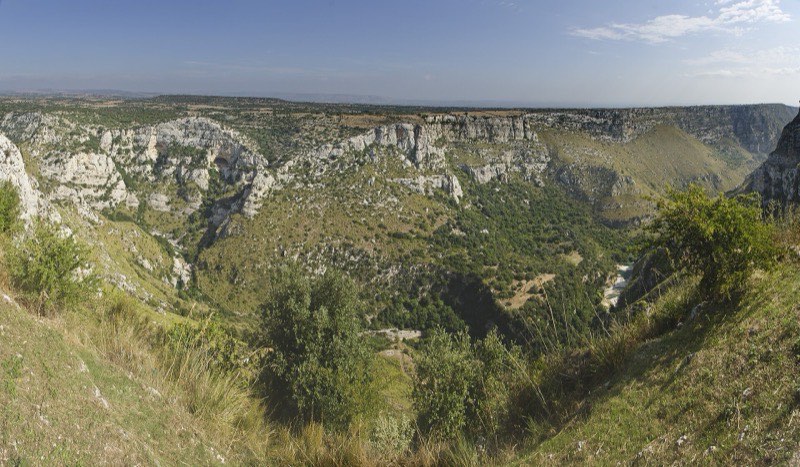 Nature reserve
A gorge with walls over 250 metres high and emerald pools on the floor. The way down is steep, the way back up is the hard part, and the reserve closes easily.
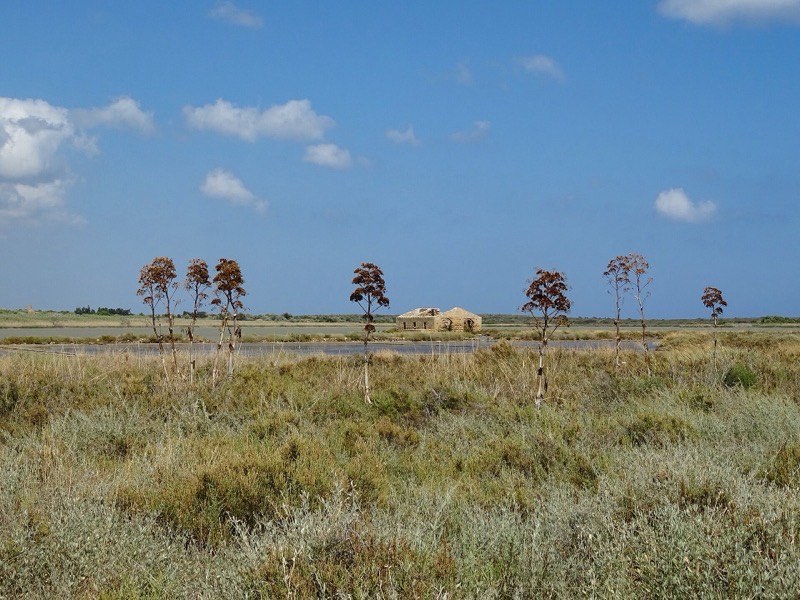 Nature reserve
Brackish lagoons, a ruined tonnara and the beach at Calamosche. The walking is flat, and this is the one Sicilian reserve that really works with small children.
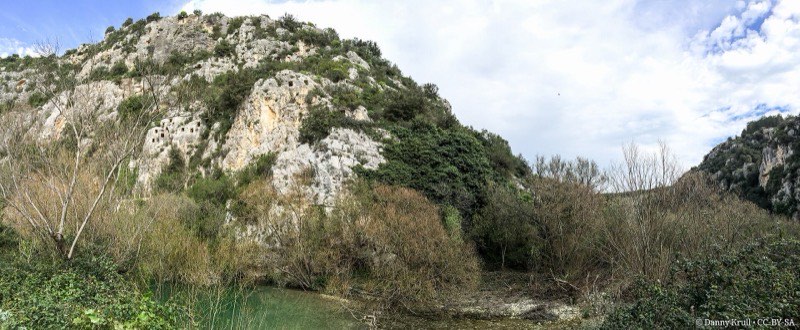 Nature reserve
Five thousand tombs cut into the walls of a gorge, and a flat route along the course of a disused railway. A UNESCO World Heritage site, and almost no climbing.
The highest summit of the Monti Iblei, 986 m in the municipality of Buccheri. The car gets you practically to the top, the top is taken up by transmitters, and what is left to walk is all below.
Next step
See the rest of the area
We have no published track for this place yet. There are others in the area.